
Last updated November 14, 2026
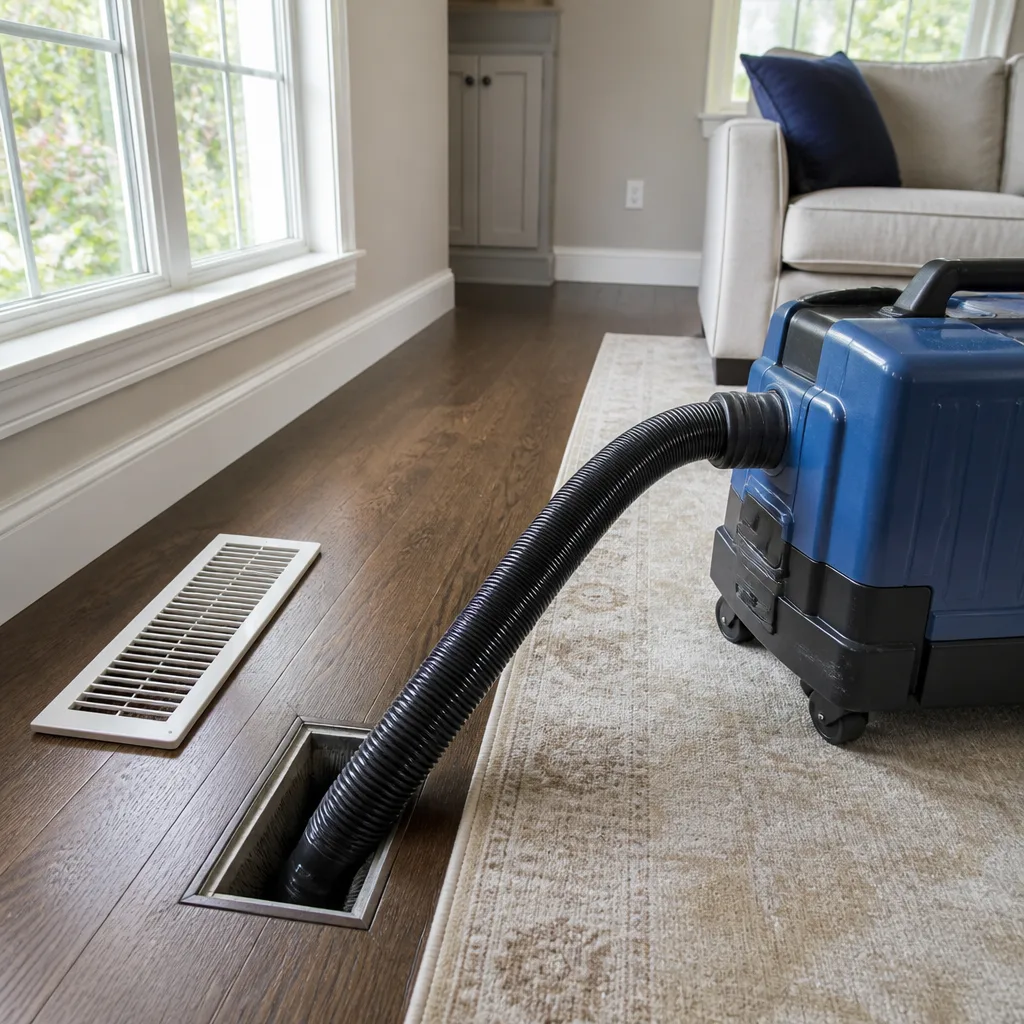 Whole-home duct cleaning
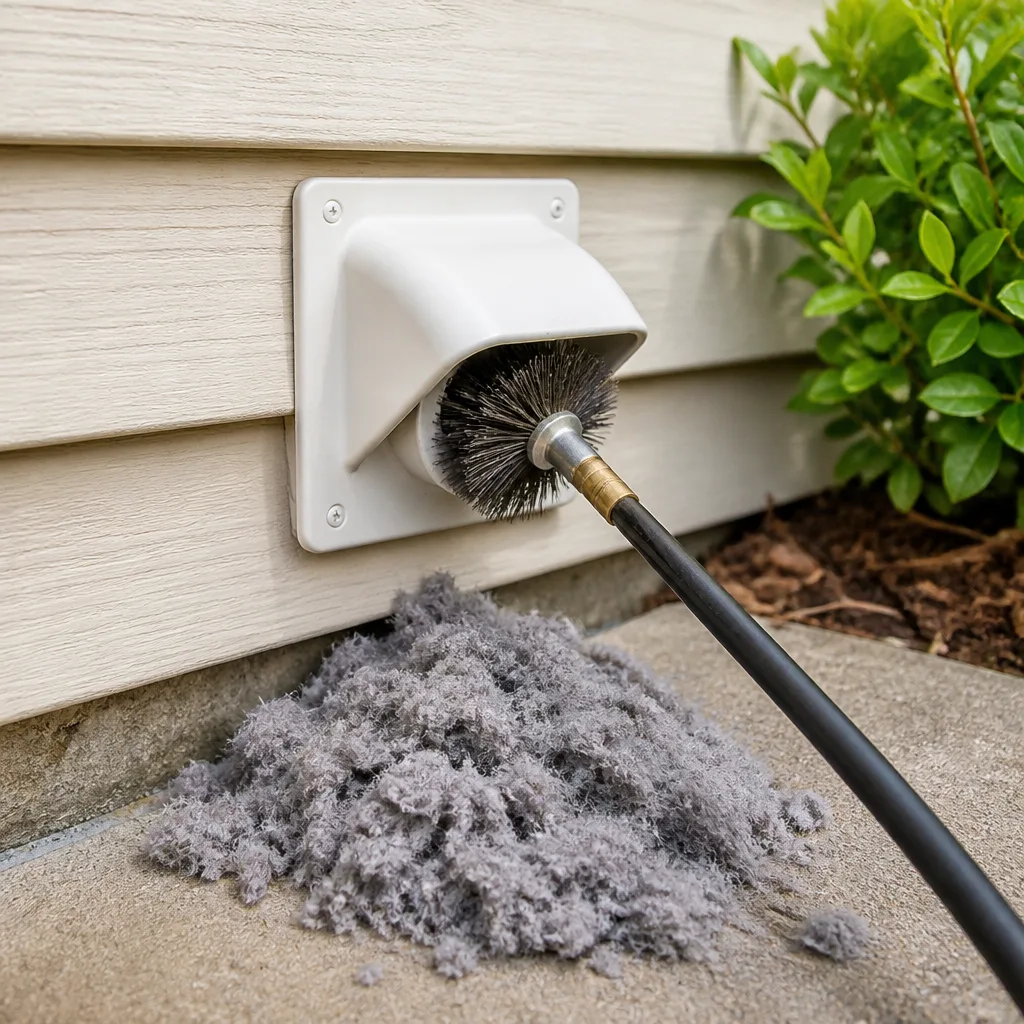 Dryer vent cleaning
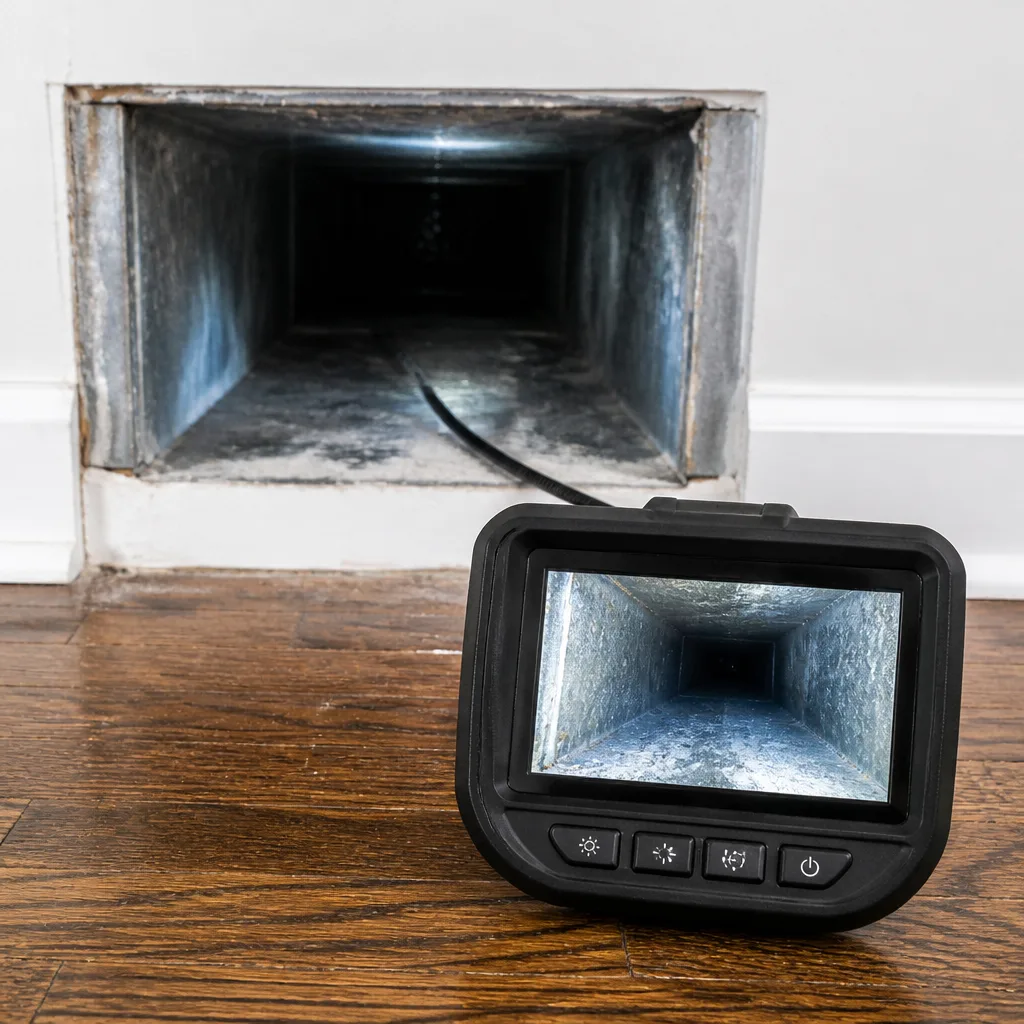 Camera inspection
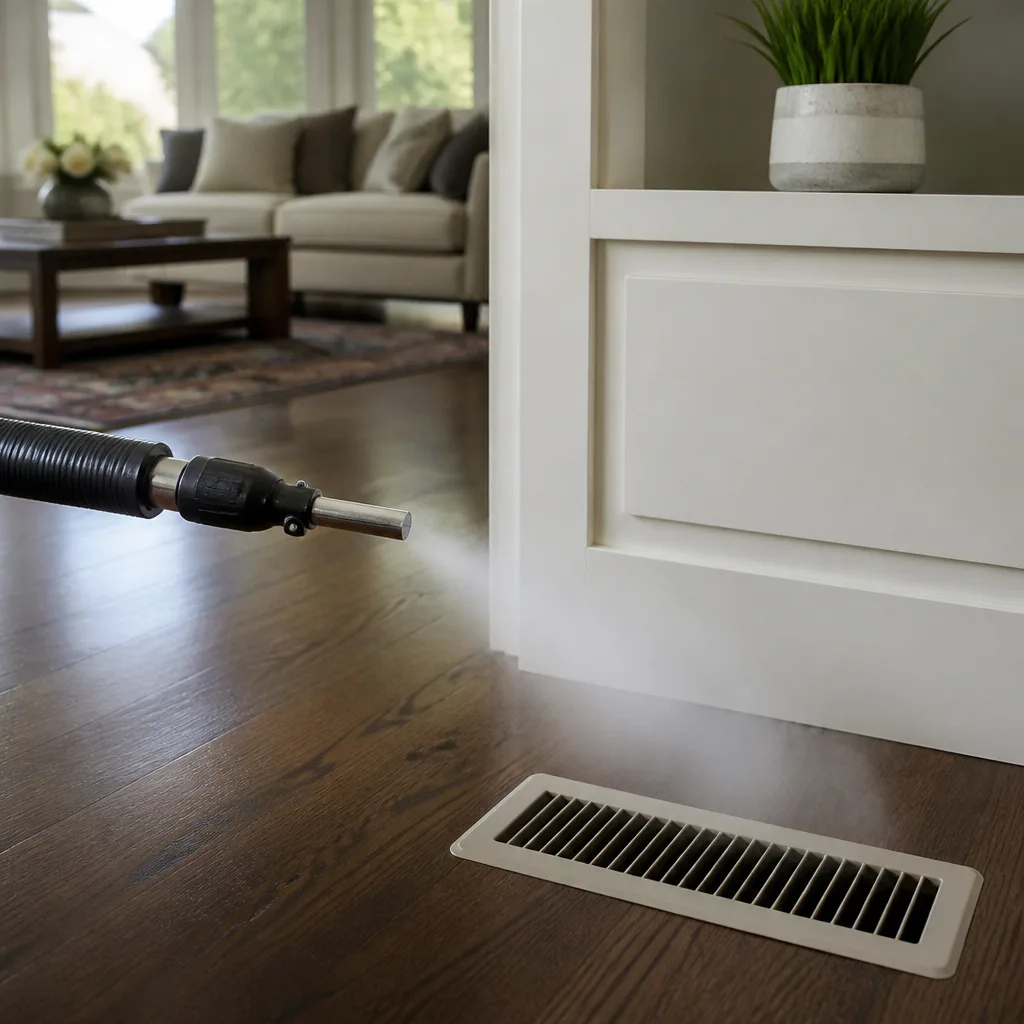 Sanitizing & deodorizing
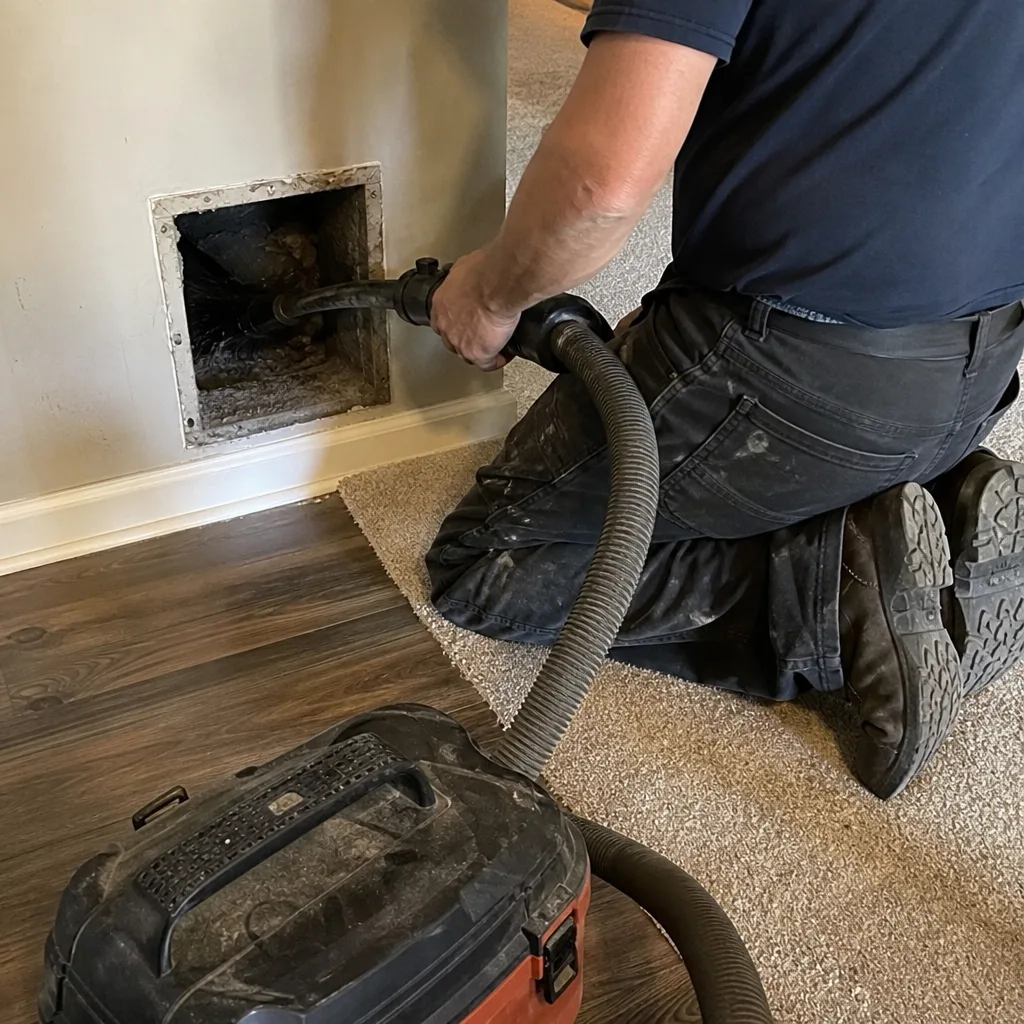
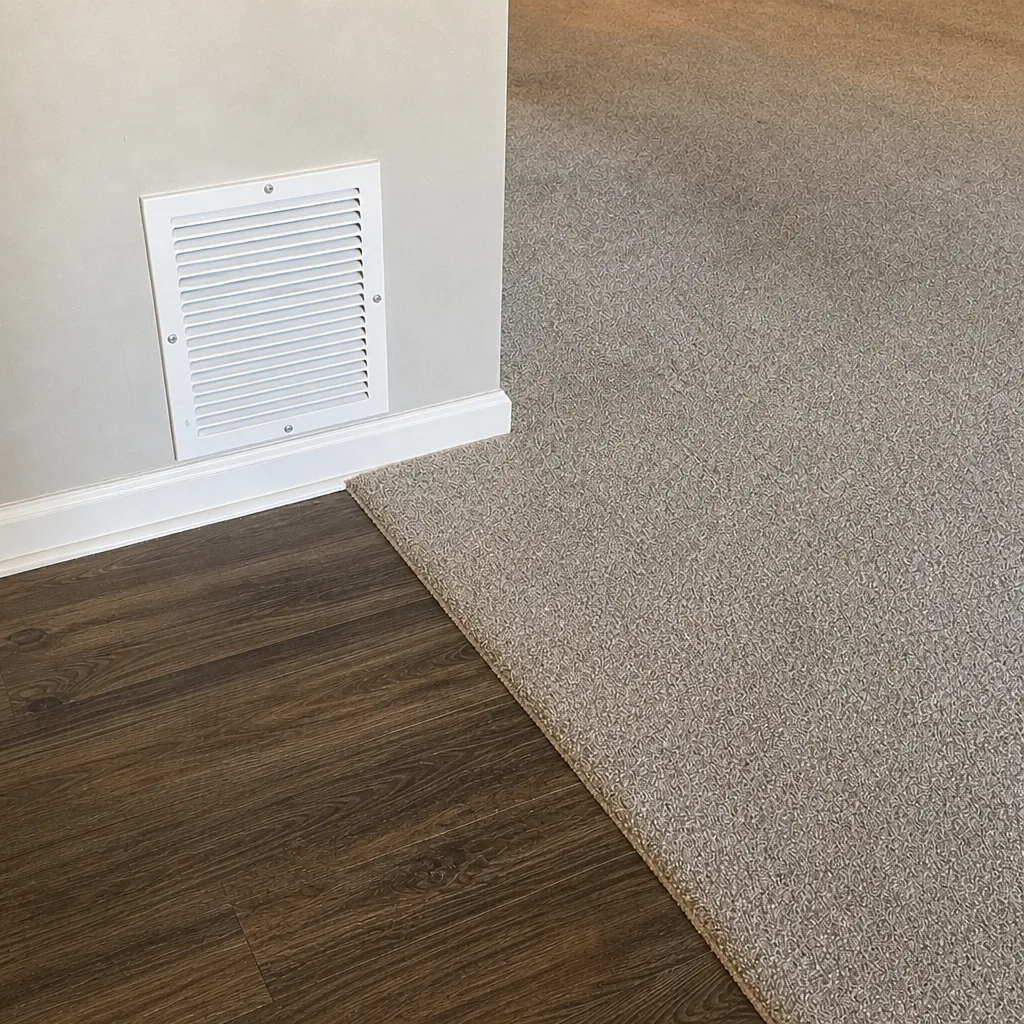
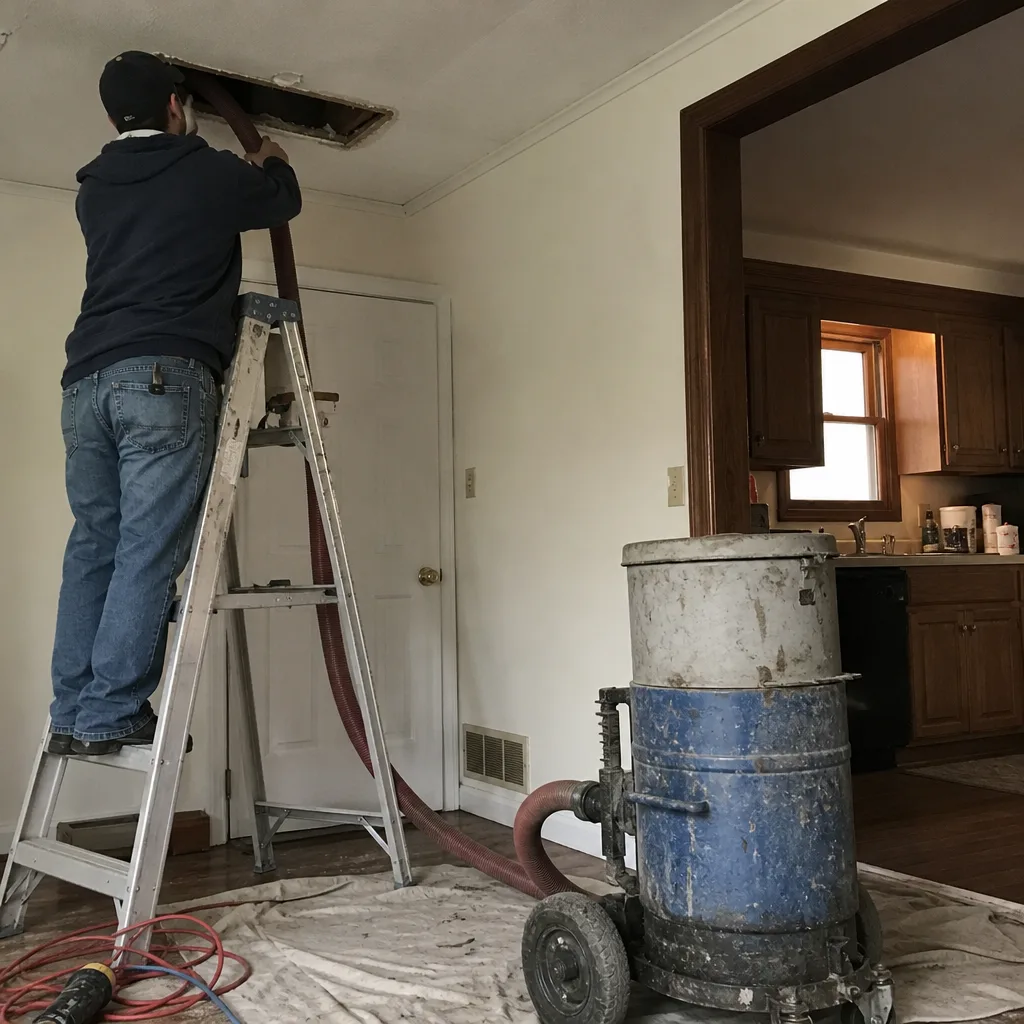
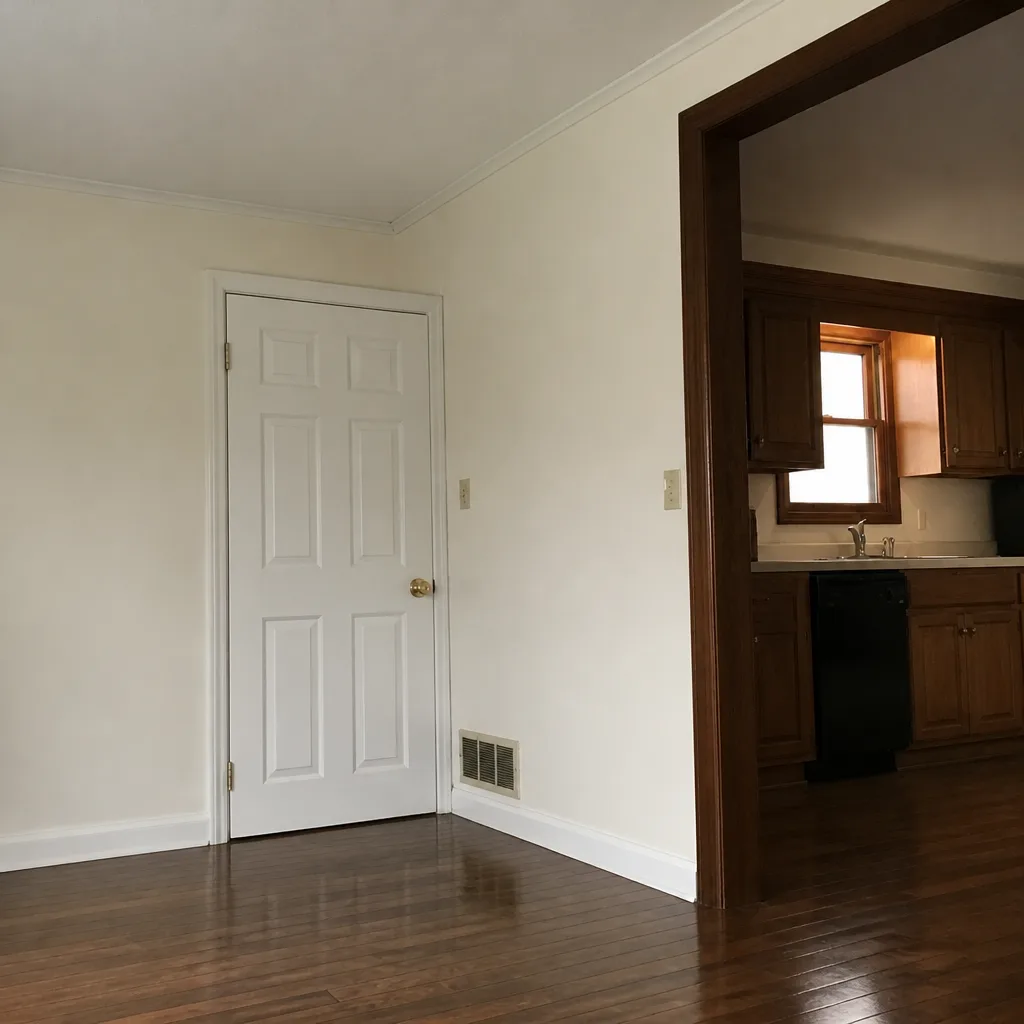
Whole-system duct and dryer vent check with before-and-after photos - you see exactly what came out of your vents
That "$99 whole-house special" is a bait ad - the real number appears once they are in your hallway, or the "clean" is a shop-vac at the register. We photograph the inside of your ducts before and after instead.
Air Duct Cleaning Maintenance Checklist for Carmel Homeowners
Most duct problems announce themselves quietly. A filter change won’t catch a flex duct that’s slowly separating at a junction, and an annual cleaning won’t catch it either if nobody looks. The failure that dumps conditioned air into an attic for months usually starts as a taped joint losing its grip, not a dramatic collapse. That’s why this checklist is built around inspection checkpoints, not a schedule of chores. You’ll learn how to read your registers, log filters against Carmel’s pollen and humidity seasons, tell DIY-safe tasks from technician-only work, and spot the moment a maintenance visit has become a repair. Read it once, then run it twice a year.
Quick Answer
A solid duct maintenance routine for a Carmel home means checking every supply and return register monthly for airflow, debris, and odor; logging filter changes against the spring pollen surge and the humid summer stretch; and having a technician inspect the full system, including attic and crawlspace runs, once a year. The homeowner checklist catches symptoms. The professional inspection catches the causes behind walls and above ceilings. Both matter, and neither replaces the other.
Styles & brands we work with
- Whole-home duct cleaning
- Dryer vent cleaning
- Camera inspection
- Sanitizing & deodorizing
Table of Contents
- Why Duct Problems Show Up Between Cleanings
- The Room-by-Room Register Inspection Checklist
- Your Seasonal Filter Log for Carmel’s Climate
- DIY-Safe Tasks vs. Technician-Only Work
- The Dryer Vent Performance Checklist
- When Maintenance Crosses Into Repair Territory
- How Often Should You Do This in Carmel?
- Common Mistakes to Avoid
Why Duct Problems Show Up Between Cleanings
A duct system is under constant low-grade stress even when nothing dramatic happens. In Carmel, that stress follows a predictable yearly rhythm. Spring pushes a heavy pollen load through every open window and return grille. Summer brings weeks of high humidity that softens duct tape, swells particleboard plenums, and stresses the seals at every joint. Winter’s dry furnace air then contracts the same materials that just swelled. Materials don’t love that cycle, and after a few years small gaps open where the ductwork meets the trunk line or where a run passes through an unconditioned attic.
A cleaning removes what’s inside the ducts on the day it happens. It does not seal a joint, re-hang a sagging run, or fix a crushed section of flex duct pinched behind a joist. That’s the gap this checklist is designed to close. You’re checking for degradation between cleanings, so the small failure gets caught before it becomes a large one.
Two conditions make this more urgent in central Indiana than in milder climates. First, the temperature swing between a July afternoon and a January night is wide, and duct materials expand and contract with it. Second, Carmel homes often have long attic runs feeding second-floor bedrooms, and an attic in August is one of the harshest environments a duct will ever sit in. A leak there doesn’t just waste energy. It pulls hot, humid, sometimes dusty attic air into the supply stream.
What you’re looking for, then, is not dirt alone. It’s change. Does a register that used to blast now whisper? Does a room that used to feel neutral have a faint musty smell? Does the return sound different than it did last season? Those are the early signals, and they’re readable by any homeowner willing to spend a few minutes per room. The rest of this guide teaches you how to read them and what to do next.
The Room-by-Room Register Inspection Checklist
This is the core of the guide, and it takes about twenty minutes for a typical Carmel home. Walk the house with a notepad and check each supply register and each return grille. Do it in the same order every time so nothing gets skipped. The goal is comparison: you’re building a mental baseline of what “normal” looks and feels like, so a change stands out next season.
- Airflow feel. Hold your hand (or a strip of tissue) a few inches in front of the register with the system running. Note whether the flow is strong, moderate, or weak. A single weak register is a duct-run problem. Every register weak is a blower, filter, or main-trunk problem.
- Visual debris. Shine a light into the supply slot. A thin film of dust is normal. Dark streaks, visible clumps, or a mat of lint stuck to the louvers means debris is traveling through the system, not settling harmlessly.
- Odor at supply versus return. Smell each one separately. A musty note at the supply means the problem is upstream in the ducts or the air handler. A musty note at the return that fades at the supply points toward the return path or the space it’s pulling from.
- Register and grille condition. Look for bent louvers, rust spots, or screws backing out. A loose grille rattling against drywall often means the boot behind it has shifted.
- Surrounding surface clues. A faint dust ring on the ceiling or wall around a register tells you air is escaping behind the grille rather than through it.
- Room-level balance. After the walk, note which rooms run warm or cool relative to the rest of the house. Persistent imbalance in one or two rooms across multiple HVAC cycles points to a duct problem rather than a thermostat setting.
Write the date at the top of each walk. A register that read “strong” in spring and “moderate” in fall is telling you something, even if both readings would have passed a casual glance. For a fuller picture of what a full-system cleaning involves, our air duct cleaning service page walks through the process. This register walk is the homeowner’s version of that same inspection logic, scaled down to what you can see and feel from the room side.
Your Seasonal Filter Log for Carmel’s Climate
Filters are the one maintenance task every guide mentions, and almost nobody tracks them in a way that’s actually useful. A calendar reminder says “change the filter,” but it doesn’t tell you why this month and not last month. A log does. The simplest format is a piece of paper on the inside of the air handler closet door, and it takes four columns.
- Date installed. The day you put the new filter in.
- Filter type. The MERV rating and the brand, written plainly. MERV 8 and MERV 11 behave very differently in a Carmel system.
- Condition at removal. One word per filter: clean, gray, matted, or clogged. This is the column that teaches you your house’s real rhythm.
- Days in service. Subtract the install date from the removal date. Over a year, this tells you the truth about your filter interval rather than a manufacturer’s generic suggestion.
Now tie the log to the local season. Central Indiana’s spring is a heavy pollen period, and Carmel’s mature tree canopy in neighborhoods like Village of WestClay and the older streets near the Arts & Design District sends plenty of it into the air and into return grilles. A filter that lasted a comfortable two months in winter may mat in five weeks during pollen peak. Log that and adjust the next spring rather than guessing.
Summer flips the problem. High humidity means the filter isn’t just catching particles; it’s also the surface where moisture and dust can combine into a musty mat if airflow is restricted. A filter that looks “not that dirty” but smells off should come out. Winter’s dry furnace runs then load the filter with fine dust from recirculated indoor air.
Two practical notes. First, a higher MERV isn’t automatically better. A very high-MERV filter on a system not designed for the extra pressure drop can starve airflow and look, from the living room, exactly like a duct problem. Second, if your log shows the filter matting faster than the interval you’d expect, that’s a signal worth a technician’s look. It can mean a leaking return duct pulling attic or crawlspace air, which is a repair issue, not a filter issue.
DIY-Safe Tasks vs. Technician-Only Work
Knowing which jobs belong to you and which belong to a technician saves money and prevents damage. The dividing line is straightforward: if the task happens on the room side of the register with no tools beyond a screwdriver and a vacuum, it’s yours. If it needs the system opened, the ducts accessed, or the air handler touched, it isn’t.
DIY-safe:
- Replacing filters on your logged schedule.
- Vacuuming register grilles and louvers with a brush attachment.
- Wiping dust rings around registers and reseating loose grilles.
- Keeping return grilles clear of furniture, rugs, and storage boxes.
- Running the register inspection walk and recording results.
- Checking the exterior dryer vent flap for free movement (from outside, with the dryer running).
Technician-only:
- Cleaning the interior of the duct runs and the trunk line.
- Inspecting attic, crawlspace, and wall-chase duct runs for separation, sagging, or crush damage.
- Cleaning and inspecting the air handler, evaporator coil, and blower compartment.
- Sealing, re-taping, or re-hanging duct sections.
- Cleaning the interior of the dryer vent line and the transition duct behind the dryer.
- Any work involving the electrical components of the HVAC system.
The safety line matters most in two places. Duct interior work and air handler cleaning involve the system’s electrical components and, in some setups, refrigerant lines; those aren’t homeowner territory. And dryer vent interior cleaning is a genuine fire-safety task, not a chore. Lint packed into a vent line is combustible, and the equipment that clears it properly is not a shop vacuum with a long hose. If you’re unsure which side of the line a task sits on, treat it as technician work. Our team uses professional-grade systems for exactly this reason.
The Dryer Vent Performance Checklist
Dryer vents run parallel to duct maintenance and deserve their own track because the failure mode is different. A restricted dryer vent doesn’t just slow drying. It’s a fire risk, and it’s one that builds gradually enough that most people adjust to it without noticing. Run this checklist every few months, and any time the dryer starts behaving differently.
- Drying cycle time. Note how long a normal load takes to dry fully. A load that used to finish in one cycle and now needs two is the classic early signal of a restricted vent. Log the time so you’re comparing real numbers, not memory.
- Heat at the dryer and at the exterior. With the dryer running, the exterior vent should be pushing warm, moist air freely. Weak or cool exhaust at the outside flap while the dryer is hot at the back points to a blockage in the line.
- Exterior flap check. From outside, the flap should open wide under airflow and close flat when the dryer stops. A flap that stays partly open, or flaps weakly, means airflow is restricted or lint is trapping it.
- Lint at the exterior. A small amount of lint around the flap is normal. Lint packing the flap open or visible around the hood means the line needs cleaning.
- Transition duct behind the dryer. Check that it’s connected, intact, and not crushed against the wall. A transition duct kinked flat is a common and easily missed restriction.
- Laundry room humidity and smell. A laundry room that feels humid after a dry cycle, or smells faintly of warm lint, is telling you exhaust isn’t leaving the way it should.
If more than one item on this list fails, stop using the dryer until the vent line is checked. That’s a safety call, not an inconvenience. Our dryer vent cleaning service covers the interior line and the transition duct, which are the parts this checklist can flag but can’t fix from the outside. For homeowners in Carmel with the dryer on an interior wall and a long vent run, this track is worth more attention than the duct track, because long runs accumulate lint faster.
One more thing worth noting: the dryer vent track and the duct track share a failure pattern. Both degrade quietly, both get adjusted to by the people living with them, and both are cheap to inspect and expensive to ignore. Treat them as two lanes of the same maintenance habit.
When Maintenance Crosses Into Repair Territory
There’s a clear set of signals that a maintenance visit has become a repair job. Catching them early is the whole point of the inspection checkpoints above, because a small joint separation is a quick fix while a collapsed run that’s been dumping air into an attic for a season is a bigger one. Here’s what to watch for.
- Persistent room imbalance after a cleaning. If a room that ran weak before the cleaning still runs weak after, the cause is a duct issue, not debris.
- Visible separation at joints. Duct tape that’s peeling, gaps at the trunk-to-run connection, or a run that’s pulling away from its boot. This is the classic Carmel-attic failure.
- Sagging or crushed flex duct. A run that’s drooping between hangers or pinched behind a joist restricts flow and can tear at the seams over time.
- Musty odor that returns quickly after cleaning. A cleaning fixes the symptom. If the smell is back within weeks, moisture is getting in through a breach somewhere.
- Dust reappearing on registers fast. If grilles go from clean to streaked in a couple of weeks, the system is drawing contaminated air from somewhere it shouldn’t.
- A filter that mats unusually fast. As noted in the filter log, a rapidly clogging filter often points to a leaking return pulling attic or crawlspace air.
What makes these signals useful is that they’re visible from the homeowner’s side, with no equipment. You don’t need to know why a run is sagging to know it’s sagging. Report what you see. During any visit, we inspect for exactly this, so problems found during cleaning can be fixed in the same visit rather than handed off to a second contractor. That’s the advantage of pairing cleaning with repair capability: one inspection, one set of findings, one solution. If you’ve noticed two or more of the signals above, that’s your cue to schedule an inspection rather than wait for the next cleaning cycle.
How Often Should You Do This in Carmel?
Split the schedule by task. The homeowner checklist runs twice a year, ideally once in early spring before pollen peak and once in early fall before heating season. The filter log runs constantly, with a physical check roughly monthly against the log. The professional full-system inspection runs annually, and the dryer vent checklist runs every few months plus any time drying times change.
Two conditions in Carmel move the schedule up. First, a home with pets, recent renovation dust, or a family member with allergies benefits from a shorter interval between professional cleanings. Second, a home that’s had any HVAC work, a remodel, or a new roof is worth an inspection soon after, because construction activity and roofline work can disturb duct runs in the attic. New homeowners should front-load the schedule: one full inspection in the first season establishes a baseline, and everything after that compares against it.
Property managers and landlords maintaining multiple units should run the register checklist at turnover and log each unit’s filter interval separately. A unit with a record is far easier to maintain than one where every visit is a discovery. The same logic applies to a single-family home: the log is the thing that turns maintenance from reactive to scheduled.
Common Mistakes to Avoid
- Assuming the annual cleaning is the whole plan. A cleaning resets the system; it doesn’t monitor it. Without the register walk between cleanings, you’ll miss the early joint separation that a cleaning would have caught if it happened to be visible that day. The checklist is what fills the gap.
- Chasing a higher MERV rating without checking the system. In a Carmel home with a modest air handler, an overly restrictive filter can starve airflow and mimic the symptoms of a duct problem. Match the filter to the system, not to the label.
- Treating the dryer vent as a chore instead of a safety item. Many homeowners clean the lint screen and consider the job done. The interior line is where the fire risk lives, and it only gets checked during a dedicated vent cleaning.
- Ignoring one weak register because “the rest are fine.” A single weak register is the clearest repair signal you’ll get, and it’s easiest to fix early. Waiting for it to affect the whole house means waiting for a bigger repair.
- Confusing musty smell with dust and treating it with a cleaning. Odor that returns quickly after cleaning means moisture is entering somewhere. Cleaning without finding the breach just restarts the clock.
- Not logging anything. Maintenance without records depends on memory, and memory adjusts to gradual change. A written log is what makes a “still fine” register stand out when it isn’t.
- Skipping the exterior dryer flap check. It takes ten seconds and is one of the most reliable early warnings a homeowner has. Most people never look at it.
When to Call a Professional
Call a professional when the checklist produces a pattern, not a single reading. A weak register that’s still weak after a cleaning, a musty odor that returns within weeks, a filter that mats faster than its logged interval, or a dryer that needs a second cycle are all signs the issue is inside the system rather than on the room side. Call sooner if you smell gas, see moisture or water stains near ductwork, or notice the dryer vent flap not opening at all. The tasks on the technician-only list are exactly the ones that need professional equipment and training. Duct Cleaning Carmel offers free estimates in Carmel. Call (844) 834-5334. We answer 24/7. Fast dispatch from 7am to 7pm, Sunday through Friday. Our technicians have up to 12 years of experience, and we use professional-grade Rotobrush and Nikro systems along with Abatement Technologies equipment for verified contaminant capture. Guardsman protective treatments are available after cleaning to extend duct cleanliness.
See the difference
 Before
 After
 Before
 After
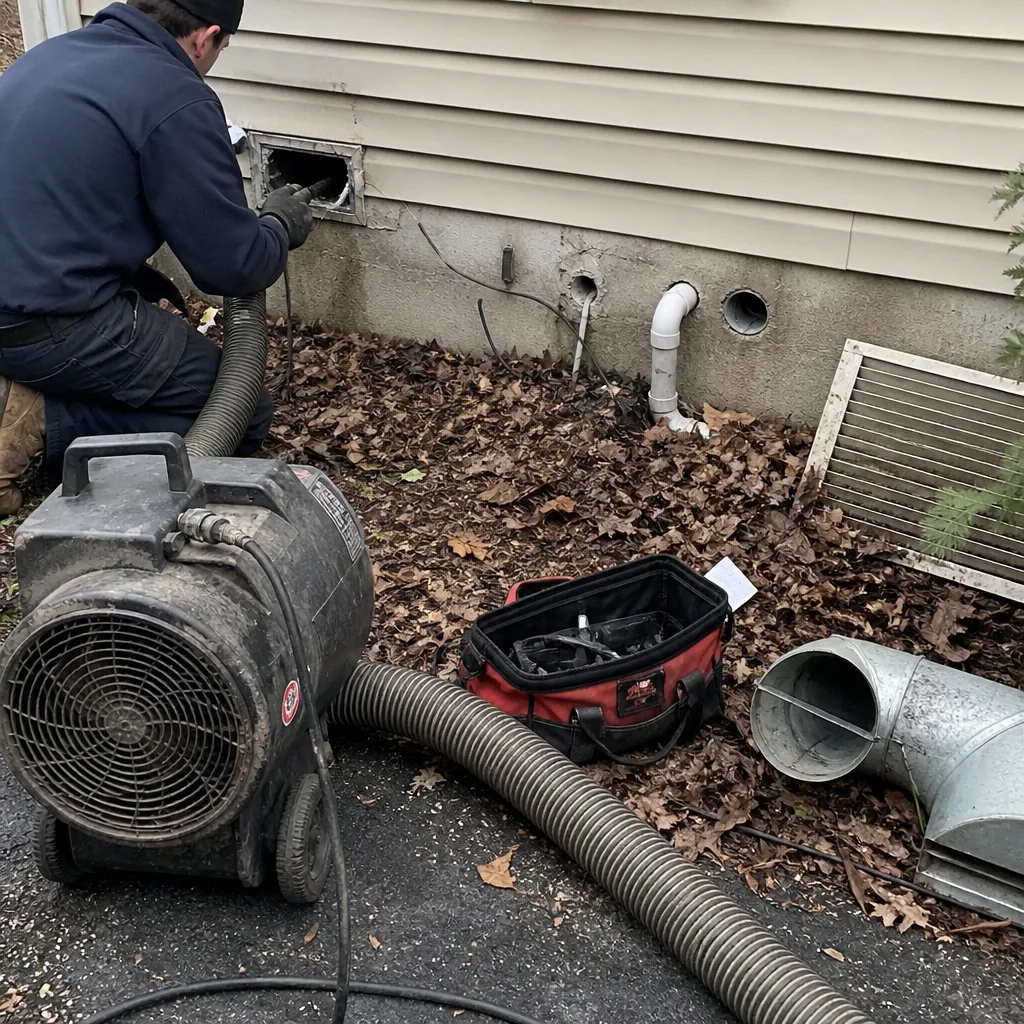 Before
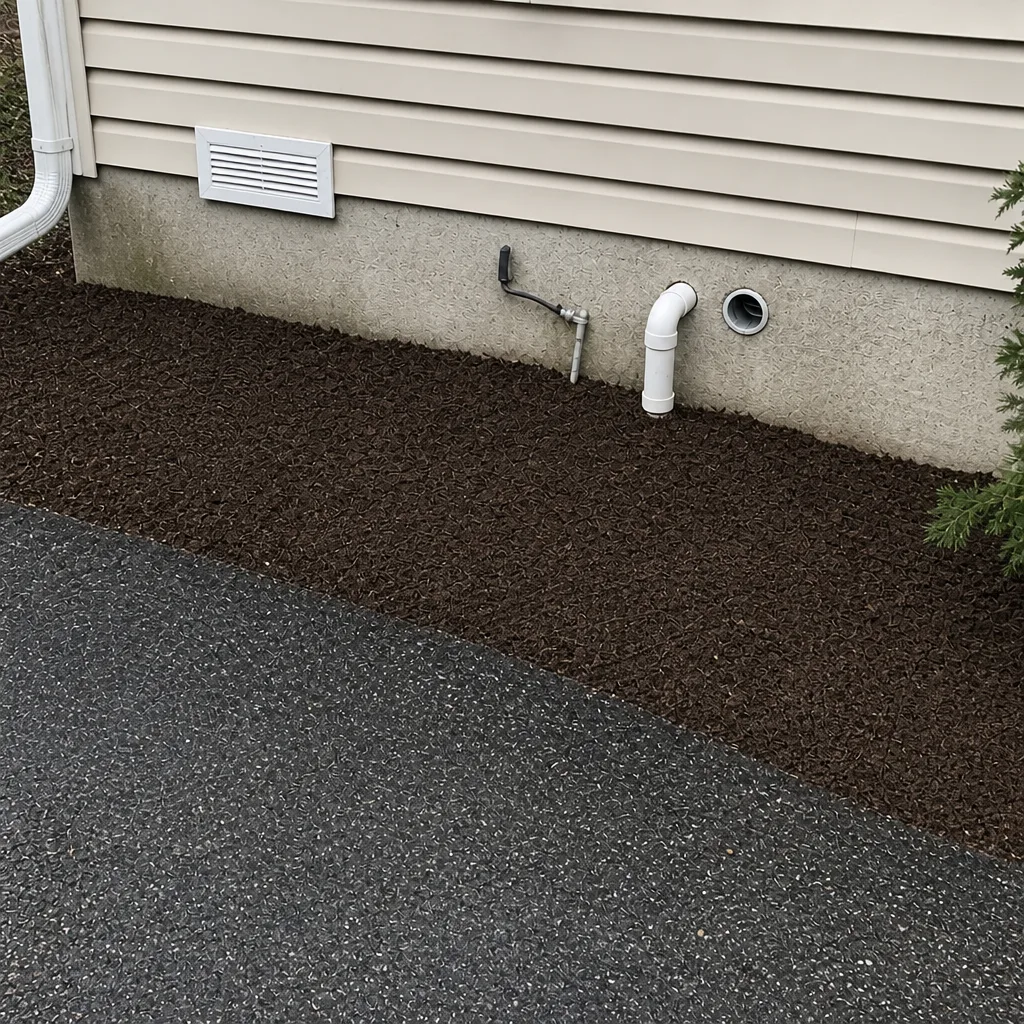 After
Frequently Asked Questions
Once a year is a reasonable baseline for most Carmel homes, adjusted by conditions. Homes with pets, recent renovations, allergy-sensitive occupants, or long attic duct runs may benefit from a shorter interval, and new homeowners should start with a full inspection to set a baseline. The homeowner register checklist and filter log fill the months in between so nothing goes unchecked.
Cleaning removes accumulated debris from inside the duct system; maintenance is the ongoing habit of inspecting, logging, and catching problems before they need repair. They work together. A cleaning without the inspection habit misses the joint separation and the sagging run. The maintenance habit without a periodic cleaning lets debris accumulate. You want both, on their own schedules.
No, and it’s worth being direct about why. A shop vacuum doesn’t have the airflow, filtration, or reach to clean duct interiors without pushing debris further into the system or releasing it into the room. Professional systems like Rotobrush and Nikro, paired with Abatement Technologies HEPA-level filtration, are designed for exactly this work. Homeowners can vacuum register grilles and change filters safely; the interior work belongs to a technician.
The clearest sign is a change in drying time: a load that used to finish in one cycle now needs two. Other signs include weak airflow at the exterior vent flap, the flap not opening fully or closing flat, visible lint packing around the exterior hood, a kinked transition duct behind the dryer, and a laundry room that feels humid after a cycle. If more than one of these is present, stop using the dryer until the vent line is checked.
Persistent imbalance in one or two rooms usually points to a duct issue rather than a thermostat setting. The likely causes are a separated joint, a sagging or crushed run, or a boot that’s shifted behind the register. Run the register checklist to see whether airflow is weak in that room specifically, then have a technician inspect the run. It’s a common finding in homes with long attic duct runs.
Ask directly, because the answer tells you a lot. Professional work uses systems designed for duct interiors, such as Rotobrush or Nikro, along with true HEPA-level contaminant capture like Abatement Technologies equipment. Those are the tools that clean thoroughly and keep what’s removed out of your home’s air. We use exactly this equipment on every visit, which is how we can show the system was actually addressed rather than just surface-cleaned.
Yes, when the problem is found during the visit. That’s one of the reasons we handle repair alongside cleaning: an inspection during a cleaning reveals separation, sagging, or crush damage, and fixing it in the same visit saves a second appointment. If the findings are larger than expected, the estimate covers the work before anything happens.
Yes. The cleaning happens on one day; the between-cleaning months are when degradation begins. The register walk, the filter log, and the dryer vent check are what catch the early signals between visits. Without them, you’re relying on the cleaning to catch everything, and a slow joint separation may not be visible until it’s already caused a season of air loss.
The Bottom Line
Duct maintenance is an inspection habit, not a chore list. The register walk, the filter log, the DIY-versus-technician divide, and the dryer vent track all work the same way: they give you a baseline so a change stands out. Cleaning and repair handle what the inspection finds. The professional-grade equipment handles the work itself. What makes it all hold together is the habit of looking in a consistent, ordered way, twice a year, and writing down what you see. That’s the difference between a system that’s maintained and one that’s monitored. The register walk is the piece you can start today.
When something on the list comes back as a pattern, or you’d rather have a trained eye take the baseline, we’re one call away. Our approach is to find the problems and fix them in the same visit where possible, using professional equipment and documenting what was removed. Call (844) 834-5334 to book a free estimate for air duct cleaning, dryer vent cleaning, or duct repair in Carmel.
Related Pages
Written by the team at Duct Cleaning Carmel.