
Last updated November 14, 2026
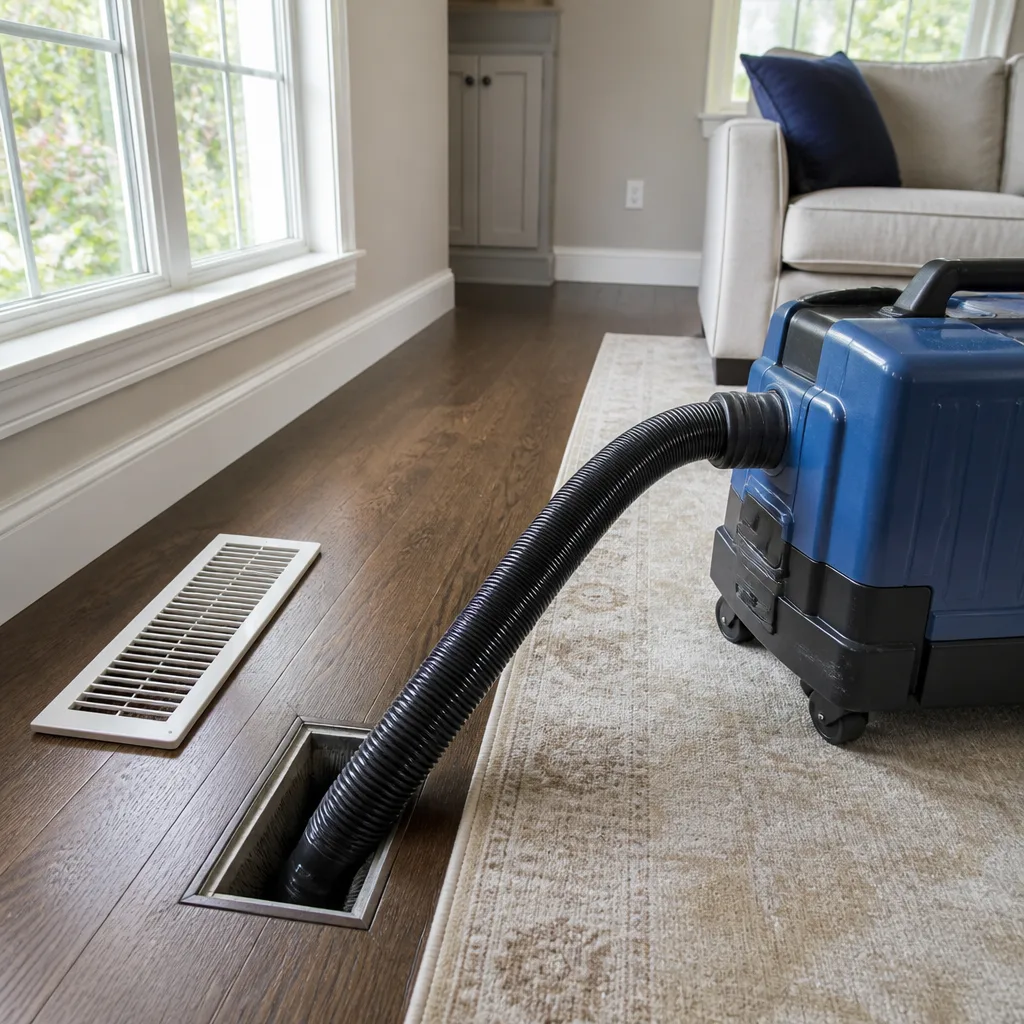 Whole-home duct cleaning
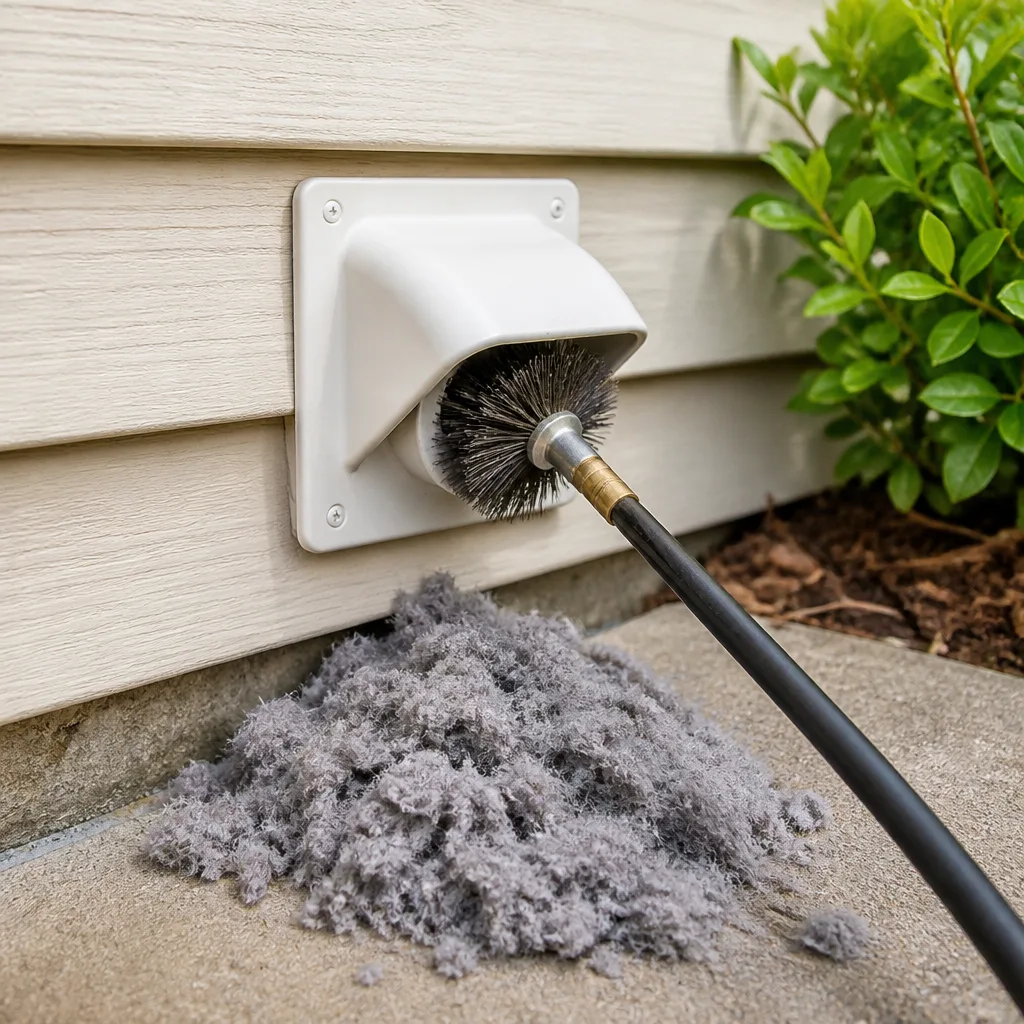 Dryer vent cleaning
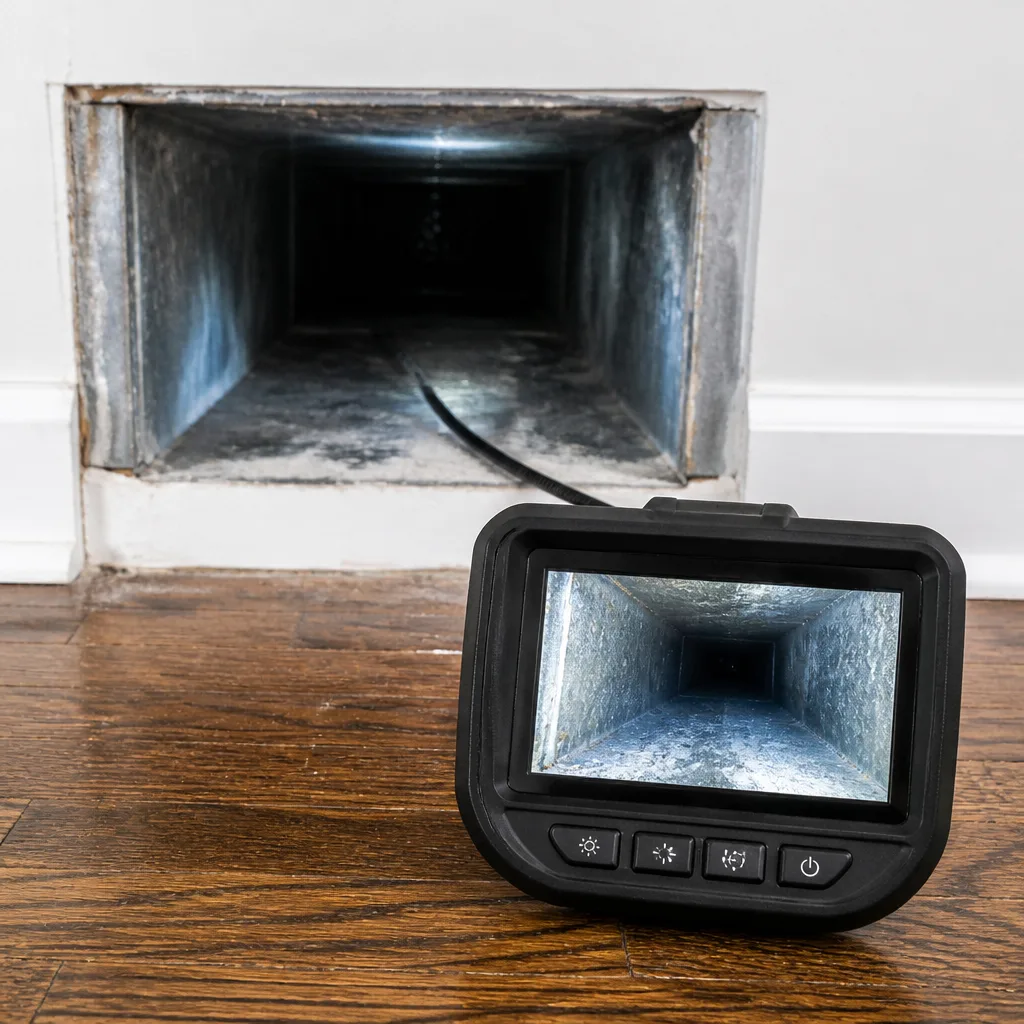 Camera inspection
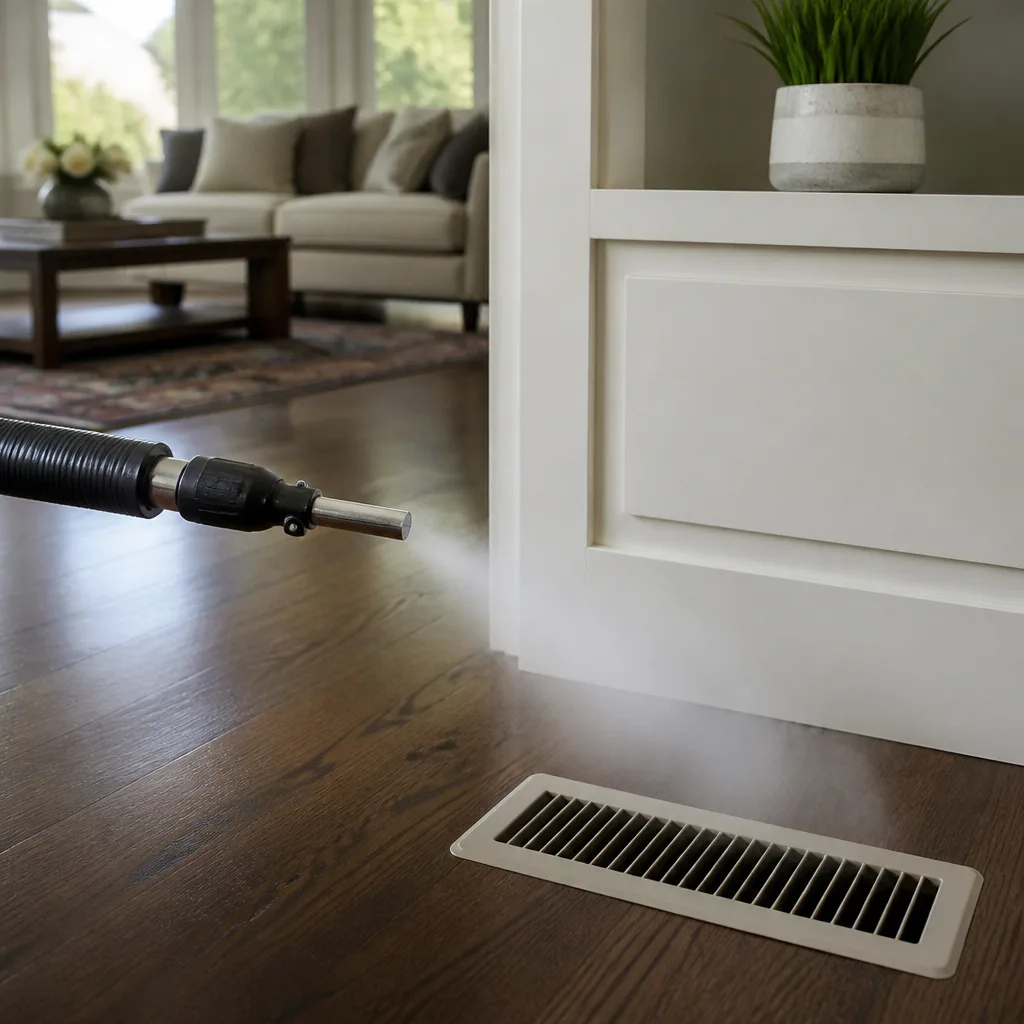 Sanitizing & deodorizing
Whole-system duct and dryer vent check with before-and-after photos - you see exactly what came out of your vents
That "$99 whole-house special" is a bait ad - the real number appears once they are in your hallway, or the "clean" is a shop-vac at the register. We photograph the inside of your ducts before and after instead.
Air Duct Cleaning Permits, Codes & Inspections in Carmel, IN: What You Need to Know
Here’s the part almost nobody explains before the truck pulls into the driveway: cleaning a duct system rarely needs a permit, but the repairs uncovered during cleaning often do. A disconnected trunk line, a crushed flex run, a rerouted dryer vent terminating under a deck – those are mechanical modifications, and in Indiana they can trigger permit and inspection requirements. When a repair like that gets patched without a permit, it can surface later as an undisclosed defect on your Carmel home’s seller’s disclosure statement. This guide walks through where the permit line actually sits, who has jurisdiction in Carmel, how dryer vent work differs from duct cleaning, what HOAs in newer subdivisions control, and how to document repairs properly for resale.
Quick Answer
Routine air duct cleaning in Carmel generally does not require a building permit. Duct repairs, replacements, and modifications – including rerouting or installing a dryer vent – can require a mechanical permit from the City of Carmel’s building department, and that work should be inspected before it’s covered up. If a duct cleaner finds a problem mid-job, ask whether the fix crosses into permitted work before agreeing to it.
Styles & brands we work with
- Whole-home duct cleaning
- Dryer vent cleaning
- Camera inspection
- Sanitizing & deodorizing
Table of Contents
- Does Air Duct Cleaning Require a Permit in Carmel?
- Who Has Jurisdiction: Carmel Building Department & Hamilton County
- Duct Repairs Uncovered During Cleaning: When to Call Before Starting
- Dryer Vent Installation and Rerouting: The Code-Governed Modification
- HOA Considerations in Carmel’s Newer Subdivisions
- Documenting Post-Cleaning Repairs for Indiana Home Sale Disclosure
- What an Inspection Actually Looks Like
- How Carmel’s Climate and Housing Stock Shape Duct Problems
Does Air Duct Cleaning Require a Permit in Carmel?
Air duct cleaning in Carmel does not require a building permit. Cleaning is maintenance, not construction. You’re removing accumulated dust, debris, and contaminants from an existing system, and nothing about that changes the structure or the mechanical layout of the home. Hoosier homeowners who call the city asking about a permit for a straight cleaning are usually told the same thing: no permit needed.
The line sits between cleaning and modifying. Cleaning removes what’s inside the ducts. Modification changes the ducts themselves – adding a run, deleting a run, replacing a section of rigid duct with flex, moving a trunk line, changing a register location, or installing or rerouting a dryer vent. Those are mechanical alterations, and in most jurisdictions they fall under the mechanical code that governs HVAC work.
In practice, our technicians run into this distinction almost every week. A homeowner books a standard air duct cleaning because the house feels dusty. During the walkthrough we find a disconnected flex run behind a knee wall, or a return duct crushed flat under a joist. That’s a repair – and depending on scope, it may cross the permit threshold. We tell the homeowner what we found, explain what the fix involves, and let them decide whether to proceed or call the city first. We find problems and fix them in the same visit, but we don’t decide permit questions for the homeowner. That’s a conversation between them and Carmel’s building department.
What counts as cleaning versus modification
- Cleaning: brushing, agitating, and extracting debris from existing ductwork; sealing minor gaps with mastic; replacing filter grilles.
- Likely modification: adding or removing a duct run, relocating a register, replacing a length of duct with a different material, changing a trunk line, installing or rerouting a dryer vent.
- Gray area: reconnecting a disconnected joint in the same location. Small reconnect work often doesn’t require a permit, but the scope matters. Ask.
Our technicians have up to 12 years of experience, and most of them can look at a duct run and tell you whether what they’re about to do is maintenance or alteration. That distinction is worth understanding before you sign off on a repair.
Who Has Jurisdiction: Carmel Building Department & Hamilton County
The City of Carmel’s building department handles permits and inspections for work inside Carmel city limits. Hamilton County has its own building department for unincorporated areas and for municipalities that don’t run their own permitting operation. If your home sits inside Carmel proper, you’re dealing with the city. If you’re in a surrounding unincorporated pocket, the county may be the authority. Either way, the mechanical code provisions are similar.
This matters because a lot of homeowners assume that because Carmel is a well-run, inspections-heavy city, their contractor automatically pulled the right permit. That’s not how it works. The permit is the property owner’s responsibility. The contractor can pull it on your behalf, but if nobody pulls it, the liability lands on the deed.
Here’s how to check where you stand:
- Call the City of Carmel building department and describe the exact work. “I want to replace 12 feet of disconnected flex duct with rigid duct in the same location” gets you a better answer than “I need a permit for duct work.”
- Ask whether the scope triggers a mechanical permit and whether it requires an inspection before the ducts are closed back up.
- Get the answer in writing, even if it’s an email confirming no permit is required. Keep it with your home records.
- If a permit is required, confirm who pulls it before work starts. Most contractors will do it, but confirm in writing.
- Ask who calls for the inspection. In most cases the permit holder calls, but you want to know the sequence.
For homeowners in Carmel proper, the city’s online permitting portal makes it possible to check whether a permit exists on your address. That’s a quick way to verify. If a repair was completed and you’re not sure whether it was permitted, pulling the record is simpler than pulling the drywall later.
Duct Repairs Uncovered During Cleaning: When to Call Before Starting
Cleaning reveals problems. That’s not a sales pitch, it’s a physical reality of what a professional-grade system does when it agitates and extracts the full run. Once the debris is out, the disconnected joints, crushed flex, gaps at the plenum, and rodent-chewed boot connections come into clear view. What happens next is where homeowners get into trouble.
The temptation is to say yes on the spot. In-and-out, one invoice, done. But if the repair is more than a reconnected joint in the same location, that’s the moment to pause and ask about permits. A duct system is part of the home’s mechanical infrastructure, and some fixes to that infrastructure require a permit and an inspection. Skipping that step is the kind of shortcut that comes back when a buyer’s inspector does the walkthrough.
Repairs that typically warrant a call to the city before starting
- Adding a new supply or return run to a room that doesn’t have one
- Relocating a register or grille to a different wall or floor position
- Replacing a section of rigid duct with a different material or diameter
- Installing a new dryer vent or rerouting an existing one
- Changing the duct layout at the plenum or air handler
- Sealing a system with mastic or spray where the work alters the duct layout
Repairs that usually don’t require a permit
- Reconnecting a flex run that came loose at the same fitting
- Replacing a filter grille with the same size
- Sealing a gap at a boot or takeoff with mastic
- Replacing a section of flex duct with the same material in the same location
Our company offers Air Duct Repair alongside cleaning, which means we’re often the ones identifying the problem. We’ll tell you what we found, describe the fix, and flag whether the scope may cross into permitted work. Then you decide. When the repair is straightforward reconnect work, we handle it in the same visit. When it’s a modification, we wait for your call to the city.
Dryer Vent Installation and Rerouting: The Code-Governed Modification
Dryer vent work is the modification most Carmel homeowners don’t realize is code-governed. Cleaning a dryer vent is maintenance. Installing a new one, rerouting an existing one, or changing the termination point is construction. The rules that apply to dryer vents are specific and, in many cases, stricter than what applies to general ductwork.
Here’s the practical issue. A dryer vent termination has to meet a defined set of conditions in most adopted codes: a specific maximum length for the run from the dryer to the exterior, a limit on how many elbows or turns are allowed, a smooth interior rather than a flexible foil or vinyl hose, and termination to the exterior of the building rather than into an attic, crawl space, or garage. Each of those conditions exists because a dryer vent carries heat and lint, and lint is combustible. A vent that’s too long or has too many turns traps lint behind the dryer. A vent that terminates in a crawl space dumps that lint and moisture into an enclosed area.
Our dryer vent cleaning service is a core part of what we do, and it’s also where we most often find code problems. Vinyl hoses are common. Terminations buried behind too much airflow restriction are common. Reroutes done to make room for a new washer and dryer arrangement without thought to the code are common. When we see these, we explain what we’re looking at and recommend the fix. If the fix is a reroute or a new termination, the homeowner should confirm permit requirements with the city before proceeding.
What to know before you reroute a dryer vent in Carmel
- Check the current code and the permit requirements with the City of Carmel building department before any reroute.
- Confirm the maximum run length and elbow count under the code your jurisdiction has adopted.
- Make sure the termination is to the exterior, not into an attic, crawl space, or garage.
- Use smooth rigid or semi-rigid metal ducting, not flexible vinyl or foil hose.
- If the new route terminates on an exterior wall controlled by HOA design standards, get HOA approval first.
Dryer vent work is genuinely a safety issue, not a cosmetic one. Lint buildup is a fire risk, and the code rules exist to protect against that. We take it seriously, and we expect the homeowner’s jurisdiction to as well.
HOA Considerations in Carmel’s Newer Subdivisions
Carmel has a lot of newer subdivisions, and many of those subdivisions have architectural review committees or design guidelines that govern what can be added, changed, or placed on the exterior of a home. A dryer vent termination poking out of a wall in a specific spot, a new exterior air intake, or a relocated exhaust hood can all fall under those rules. The building code may allow a change that the HOA still won’t approve.
In practice, this usually matters most when a duct repair involves rerouting or when a homeowner is considering a higher-capacity dryer vent that terminates in a different location than the original. A homeowner who moves the dryer and reroutes the vent to a spot closer to the dryer may create a termination that doesn’t match the HOA’s approved design for the exterior wall. That’s a conversation to have with the HOA before the work is scheduled, not after.
It also matters for whole-home air quality work. If you’re adding filtration or a fresh air intake from a system like an Aprilaire or Honeywell controller, the exterior penetration points may be governed by HOA guidelines. In our experience, a fifteen-minute call to the HOA management office before the work clarifies the requirement. If your HOA has a design review process, ask what they need: drawings, photos of the proposed termination, product spec sheets.
For homeowners who bought a home in a newer Carmel subdivision and are now planning duct repairs, checking the HOA’s architectural guidelines is worth more than assuming. A repair that isn’t approved may be technically code-compliant and still a problem under the covenants.
Documenting Post-Cleaning Repairs for Indiana Home Sale Disclosure
Indiana uses a seller’s residential real estate sales disclosure form. The form requires the seller to disclose known defects and known conditions in the home. Duct repairs that aren’t disclosed – especially those that weren’t permitted – can become a negotiating issue at resale. A buyer’s home inspector finds a patched trunk line or a dryer vent reroute with no permit record, and suddenly you’re the seller explaining why the work isn’t documented.
The fix is simple. Document everything, and document it at the time, not years later.
How to document post-cleaning repairs properly
- Save the written estimate and invoice. Both should describe the specific work: the location, the material used, and the scope.
- Photograph before and after. Photos of the disconnected joint, the removal process, the new material installed, and the finished run are the clearest evidence of what was done.
- Keep the permit record if one was pulled. The permit number and the inspection sign-off are what a buyer’s title review will look for.
- Save any HOA approval in writing. If the repair touched an exterior termination point and the HOA approved it, keep the approval alongside the invoice.
- Note the repair on your disclosures when you sell. Even a permitted repair should be disclosed. The disclosure form asks about known defects, and a repair documented properly is not a defect – but it is a fact about the home.
- Organize the file by date. A simple three-ring binder or a labeled folder in a cloud account works. Future buyers care about sequence.
We provide before-and-after photos of the actual ducts we work on, which keeps the record complete for exactly this reason. If a repair was completed in your home by us, the photos live in the invoice file and stay with the home through resale.
What an Inspection Actually Looks Like
When a permit is pulled for duct or dryer vent work in Carmel, the inspection generally happens after the work is complete but before it’s covered up. For duct repairs, that often means an inspector sees the work exposed in the ceiling or wall cavity where the duct was changed. For dryer vent work, the inspector looks at the termination point and, in some cases, measures the run length and checks the material.
An inspection isn’t a commentary on your duct cleaner. It’s the city confirming that the work matches the permit scope and the code. If the work passed, the inspector signs off and the permit closes. If the work failed something, the inspector typically issues a correction list, the contractor addresses it, and a re-inspection happens. That’s it.
The part homeowners miss is this: if the work was never permitted, there is no inspection. There’s no record of it, no sign-off, no third-party verification. At resale, that gap in the record is visible. A buyer’s home inspector who finds a duct repair with no permit is going to ask. And in some cases the answer is “I don’t know, the previous owner did it,” which is exactly the position you don’t want to be in as the seller.
For properties in Carmel where the homeowner plans to sell in the next few years, pulling the permit when the repair happens is far simpler than trying to retroactively apply for one after the fact. Retroactive permitting is possible in many jurisdictions, but it can require opening walls back up for inspection – a much bigger job than doing it right the first time.
How Carmel’s Climate and Housing Stock Shape Duct Problems
Carmel’s climate is the four-season Midwest variety: hot, humid summers that put the air conditioning system under real load, and cold winters that do the same for the furnace. That swing is hard on ductwork. Metal ducts expand and contract through the temperature swing, and where the duct tape or mastic has dried out, small gaps open. A homeowner who runs the AC hard in July and then the furnace hard in January will find that the same compromised joint becomes a leak in both seasons.
The housing stock matters too. Carmel has a lot of newer construction mixed with older neighborhoods, and each brings different duct patterns. Newer subdivisions in Carmel are often built with flex duct in the attic runs, which is efficient and fast but more prone to disconnecting at the fittings over time. Older homes – especially any that have had additions or basement finishes – often have duct runs that were extended into new spaces without much attention to balancing. Both of those are exactly the patterns that lead to the “cleaning revealed a problem” scenario.
Humidity is the other variable. Carmel’s summers bring enough of it that duct systems in a house with undersized return air can sweat in the attic during the cooling season. Condensation on the outside of a duct run that’s supposed to be insulated is a sign the insulation has failed. That shows up during cleaning as wet insulation or visible moisture on the duct wall. If we see it, we flag it, and the fix may involve duct replacement in that section – which is the kind of modification that can trigger permit questions with the city.
Homeowners in Carmel who are dealing with the older neighborhoods near the Arts & Design District or in established subdivisions near the Monon Community Center often have duct systems that have never been cleaned. Newer construction in the western part of Carmel near Clay Terrace is sometimes already dealing with flex duct disconnections at the six-to-ten-year mark. Either way, professional-grade cleaning usually tells you something about the system.
Common Mistakes to Avoid
- Letting a duct cleaner patch a disconnected trunk line without asking about the permit. Two sentences to the contractor – “Is this permitted work?” and “Can I get that in writing?” – save a load of explaining at resale.
- Assuming no permit means no problem. An unpermitted repair is a gap in the record. A buyer’s inspector will find it, and the seller will have to explain it either way.
- Rerouting a dryer vent without checking code or HOA. A vent that satisfies the building department can still violate the HOA covenants. Both need to be cleared before work.
- Skipping the photos. Before-and-after photographs of the actual ducts are the cheapest insurance against a resale headache. Save them with the invoice.
- Trusting a quote that doesn’t break down what’s being done. A whole-system price that includes cleaning but not repair is a different scope than one that includes the repair. Know what you’re paying for.
- Calling the city after the work is done. Retroactive permitting is doable in many cases, but it can require opening the walls back up for inspection. Call first.
- Ignoring HOA design rules. A vent termination that meets code and looks wrong to the HOA is a problem. Check both.
See the difference
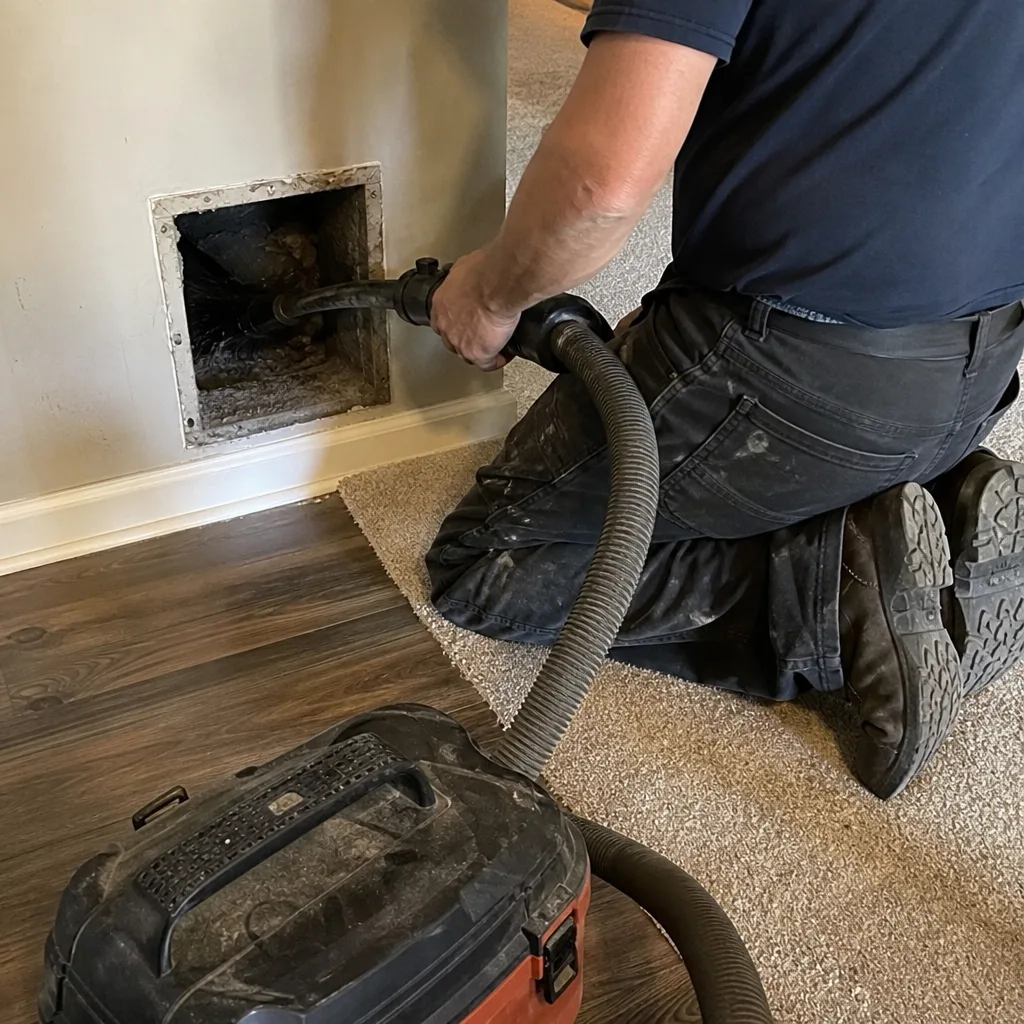 Before
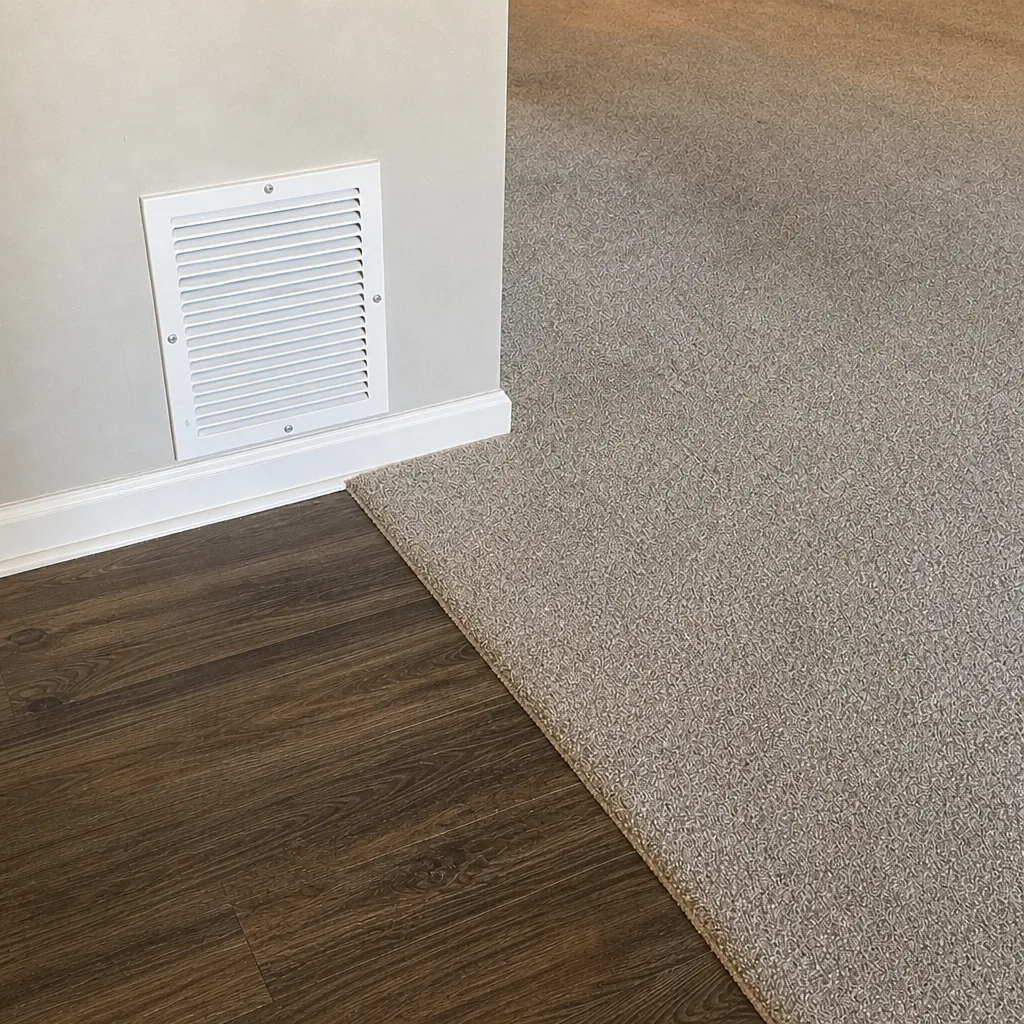 After
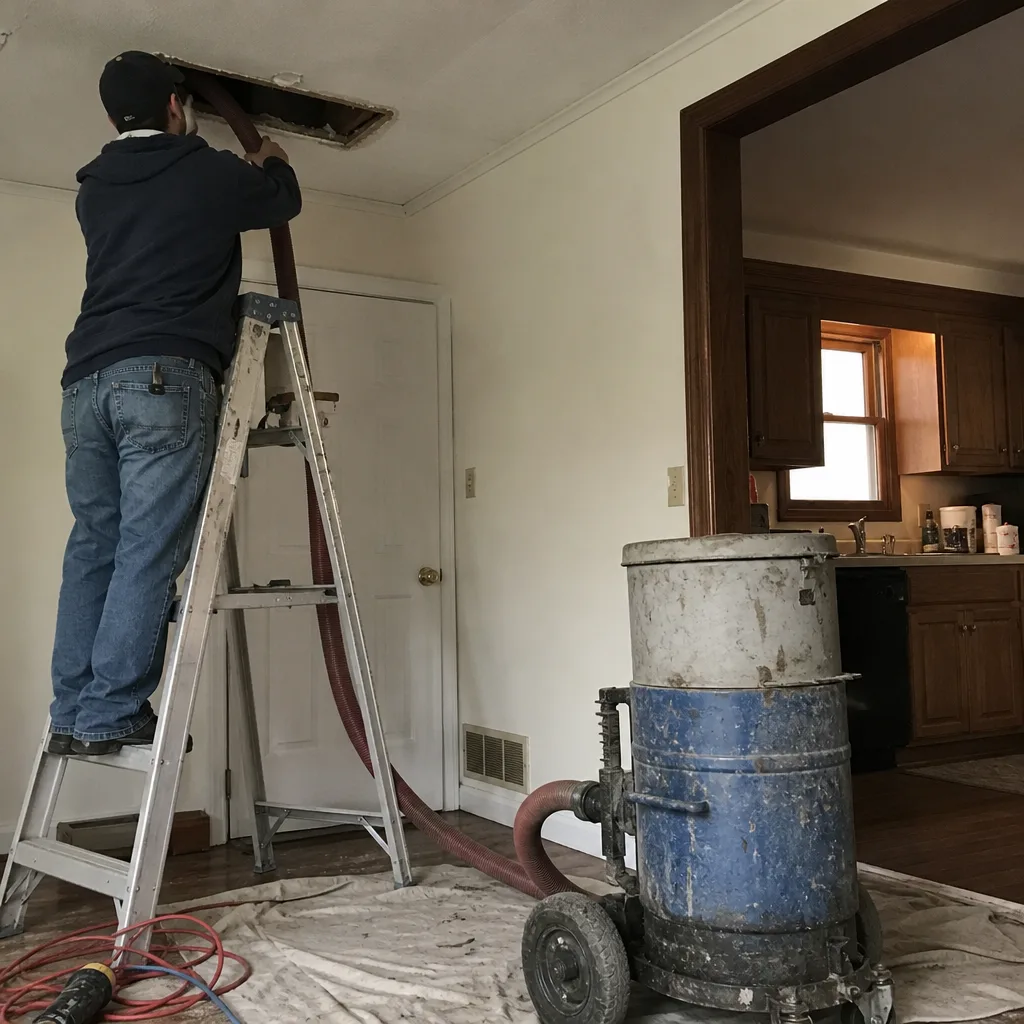 Before
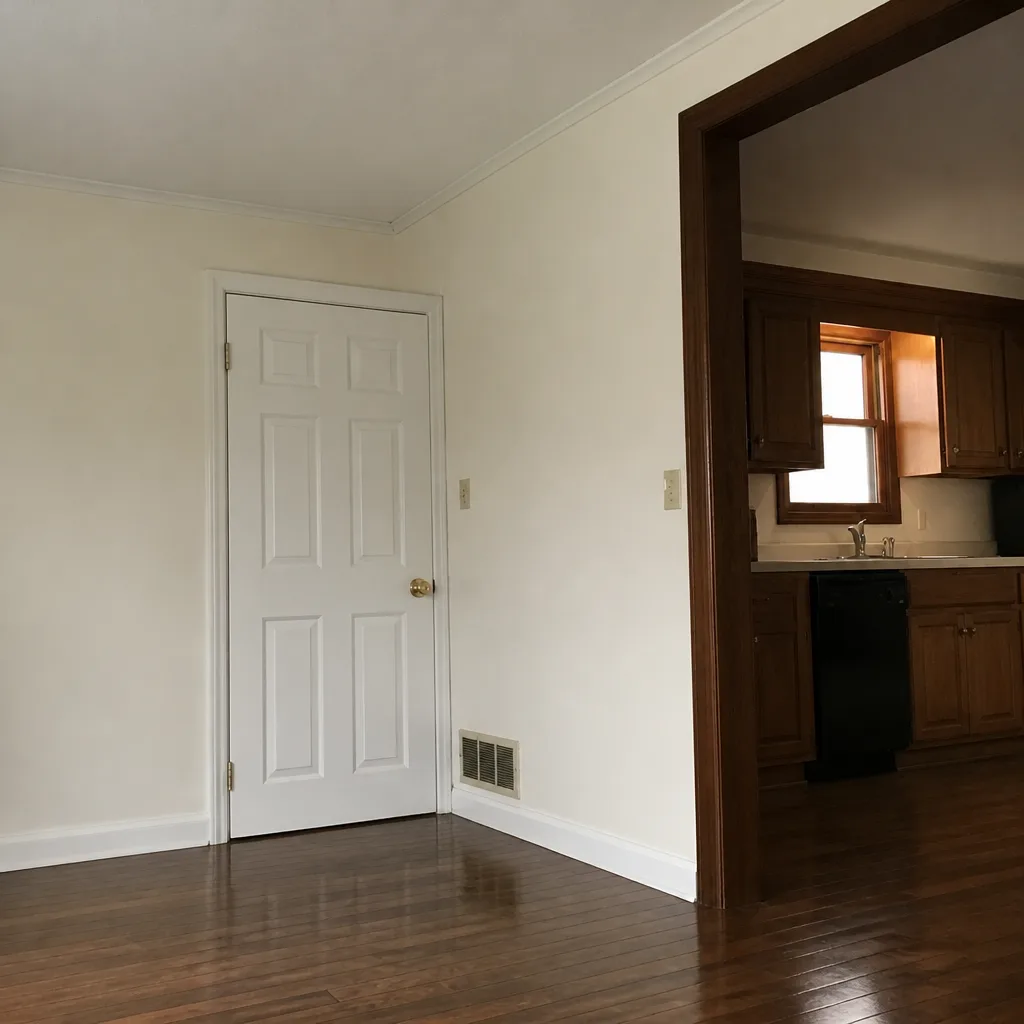 After
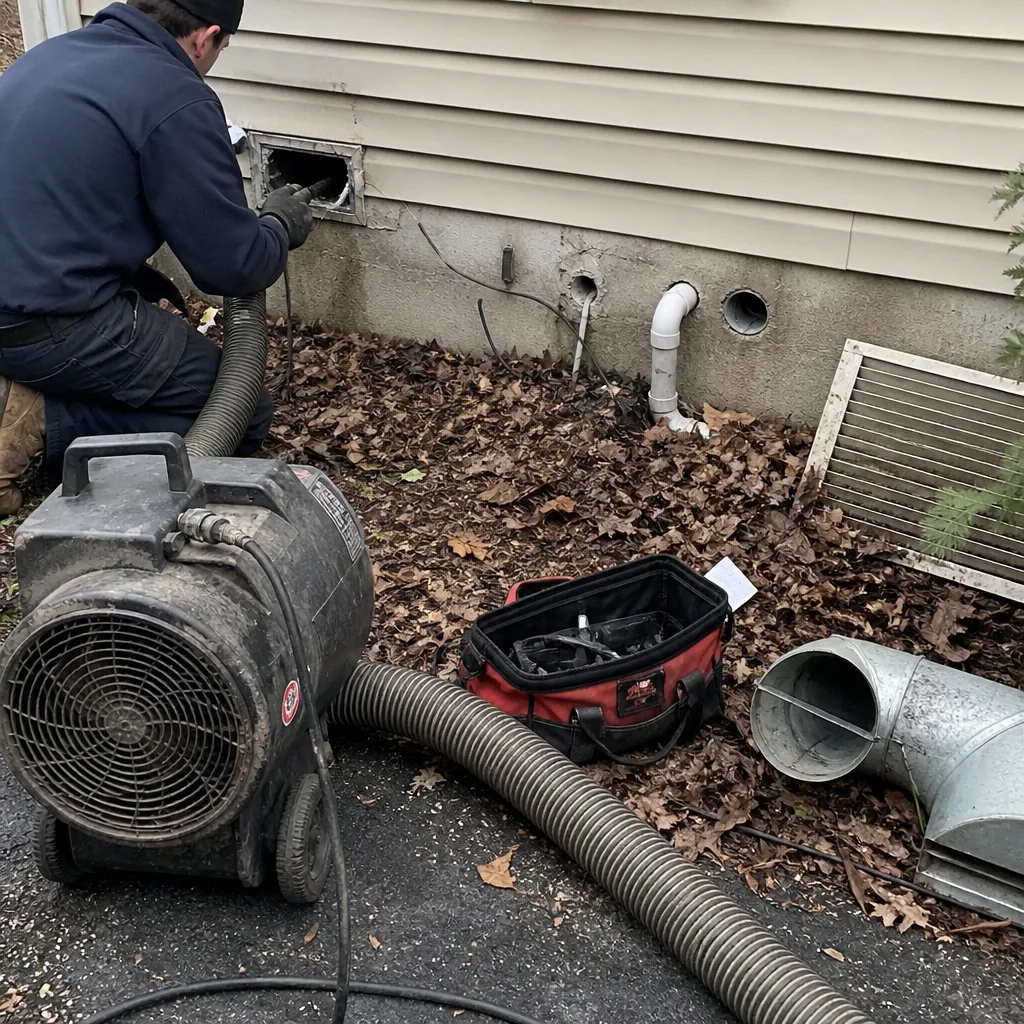 Before
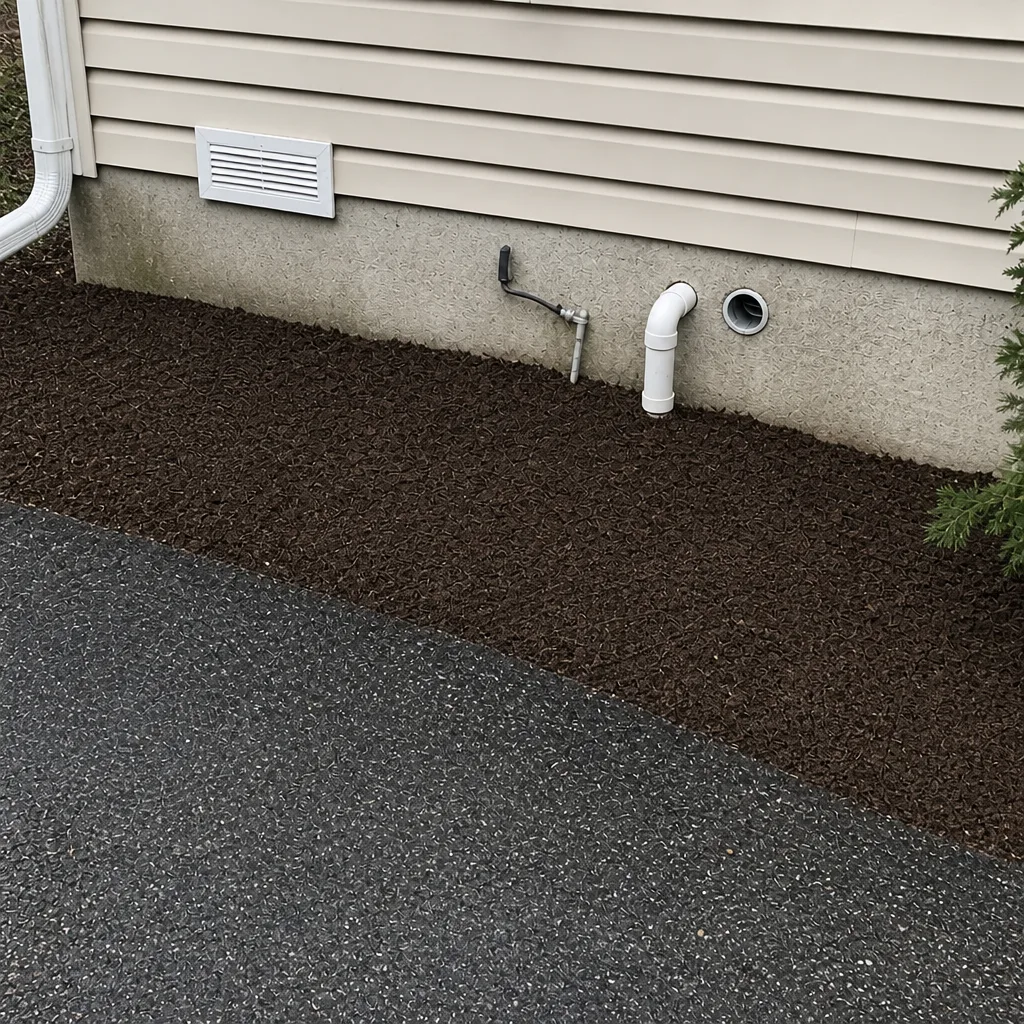 After
When to Call a Professional
Some situations warrant a professional assessment rather than a homeowner’s glance with a flashlight. If you’re buying a Carmel home and the inspection flagged ductwork, call for an assessment before closing. If you moved in recently and you don’t know the last time the ducts were cleaned, schedule a Duct Cleaning Carmel visit. If the system has hot and cold rooms that don’t match the thermostat, that’s a sign of an actual duct defect rather than dirt. If the dryer takes two cycles to dry a load, that’s a vent issue worth checking now. If a cleaning reveals a repair, the conversation about permits needs to happen before you say yes to the fix.
Duct Cleaning Carmel offers free estimates in Carmel – call (844) 834-5334. We answer 24/7. Fast dispatch from 7am to 7pm, Sunday through Friday. We use professional-grade equipment including Rotobrush, Nikro, and Abatement Technologies systems, so we can actually see what’s going on in the system rather than guessing.
Frequently Asked Questions
No. Routine air duct cleaning in Carmel does not require a building permit because it’s maintenance work on an existing system. Duct repairs and modifications – especially reroutes, new runs, or dryer vent installation – are the scope that can trigger a mechanical permit. Confirm with the City of Carmel building department before any repair that changes the duct layout. Call (844) 834-5334 for a free estimate – we’ll point out what we find and tell you whether the fix looks permit-required.
The City of Carmel building department has jurisdiction for work inside Carmel city limits. Hamilton County handles unincorporated areas and municipalities that don’t run their own permitting. Mechanical code requirements are similar across the county, but the permit process and the office you deal with differ. Ask the city directly for the specific answer on your address. Call (844) 834-5334 – estimates are free and we can walk you through what we normally see.
Often yes, but it usually requires re-inspection, which can mean opening walls or ceilings back up to expose the repair. The simpler path is confirming permit requirements before the work is done. A quick call to the city, logged with the repair record, is worth more than the retroactive process later. Call (844) 834-5334 for an exact quote on the cleaning or repair scope – estimates are free.
Yes. HOAs in newer Carmel subdivisions often have architectural review rules about what can be added or changed on exterior walls, and a new dryer vent termination is exactly the kind of thing those rules cover. Get both the building department clearance and the HOA approval in writing before scheduling the work. Call (844) 834-5334 – we can help you scope the work and get the estimate started.
Whole-system air duct cleaning in Carmel typically runs in a range based on the number of vents, the number of systems (one or two HVAC units), and how accessible the ductwork is. Ranges land generally between the low hundreds for a simple single-system home and the higher hundreds for larger two-system homes, with repair work priced separately based on scope. We give one flat price per system, agreed before work starts, so there’s no per-vent pricing surprise at the end. Call (844) 834-5334 – the estimate is free and you’ll see the number in writing.
Cheap quotes are often per-vent teaser pricing that balloons once the technician is on site and starts finding “additional work.” Real professional-grade equipment – Rotobrush, Nikro, Abatement Technologies HEPA units – costs more to run than a shop vacuum with a brush, and the cleaning that equipment delivers is what the price should reflect. Ask for a flat price per system before work begins and ask for before-and-after photos of your own ducts at the end. If a quote won’t give you both, that’s your answer. Call (844) 834-5334 for a written estimate with no per-vent pricing.
Ask for before-and-after photos of your own ducts, taken during the visit; a professional crew captures these by default. You should see the actual ductwork before the agitation and extraction and after, along with the invoice that documents what was done and where. That file is what matters if a repair comes up at resale. Call (844) 834-5334 to schedule a free estimate – we photograph everything as part of the standard process.
The Bottom Line
Air duct cleaning in Carmel is maintenance and generally doesn’t require a permit. Duct repairs, reroutes, and dryer vent modifications can require one, and those permits are the homeowner’s responsibility to confirm before work starts. Check with the City of Carmel building department for the specific scope, and check HOA guidelines when the work touches an exterior wall. Document every repair with photos, an invoice, and the permit record if one was pulled – the paper trail is what carries the repair through a future resale. For cleaning, dryer vent work, or a professional assessment of what your ducts actually need, we’re at (844) 834-5334.
Duct Cleaning Carmel works across Carmel with professional-grade equipment, offers Air Duct Repair alongside cleaning, and handles dryer vent work as a dedicated service because it’s a fire-safety issue, not an afterthought. We also work with Honeywell and Aprilaire air quality systems when filtration or fresh air equipment is part of the picture. Clean ducts. Repaired ducts. Safer dryer vents. We answer 24/7. Fast dispatch from 7am to 7pm, Sunday through Friday. Call (844) 834-5334 for a free estimate.
Written by the team at Duct Cleaning Carmel.