
Last updated November 14, 2026
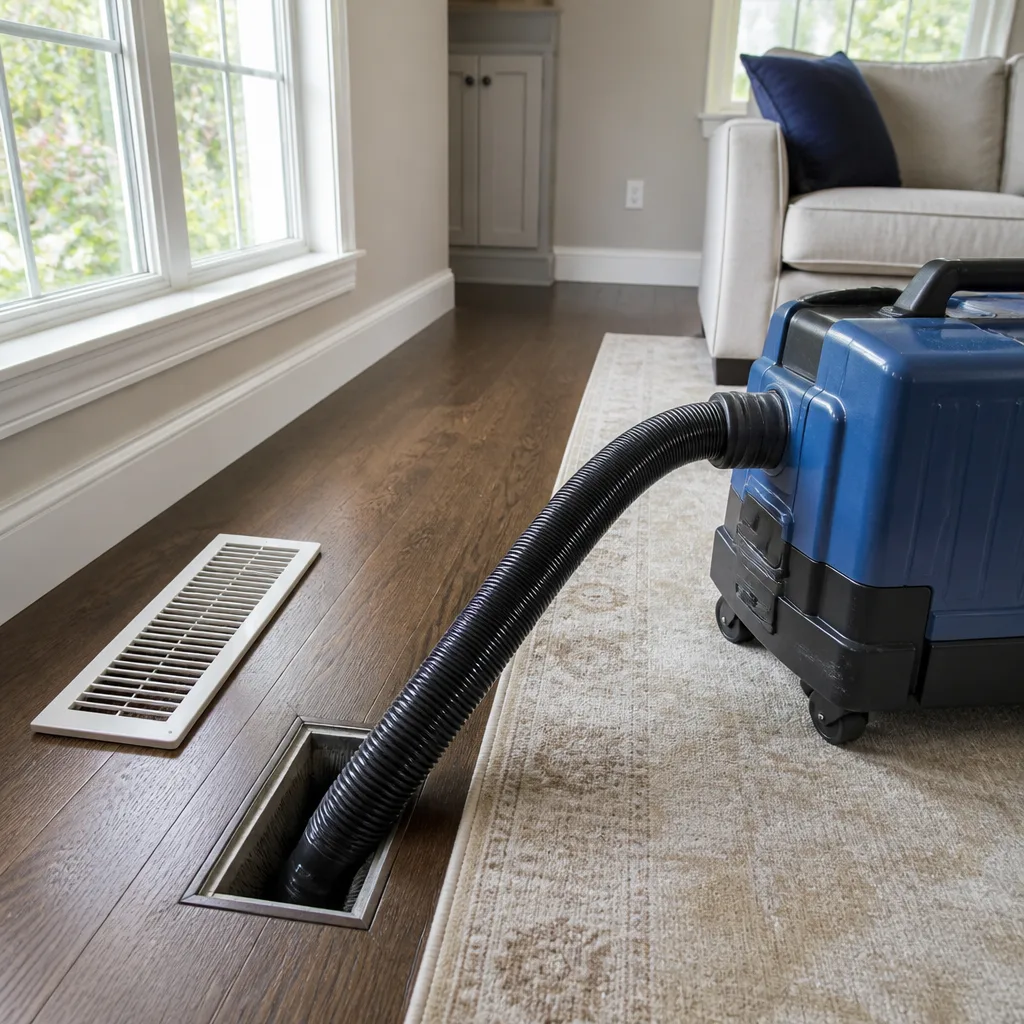 Whole-home duct cleaning
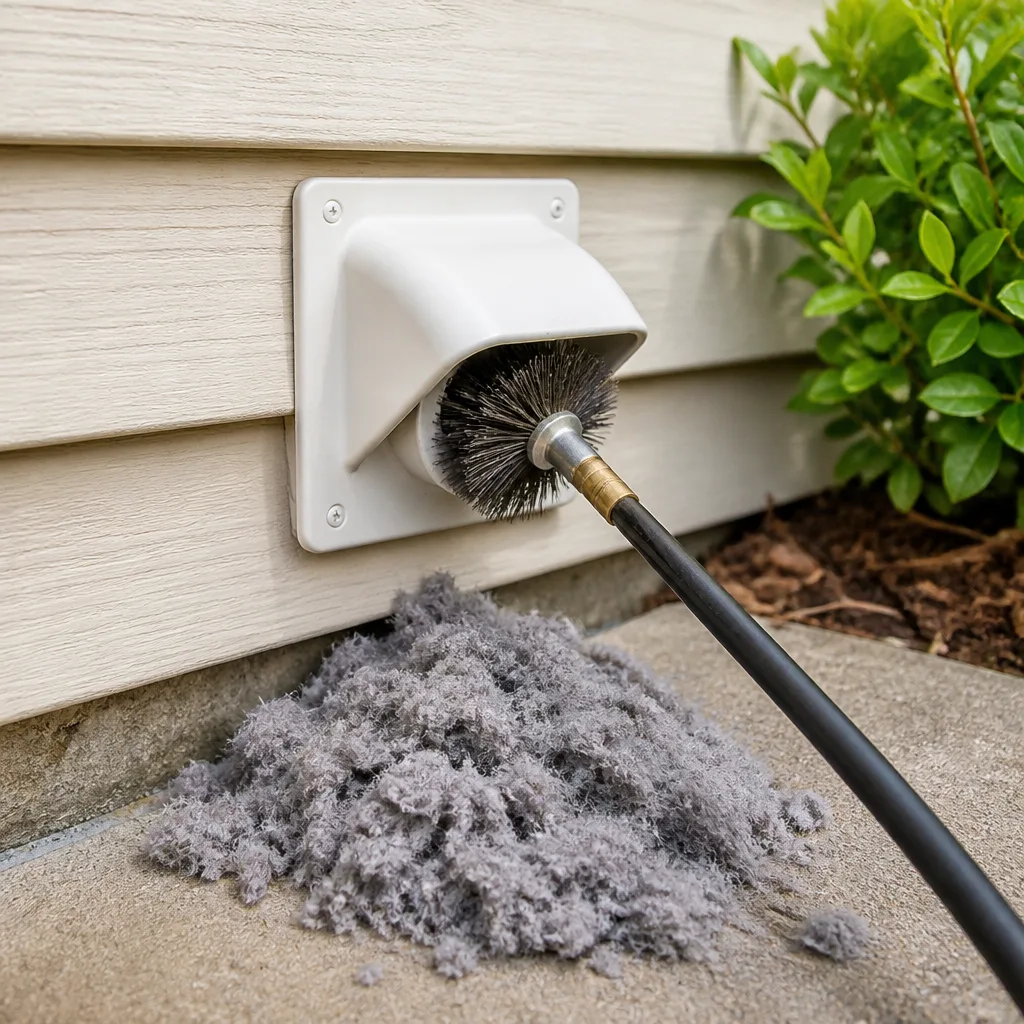 Dryer vent cleaning
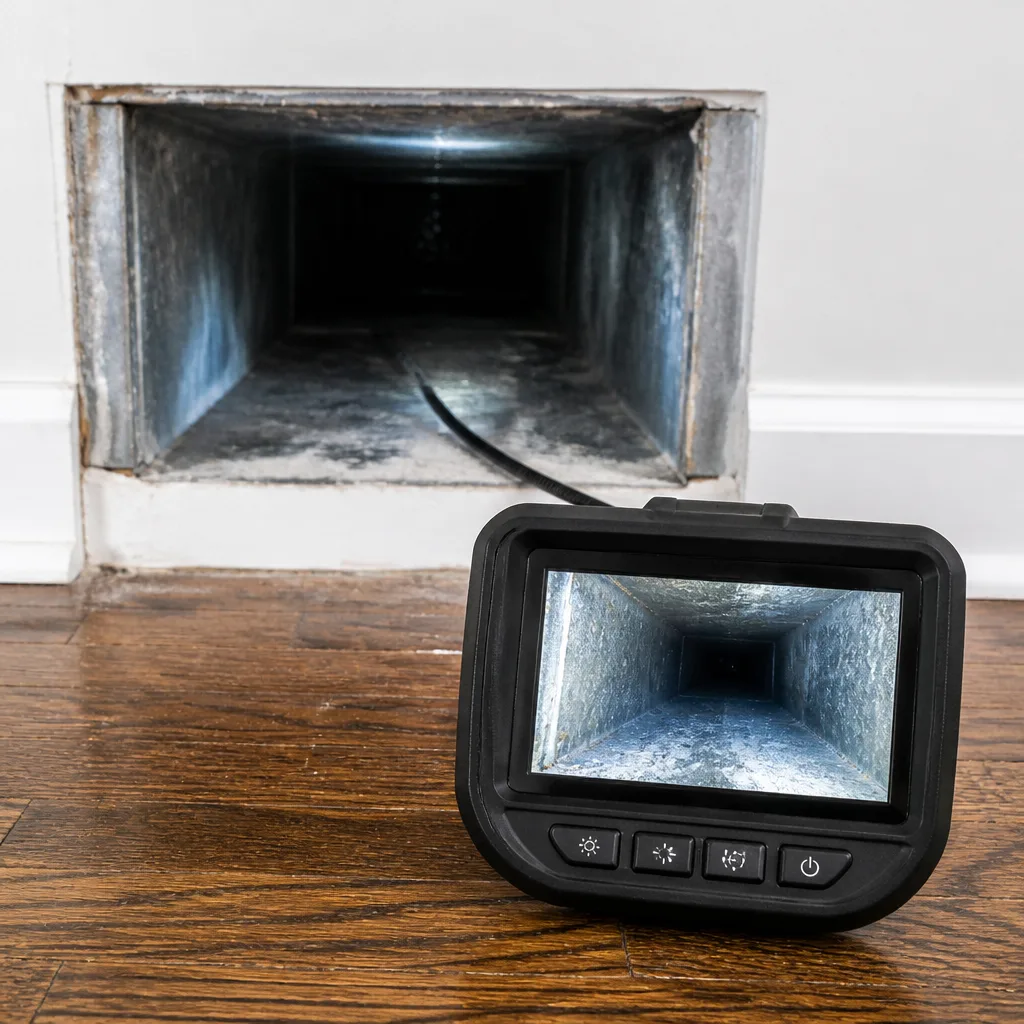 Camera inspection
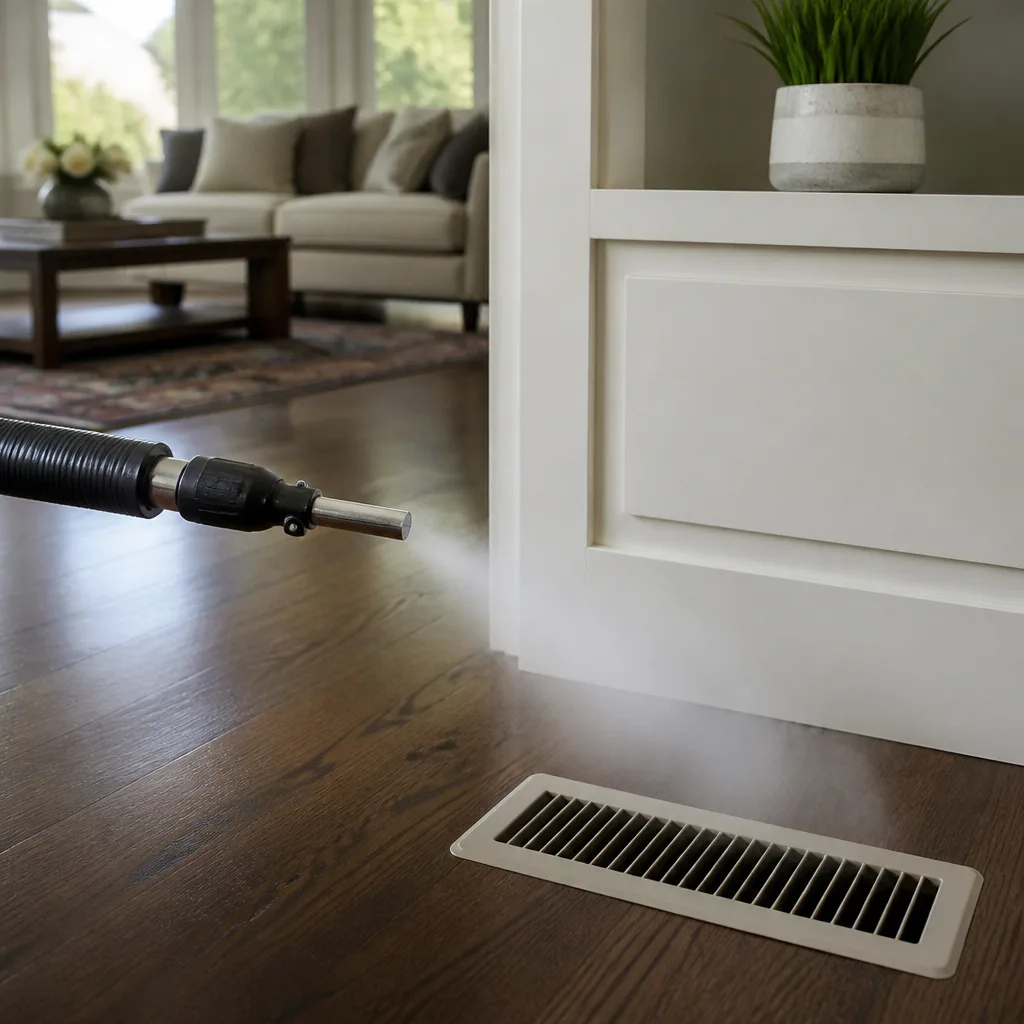 Sanitizing & deodorizing
Whole-system duct and dryer vent check with before-and-after photos - you see exactly what came out of your vents
That "$99 whole-house special" is a bait ad - the real number appears once they are in your hallway, or the "clean" is a shop-vac at the register. We photograph the inside of your ducts before and after instead.
Air Duct Cleaning Warning Signs: A Carmel Homeowner’s Reference Guide
A musty smell from your vents is an obvious warning sign. But rooms that never reach the thermostat setting in a correctly sized HVAC system are quietly telling you the same story about your ductwork, and most homeowners never connect those dots. Dust at a register is easy to see. Uneven heating, creeping energy bills, and short cycling are not, yet they often point to the same underlying problem inside the ducts. This guide teaches you to read the system-level signals, not just the surface clues, so you can tell whether your Carmel home needs cleaning, repair, or a closer look at the HVAC equipment itself.
Quick Answer
The main air duct cleaning warning signs are visible debris blowing from registers, musty or unusual odors, uneven room temperatures, rising energy bills with no other explanation, and visible dust trails around vents or the air handler. In dryer vents, watch for longer drying cycles and a vent hood that doesn’t open fully. Persistent signs usually mean the ducts need professional attention, and some point to a repair or an HVAC evaluation rather than cleaning alone.
Styles & brands we work with
- Whole-home duct cleaning
- Dryer vent cleaning
- Camera inspection
- Sanitizing & deodorizing
Table of Contents
- The Obvious Signs and What They Hide
- Performance Signals: Uneven Rooms and Rising Bills
- Reading Odor Types: Musty, Burning, and Chemical
- What Register Debris Really Tells You
- Dryer Vent Warning Signs Most Lists Miss
- The Triage Framework: Clean, Repair, or Evaluate?
- How a Professional Duct Cleaning Actually Works
- When to Call a Professional
The Obvious Signs and What They Hide
Visible dust is where almost every warning-sign list starts, and for good reason. It’s the one clue you can see without thinking. But the obvious signs tell you something is happening without telling you where. That distinction matters in Carmel, where a lot of housing was built during a stretch of rapid growth and where duct layouts vary widely from one subdivision to the next. Two homes a street apart can have very different duct configurations, and the same puff of dust at a register can mean different things in each.
Here’s what to note on the surface, and what each sign can conceal:
- Dust puffs from a register when the system kicks on. This can be loose debris right at the vent, but it can also mean the trunk line feeding that room has never been cleaned and is shedding material downstream.
- Dark rings or streaks around the register frame. Often a sign of air seeping past a poorly sealed boot, pulling attic or wall-cavity air into the supply stream.
- Dust settling faster on one side of a room. Usually points to airflow imbalance rather than dirt alone, which is a system-level issue.
- Visible fuzz or lint on the grille. Can be surface buildup, but when it reappears within days of cleaning, it’s coming from upstream.
The reason surface clues matter is that they give you a starting point, not a verdict. A dusty register is evidence. The question worth asking is whether the dust is being produced locally at the grille or carried from somewhere deeper in the system. That question is what the rest of this guide answers. If you’re ready to have someone look, Duct Cleaning Carmel starts with an inspection and a written estimate before any work begins.
Performance Signals: Uneven Rooms and Rising Bills
Uneven temperatures are the most under-read warning sign in home HVAC. When one bedroom runs several degrees behind the rest of the house, or when the upstairs never quite catches up on a hot afternoon, many homeowners assume the system is undersized or old. Sometimes that’s true. Often it isn’t. Restricted airflow from accumulated debris, crushed flex runs, or disconnected joints can produce exactly the same symptom in a correctly sized system. That’s the connection most warning-sign lists miss, and it’s the one worth understanding.
The signals to watch for, and what they suggest about your ducts:
- A room that never reaches the set temperature. Airflow to that room is being lost somewhere along the run, from buildup or from a physical restriction.
- Energy bills that creep up with no change in use. When the blower works harder to push air through a restricted system, it runs longer to reach the same endpoint.
- Short cycling. The system starts and stops frequently because it can’t move air efficiently through the ductwork, so it overheats or under-delivers on each cycle.
- Weak airflow at registers that used to be strong. Point it toward the branch lines feeding those rooms.
- Whistling or whooshing at grilles. Often a sign of pressure imbalance, which can come from restricted or leaking ducts.
The most useful test is simple. If a room is consistently colder or warmer than its neighbors regardless of the season, and the thermostat and HVAC equipment check out, the ducts deserve a closer look. In our experience, a fair number of Carmel homes have at least one run that’s been pinched, disconnected, or clogged since construction. Cleaning can restore airflow when the problem is buildup. When the problem is physical damage, that’s a repair issue, and knowing which is which saves money.
Reading Odor Types: Musty, Burning, and Chemical
Not all odors from your vents mean the same thing. Treating every smell as “dirty ducts” is where homeowners get led astray. The character of the odor tells you what’s producing it, and different sources call for different responses. Learning to sort them is one of the most useful diagnostic skills a homeowner can develop.
Musty or earthy smells
A musty smell usually points to biological growth, which needs moisture to take hold. In Carmel’s humid summers and shoulder seasons, condensation inside ducts, near the air handler, or on cool interior surfaces can create the conditions for it. If your house smells like a damp basement when the fan runs, there’s moisture and likely growth somewhere in the system.
Burning or hot smells
Burning odors need immediate attention. Loose debris resting near the heat exchanger can smell like something is scorching when the system heats up, and so can an aging blower motor. Treat any burning smell as a reason to shut the system down and have it looked at. This is not a cleaning matter you sit on.
Chemical or plastic smells
A chemical smell, particularly when the system first comes on after sitting idle, often points to off-gassing from materials inside the ducts, such as new components, sealants, or filter media. If it’s persistent and isn’t tied to a recent renovation, it’s worth investigating.
What to do with the information
- Note the timing. Does the smell appear only when the fan runs, or all the time?
- Rule out the obvious. Recent painting, new furniture, or a renovation can make any house smell off for a while.
- Shut down for burning smells. Have the system evaluated before running it again.
- Book an inspection for musty or persistent chemical odors. A trained technician can find where the source actually is.
If a musty smell is part of the picture, air duct cleaning combined with a moisture investigation is usually where to start.
What Register Debris Really Tells You
Here’s the distinction most articles skip. Debris at a register is often not a local dirt problem. It’s a report from further upstream. Think of each register as a window into the trunk and branch lines feeding it. What you see at the grille is a sample of what’s traveling through the system and settling where the air slows down.
That has real consequences for what you should do about it:
- Surface contamination only (dust that wipes off the grille and doesn’t return quickly) may be handled with a filter change and a light register cleaning.
- Debris that returns within days means the source is upstream and needs the whole system addressed, not just the vent.
- Debris that looks like construction material (drywall dust, sawdust, fiberglass fibers) usually means the ducts were never properly cleaned after a renovation, or that an unsealed return is pulling from an attic or unfinished space.
- Debris that collects mainly in one room points to a specific branch, which can be a cleaning issue or a repair issue depending on what the technician finds.
The practical takeaway is this: if you clean the regs and the debris comes back, cleaning the register again won’t help. You’re looking at a system-wide condition. Professional-grade equipment matters here, which is why we use Rotobrush and Nikro systems rather than a shop-vac-and-brush setup. The right tools reach into the entire duct run and pull material back to a single collection point, rather than redistributing it. When you call for a look, ask what equipment the contractor uses. It tells you a lot about the process you’re paying for.
Dryer Vent Warning Signs Most Lists Miss
Dryer vents are a separate system from your HVAC ducts, but they carry a genuine fire risk that standalone duct cleaners often skip. The signs are easy to overlook because they masquerade as appliance problems. If your dryer seems slow, or your clothes feel damp when they come out, the dryer itself may be fine and the vent may be the real story.
Watch for these signals:
- Drying cycles that take noticeably longer. If loads that used to finish in one cycle now need two, restricted airflow is a common cause.
- Clothes that feel hot but still damp. That’s often trapped moisture from poor exhaust, not a weak appliance.
- The exterior vent hood not opening fully when the dryer runs, or not opening at all.
- Lint accumulating around the dryer door seal or behind the unit, which suggests lint is escaping the air path rather than being carried out.
- The outside of the dryer feeling unusually hot during a cycle.
- A burning or scorched smell near the dryer. Treat this as urgent; stop using the dryer until the vent is checked.
The fire logic is straightforward. Lint is fuel, and a clogged vent lets it collect in a concentrated, hot space. A dedicated dryer vent cleaning service clears the full run from the appliance to the exterior hood, not just the visible portion behind the dryer. If you’re in a Carmel home where the laundry sits in the middle of the floor plan and the vent run is long, that distance matters; longer runs trap more lint and are harder to keep clear. This is a safety service worth doing on a schedule, not just when something seems wrong.
The Triage Framework: Clean, Repair, or Evaluate?
The hardest part of reading warning signs isn’t spotting them. It’s knowing what each one calls for. Cleaning, repair, and HVAC evaluation are three different jobs, and sending the wrong one to a problem wastes time and money. Here’s a framework we use to sort signs into the right category.
Signs that point to cleaning
- Dust returning to registers within days with no other symptoms
- Musty smell tied to the fan running
- Visible buildup in the return plenum or at the air handler
- Dryer vent issues that are purely about lint and airflow
Signs that point to duct repair
- A single room that never heats or cools correctly regardless of season
- Whistling or whooshing concentrated at one grille
- Suspected disconnected or crushed runs (often found during a cleaning inspection)
- Air leaking from joints you can see or feel in accessible areas
Signs that point to HVAC evaluation
- Burning smells (shut the system down first)
- Short cycling that continues after the ducts are cleaned
- A system that can’t keep up in mild weather
- Any sign of refrigerant or combustion issue
The value of this framework is that it keeps you from paying for the wrong service. On a professional cleaning visit, if a technician finds a crushed or disconnected run, the right response is to fix it then, not hand you a second appointment with a different contractor. That’s why a company that handles air duct repair alongside cleaning is worth choosing. Problems get found and fixed on the same visit instead of sitting open for weeks.
How a Professional Duct Cleaning Actually Works
A professional cleaning visit is less mysterious than it sounds, and knowing what a good process looks like makes it easier to hold a contractor to it. Here’s how a thorough job is normally approached.
- Inspection first. The technician checks the system layout, the air handler, the returns, and any accessible runs, then talks through what they find before any work starts.
- Containment and negative pressure. The system is put under negative pressure so debris is pulled toward a collection point rather than pushed into living spaces.
- Mechanical agitation. Professional-grade equipment, like the Rotobrush and Nikro systems we use, agitates and dislodges material from the duct walls throughout the run.
- HEPA-level filtration. Abatement Technologies equipment captures fine particles during the process, which is what separates real contaminant control from a blow-and-go operation.
- Verification. Before-and-after photos of the inside of the ducts let you see what was removed and confirm the work was actually done.
- Optional protective treatment. A Guardsman protective treatment can be applied after cleaning to slow the return of buildup.
- Follow-up on air quality. If your home uses Honeywell or Aprilaire filtration or humidification, the technician can check it while the system is open and talk through what would keep the system cleaner longer.
The process should also be transparent about price. A fair quote is one flat price for the system, agreed before work starts, not a per-vent price that climbs as the technician counts more registers. If a contractor won’t put a total in writing up front, that’s a sign to walk. If your ducts need air duct repair as well, that should be quoted as its own line item, not folded into the cleaning price after the fact.
Common Mistakes to Avoid
- Treating every sign as a cleaning problem. Uneven temperatures and whistling grilles usually point to repair, and a cleaning alone won’t fix them. Match the sign to the right service before you book.
- Cleaning only the visible vents. A grille-cleaning service that doesn’t touch the duct run behind it will leave the source untouched and the debris back within weeks.
- Ignoring dryer vent signs as an appliance problem. Slow drying and a hood that doesn’t open fully are vent issues, and they’re a fire concern. Don’t defer them.
- Choosing a contractor on price per vent alone. Per-vent pricing is how a small quote turns into a big invoice. Ask for one flat price per system in writing.
- Skipping the moisture question. In Carmel’s humid months, a musty smell is a moisture problem until ruled out. Cleaning without addressing the cause invites the problem back.
- Assuming short cycling is an HVAC failure. Restricted ducts can cause the same symptom. Have the ducts ruled out before you replace equipment.
- No before-and-after photos. If a contractor can’t show you what was removed, you have no way to know the work happened.
See the difference
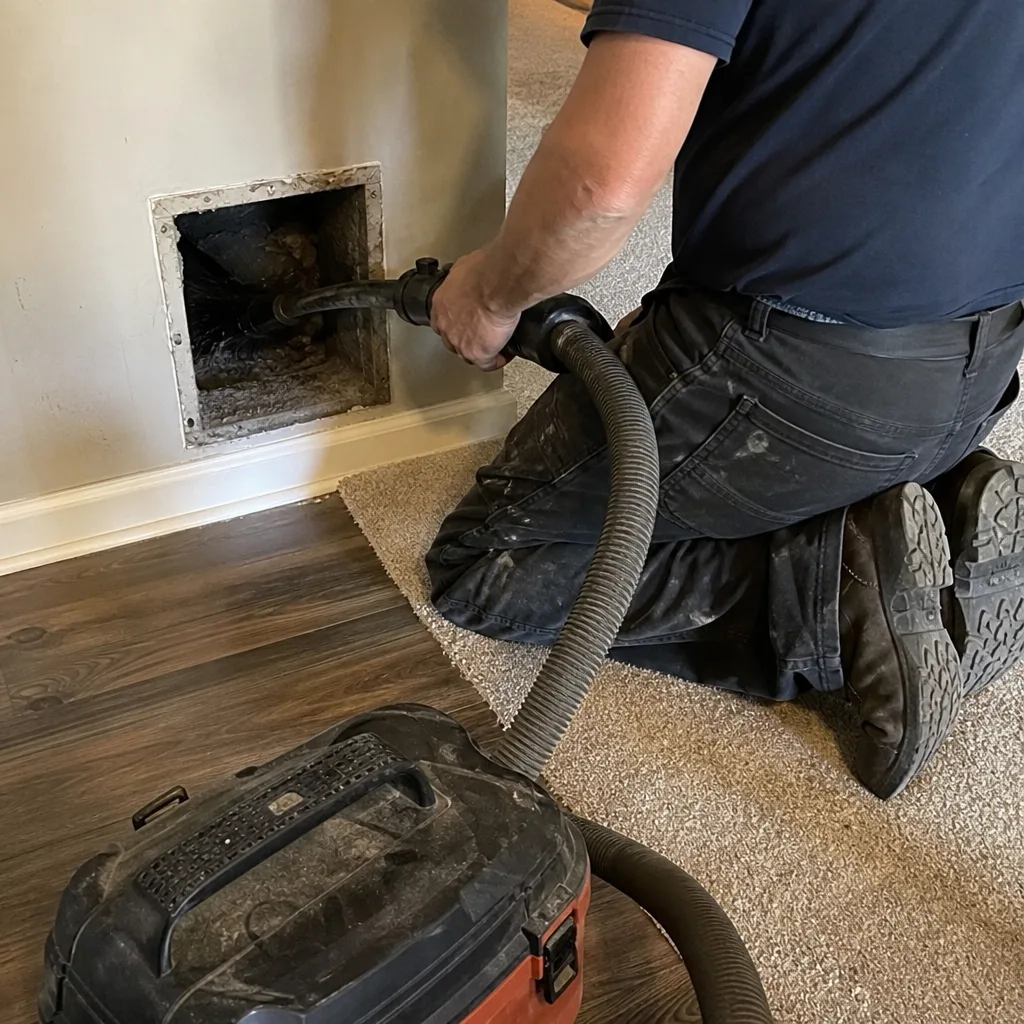 Before
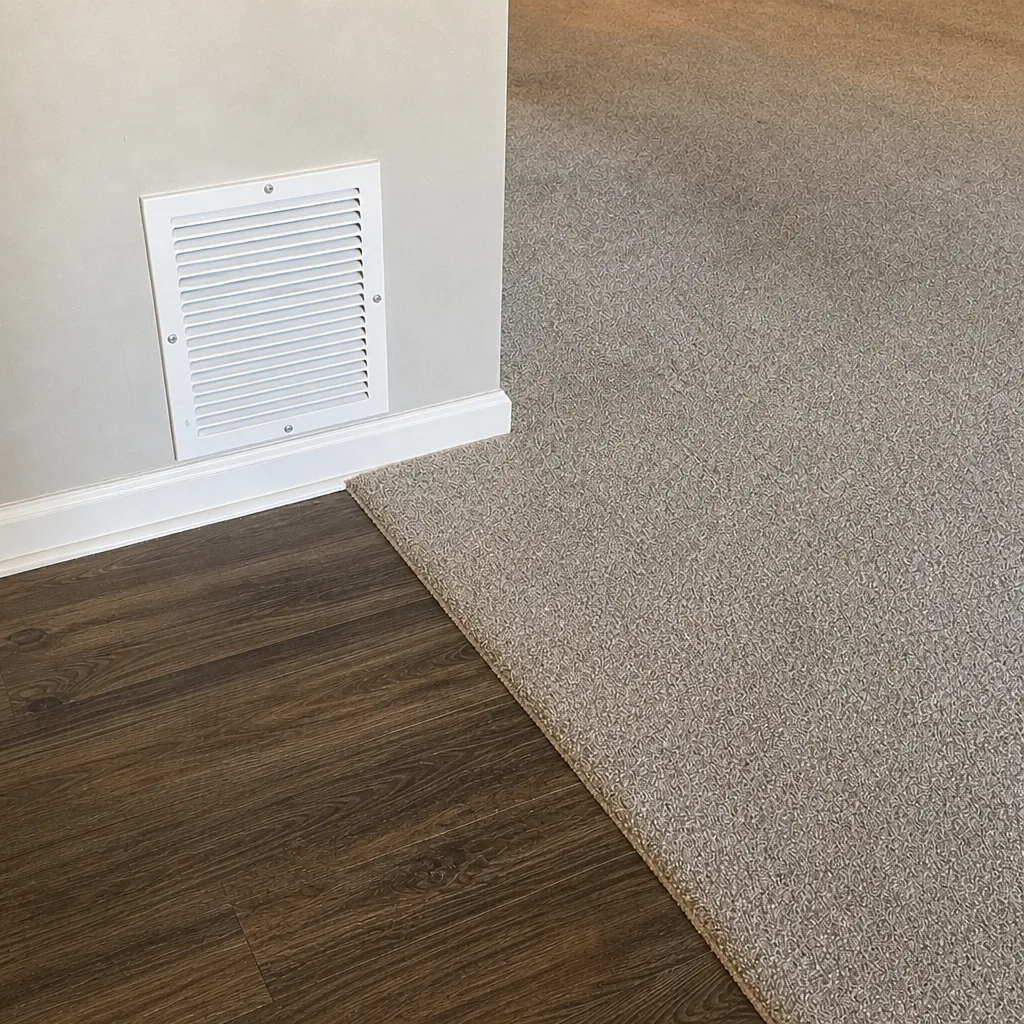 After
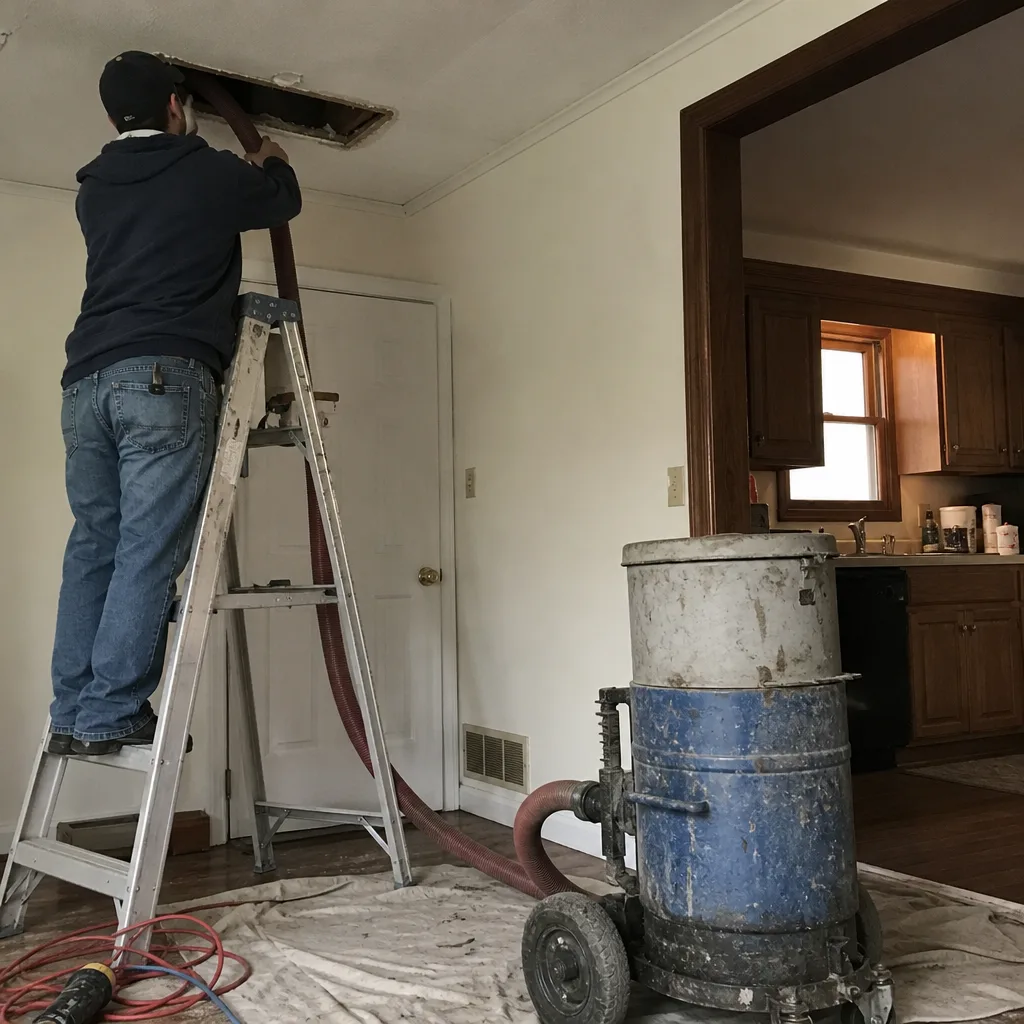 Before
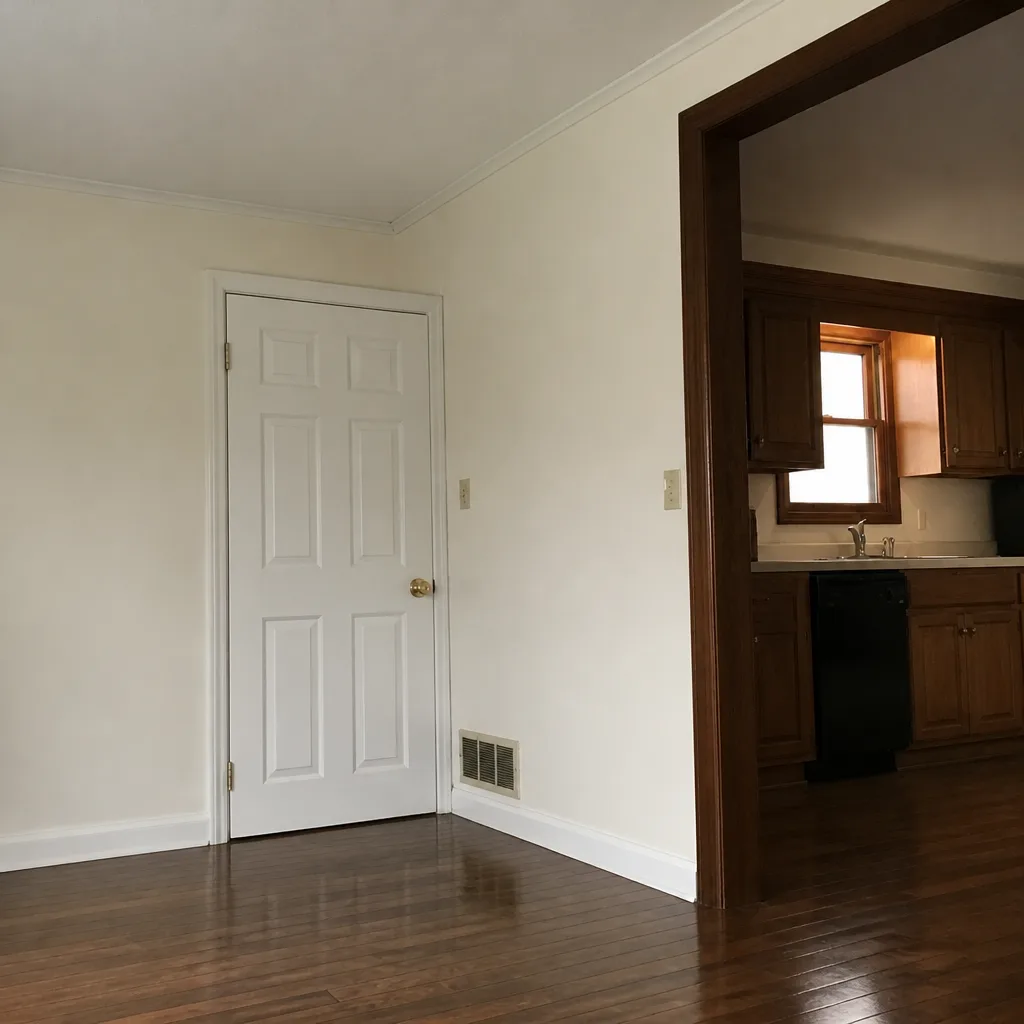 After
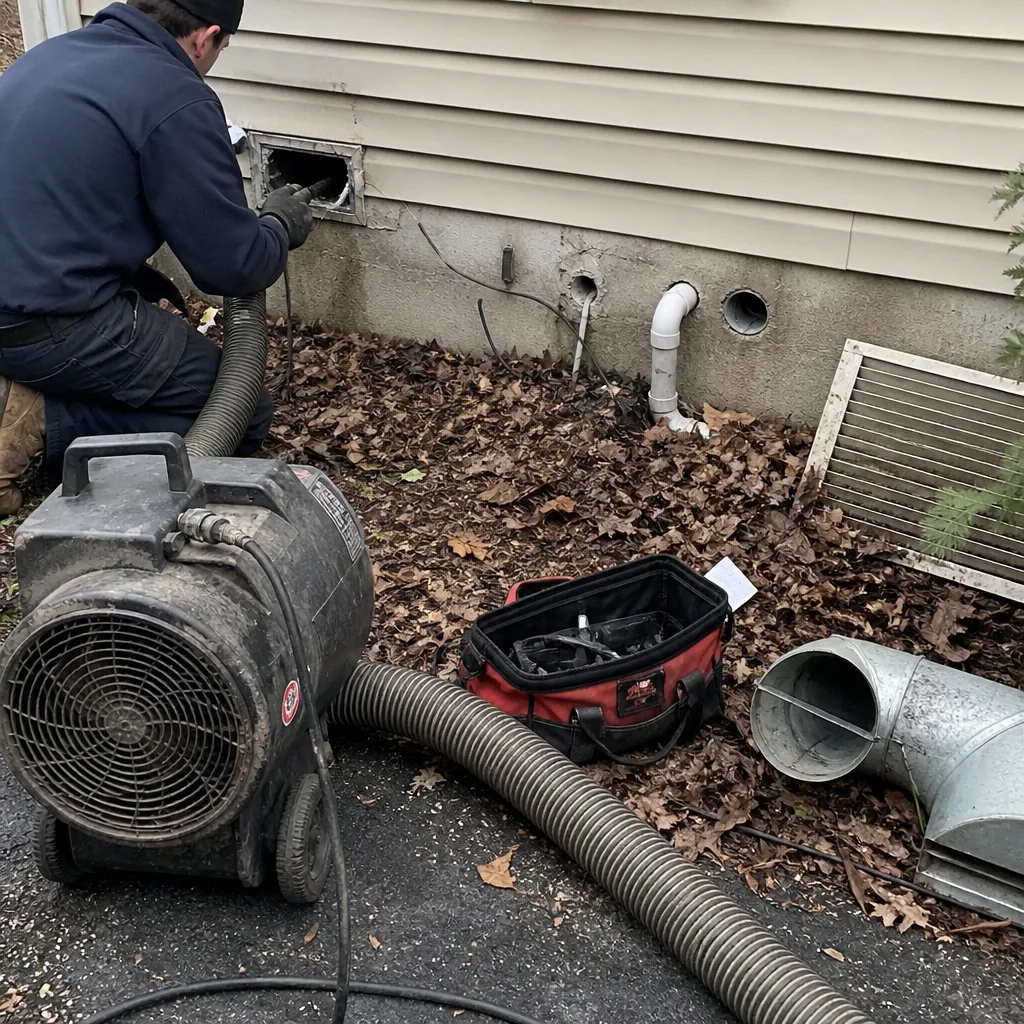 Before
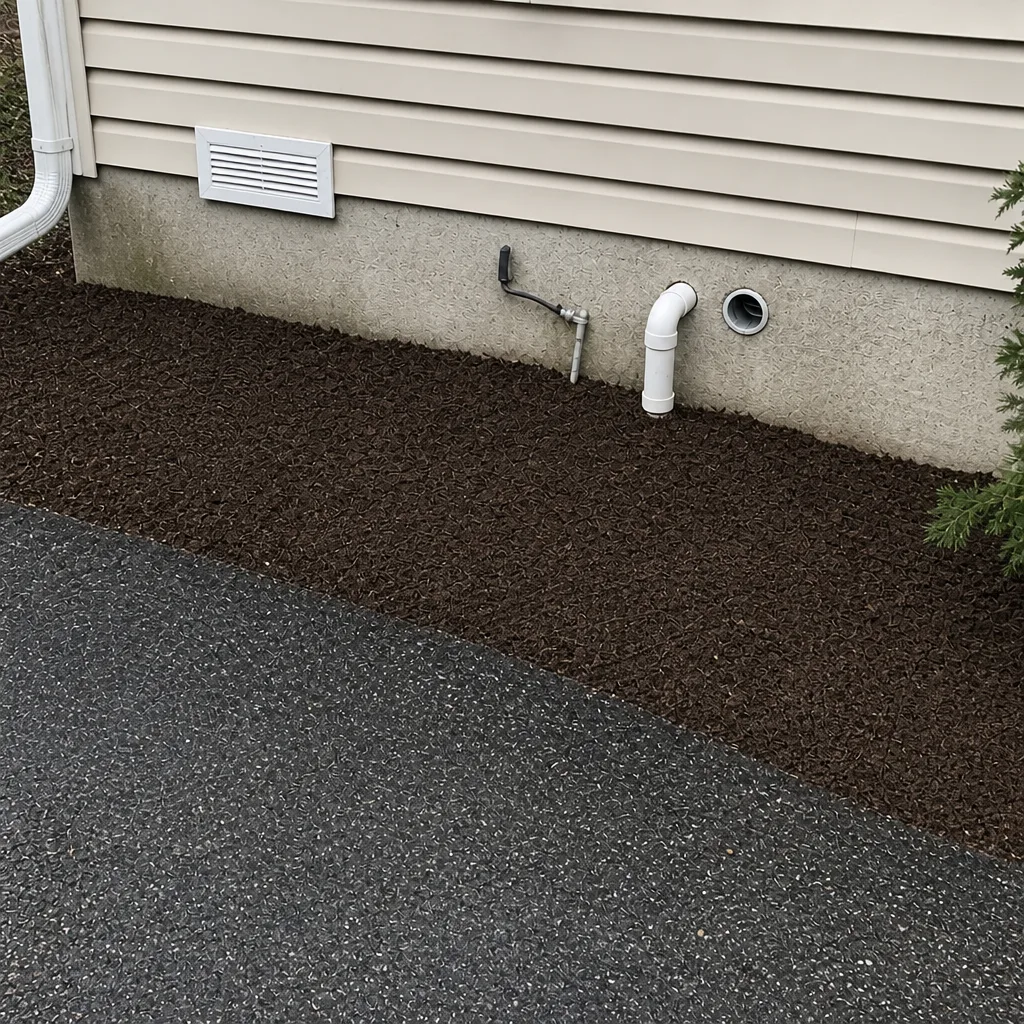 After
When to Call a Professional
Some warning signs are worth watching for a while. Others are worth calling about now. Call a professional when dust returns to your registers within days of cleaning, when a room never reaches temperature despite a working system, when you smell anything burning, when your energy bills rise without explanation, or when your dryer takes twice as long as it used to. Those scenarios point to conditions a homeowner can’t see and a shop vacuum can’t fix. Duct Cleaning Carmel offers free estimates in Carmel, with a written price per system agreed before any work begins, and before-and-after photos so you can confirm what was done. Call (844) 834-5334. We answer 24/7. Fast dispatch from 7am to 7pm, Sunday through Friday.
Frequently Asked Questions
The earliest reliable signs are dust returning to registers within days of being wiped, a musty smell when the fan runs, and a room that never reaches the set temperature. Visible debris at a vent is a clue, but it’s the recurrence and the performance symptoms that point to a real problem.
A typical professional air duct cleaning in the Carmel area is priced per system, not per vent, and the exact number depends on the size and layout of your ducts. We give one flat price in a written estimate before any work starts, plus a separate line for repair if one is needed. Call (844) 834-5334 for an exact quote; estimates are free.
A low teaser price often becomes a much larger invoice once the technician sees how many vents or runs your system has. The other gap is equipment: a shop-vac-based setup and a Rotobrush or Nikro system with Abatement Technologies filtration are not the same job. Ask what equipment is used and whether the price is flat per system before you book. Call (844) 834-5334 for a straight answer on your system.
Ask for before-and-after photos of the inside of your ducts. A professional cleaning visit should include them as standard, and they show you what was removed. That documentation is the clearest proof the ducts were actually cleaned and not just surface-wiped. Call (844) 834-5334 to schedule an estimate and see the process.
Yes. Restricted airflow from buildup, or a crushed or disconnected run, can leave a room under-served even when the system is correctly sized. That’s why uneven temperatures are a duct performance signal and not only an HVAC problem. A cleaning inspection tells you which one you’re facing.
Dryer vents carry real fire risk, which makes them a safety service rather than a comfort one. Slow drying, a hood that doesn’t open fully, and lint around the door seal are the signs to watch. We treat dryer vent cleaning as its own dedicated service and clear the full run to the exterior. Call (844) 834-5334 for an estimate.
The Bottom Line
The signs worth your attention aren’t only the ones you can see at the register. Uneven rooms, rising bills, short cycling, and the character of an odor tell you more about your ducts than surface dust does. Read them as system-level signals, sort them into cleaning, repair, or HVAC evaluation, and you’ll avoid paying for the wrong service. In Carmel, our technicians have up to 12 years of experience reading exactly these signals, and we quote one flat price per system in writing before work starts. Call (844) 834-5334 for a free estimate.
Written by the team at Duct Cleaning Carmel.
When should I clean my ducts?
Clean when the signs justify it, not on a fixed schedule alone. Visible debris that returns, musty odors, or a recent renovation are the usual triggers. A cleaning inspection will tell you whether your system actually needs it.
Can cleaning fix a musty smell?
Cleaning removes the material that holds moisture, but if the underlying dampness is still there, the smell can return. Address the moisture source and the cleaned ducts stay clean far longer.
Do you repair ducts as well as clean them?
Yes. If a crushed or disconnected run is found during cleaning, we can fix it on the same visit rather than sending you to a second contractor. Repair is quoted separately and clearly in the estimate.