
Last updated November 14, 2026
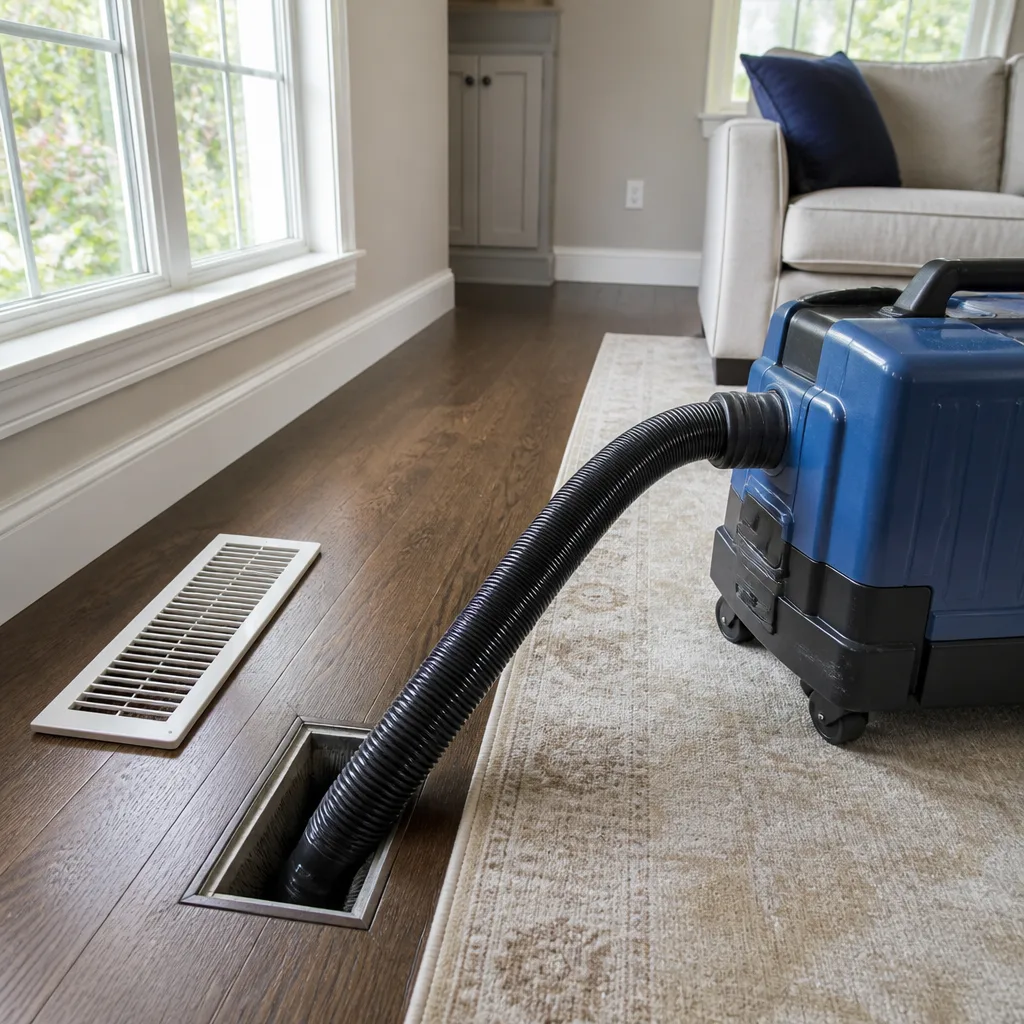 Whole-home duct cleaning
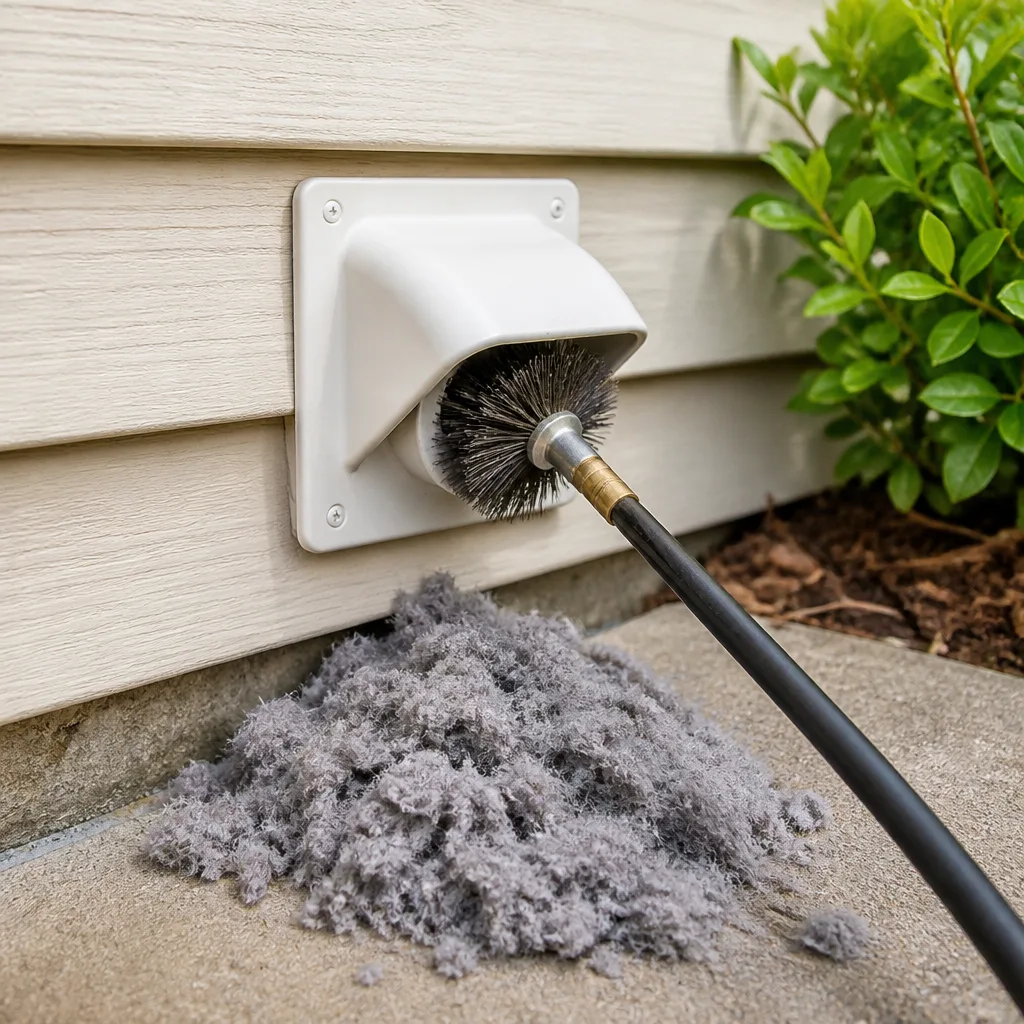 Dryer vent cleaning
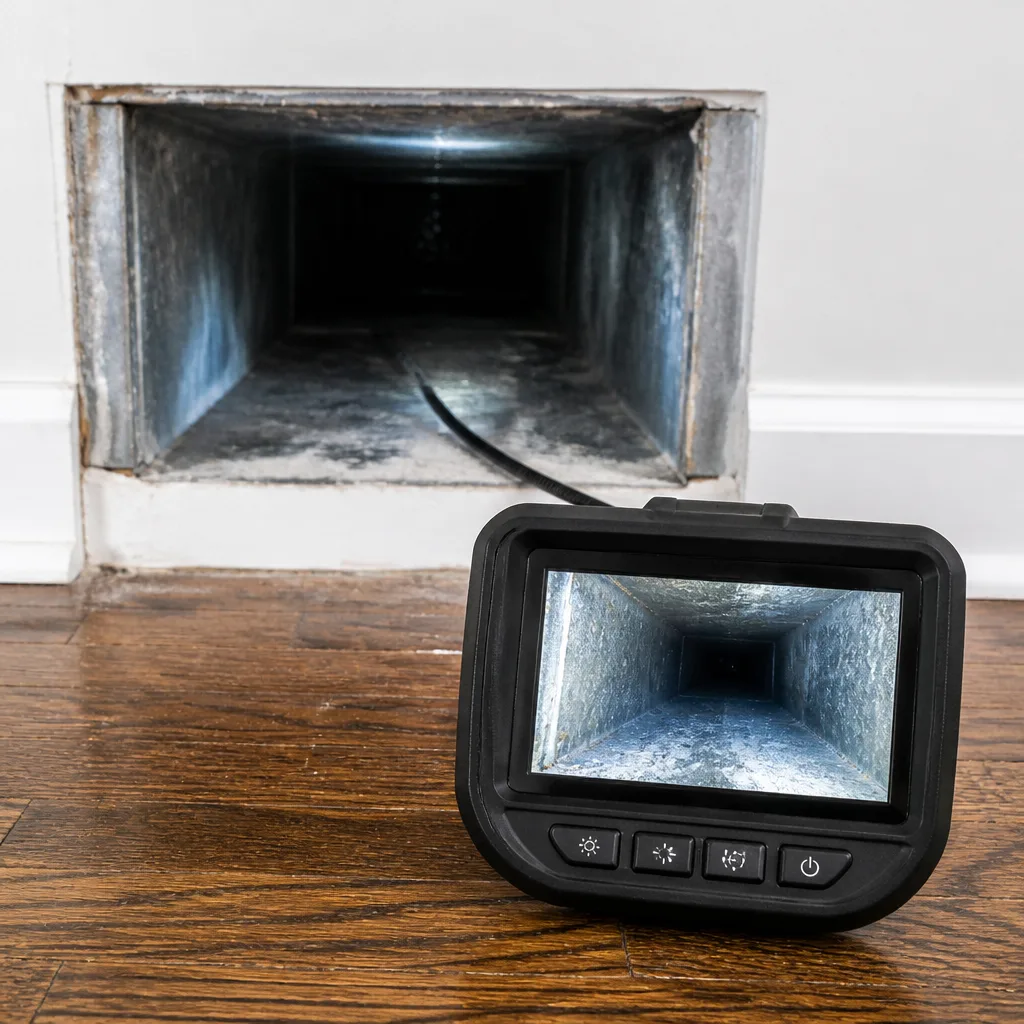 Camera inspection
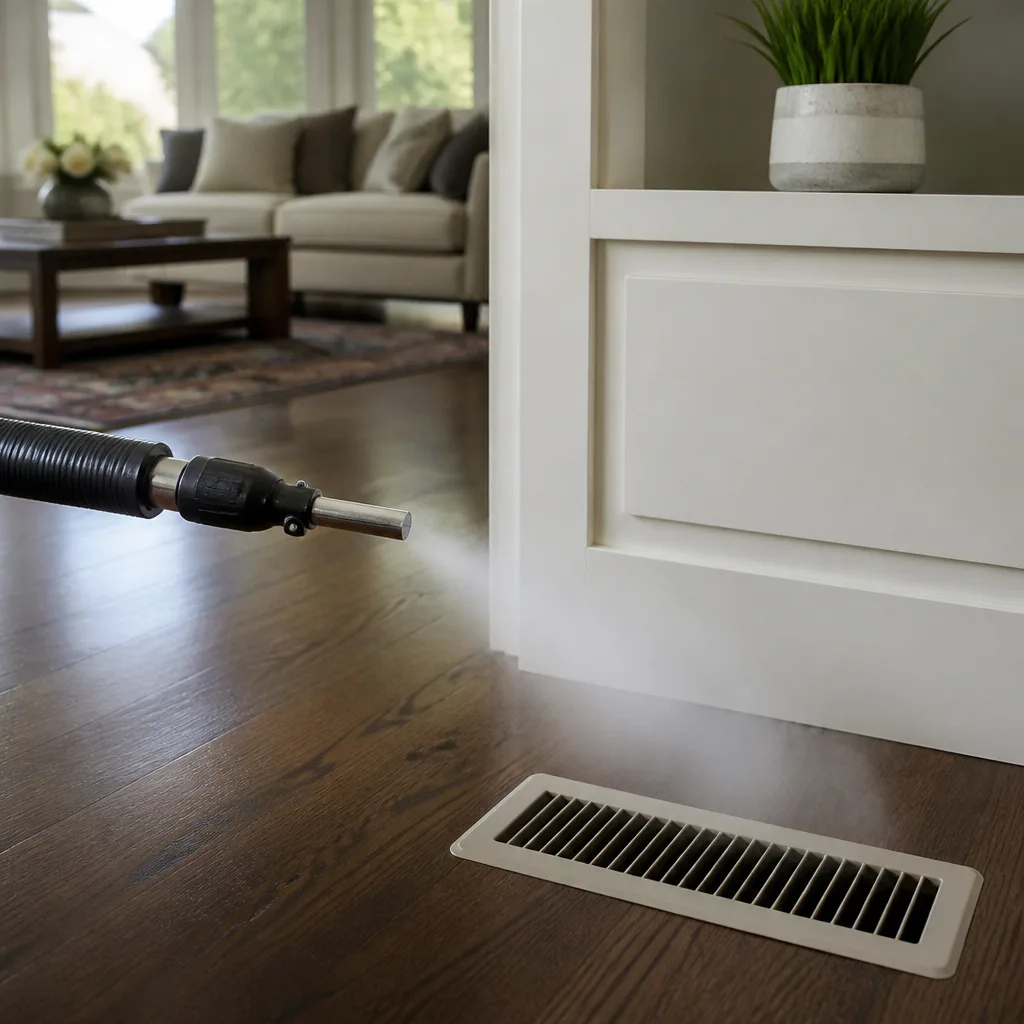 Sanitizing & deodorizing
Whole-system duct and dryer vent check with before-and-after photos - you see exactly what came out of your vents
That "$99 whole-house special" is a bait ad - the real number appears once they are in your hallway, or the "clean" is a shop-vac at the register. We photograph the inside of your ducts before and after instead.
Air Duct Cleaning Cost Breakdown: The Carmel Homeowner’s Reference for 2026
A $149 whole-home duct cleaning quote and a $650 quote for the same house aren’t necessarily describing different profit margins. They’re usually describing completely different scopes of work, and most homeowners never find out what’s missing from the cheaper one until the technician is already in the driveway. That’s the core problem with duct cleaning pricing in Carmel in 2026: contractors bundle and unbundle services so differently that the numbers stop meaning anything on their own. This guide breaks the price into line items you can actually compare – square footage, vent count, duct material, access, equipment grade, and the repair work that often follows a real cleaning. Read it before you collect quotes.
Quick Answer
Air duct cleaning in Carmel typically runs $350 – $700 for a standard whole-home system, with larger homes and multi-system setups reaching $900 – $1,500. The price depends on square footage, the number of supply and return vents, duct material, and how accessible the system is – not on a per-vent teaser rate. Repairs found during cleaning, like flex duct replacement or mastic sealing, are quoted separately, and dryer vent cleaning is its own line item entirely.
Styles & brands we work with
- Whole-home duct cleaning
- Dryer vent cleaning
- Camera inspection
- Sanitizing & deodorizing
Table of Contents
- What actually drives the cost of duct cleaning in Carmel
- Typical Carmel price ranges by home size and system type
- Why equipment grade changes the price (and what you’re paying for)
- Repair costs that commonly follow cleaning
- Dryer vent cleaning as a separate line item
- Add-ons: when they’re justified and when they’re upsold
- How to compare two duct cleaning quotes line by line
- How often duct cleaning really needs doing in Carmel
What actually drives the cost of duct cleaning in Carmel
Five variables explain almost every legitimate difference between two quotes for the same house. If a contractor can’t walk you through these, the number they gave you is a guess dressed up as a price.
- Square footage and system layout. A 1,400-square-foot ranch with a single trunk line takes far less time than a 3,200-square-foot two-story with a zoned system and two air handlers. Time is the biggest cost input, and layout determines time.
- Number of supply and return vents. Most Carmel homes run somewhere between 10 and 25 supply registers plus returns. Every vent needs to be removed, cleaned, and reinstalled, and returns in particular collect a heavy dust load.
- Duct material. Sheet metal ductwork cleans quickly and holds up to brushing. Flex duct is corrugated, traps debris in the ridges, and can be damaged by aggressive tools – which means slower, more careful work.
- Access complexity. Ducts buried above finished ceilings, crammed into tight mechanical closets, or routed through finished basements add labor. A system with accessible trunks and clean attic runs prices lower than one that requires cutting access panels.
- Contamination level. A home that just changed hands after years of deferred maintenance, or one with visible microbial growth near the coil, needs more time and stronger containment than a well-kept system.
Notice what isn’t on that list: the brand of the vacuum alone. Equipment matters, and we’ll get to it, but it’s one input among several. A contractor quoting purely on vent count is skipping the four variables that actually determine the work.
Typical Carmel price ranges by home size and system type
These are estimated ranges for a complete whole-system cleaning, not per-vent rates and not coupon teasers. The written estimate sets the final price, and it should be agreed before any work starts.
| Home profile | Estimated range | What’s included |
|---|---|---|
| Condo or small home, single system, under 1,500 sq ft | $350 – $500 | All supply and return vents, main trunks, blower compartment wipe-down |
| Standard single-family home, 1,500 – 2,500 sq ft | $450 – $700 | Full vent and trunk cleaning, containment, before-and-after photos |
| Larger home, 2,500 – 3,500 sq ft, one system | $650 – $950 | Extended trunk runs, higher vent count, deeper contamination removal |
| Two-system or zoned home, 3,500+ sq ft | $900 – $1,500 | Both air handlers, all zones, full containment on each system |
| Dryer vent cleaning (separate service) | $125 – $250 | Full lint line clearing, exterior termination check, airflow verification |
One thing worth understanding about the Carmel market: a large share of local housing was built in the 1990s and 2000s, which means original flex duct in attic runs is now hitting the end of its service life. Homes in that age band often need a repair conversation alongside the cleaning, and a quote that ignores that possibility isn’t more thorough – it’s just incomplete.
If you want the full picture of what a complete air duct cleaning appointment covers, our service page walks through the process step by step.
Why equipment grade changes the price (and what you’re paying for)
A shop-vac and a brush on a drill will pull some dust out of a register. It will also blow a cloud of it back into the room and redistribute the rest through the system. That’s the honest reason professional-grade equipment costs more to run, and it’s the difference between cleaning and stirring.
We use Rotobrush and Nikro duct cleaning systems – the same class of equipment commercial and industrial contractors rely on – because they combine a driven brush or whip with high-volume negative pressure. The vacuum holds the duct under suction while the agitation tool loosens debris, so material moves toward the capture point instead of into your living room. For contaminant control, we bring in Abatement Technologies equipment, which delivers HEPA-level filtration and lets us maintain true containment at the unit.
What that costs to operate, and why it shows up in the price:
- HEPA filtration and multi-stage containment require service, filter changes, and maintenance on the equipment itself.
- Proper containment setup – sealing registers, establishing negative pressure, protecting the mechanical closet – adds time on every job, and time is the largest cost line.
- Weight and bulk: this is not equipment one person carries up a ladder in a single trip.
- Trained operation: a driven brush in the wrong hands damages flex duct. The skill to run it without wrecking your system is part of what you’re paying for.
This is the place to be skeptical of the very lowest quote. A price that leaves no room for containment and professional capture is a price for a different job than the one you think you’re buying.
Repair costs that commonly follow cleaning
Cleaning exposes problems that dust was hiding. A disconnected flex run, a crushed section behind a joist, a register boot that was never sealed to the drywall – these turn up routinely once the ducts are opened and inspected. The question isn’t whether repairs happen; it’s whether they get quoted clearly and fixed in the same visit or deferred to a second contractor.
We offer duct cleaning in Carmel with repair on the same menu, which matters here: problems found during a cleaning can be fixed on the spot rather than scheduled out. Typical repair line items look like this:
- Flex duct replacement: priced per linear foot plus fittings, typically the single largest repair line when a run has collapsed or torn.
- Mastic sealant application: sealing joints and seams on sheet metal trunk lines and boots, priced by the number of joints and accessible length. This is the highest-value repair per dollar on most systems – sealed ducts stop leaking conditioned air into attics and crawl spaces.
- Register and grille replacement: priced per unit, higher for specialty or high-flow grilles.
- Boot and collar reconnection: reattaching runs that have pulled loose from the trunk or the floor boot.
- Access panel installation: creating a serviceable opening where none exists, sometimes required to clean or inspect a hidden run at all.
Ask any contractor whether they can perform these repairs themselves during the cleaning visit. Many can’t, and that’s a real cost: a second contractor means a second trip charge, a second schedule, and often a second opinion about what needs fixing.
Dryer vent cleaning as a separate line item
Dryer vent cleaning is a different service with a different scope, and it should never be folded into a duct cleaning quote as a freebie or left out entirely. The ductwork carries conditioned air; the dryer vent carries lint, moisture, and heat out of the house. One is an air quality and efficiency issue. The other is a fire-safety issue.
The pricing logic is simpler than duct cleaning. A dryer vent is a single line, usually 10 to 30 feet, with a termination at the exterior wall or roof. Cost depends on:
- Run length and number of elbows. Every bend collects lint and resists the brush.
- Termination type. Roof terminations and recessed boxes take more time to access safely than a wall flap.
- Condition. A vent that’s never been cleared, or one with a crushed flexible line, needs more work than routine maintenance.
Why do we treat dryer vent cleaning as a core service rather than an add-on? Because standalone duct cleaners skip it, and it’s the part of the system where the consequences of neglect are genuinely serious. If you’re already booking a duct cleaning, pairing the two is the sensible way to handle both systems in one visit – but they remain two distinct scopes with two distinct prices, and any quote that blurs them is one you should question.
Add-ons: when they’re justified and when they’re upsold
This is where the industry earns its reputation for bait-and-switch. A low headline price becomes a much larger invoice once the technician is inside and the add-ons start. Here’s the honest framing on the most common ones.
Antimicrobial fogging
Justified when there’s confirmed microbial growth, persistent odor from the system, or a known moisture problem in the ducts. Not justified as a routine upsell on a clean system with no evidence of growth. If someone offers it before they’ve even looked inside the ducts, ask what they saw that warrants it.
Protective coatings
Coating treatments applied after cleaning, like Guardsman protective treatments, extend how long the ductwork stays clean by helping resist dust adhesion and microbial regrowth. The cost-benefit is straightforward: it makes sense on a system you just paid to clean thoroughly and want to keep that way, and it’s unnecessary if the cleaning itself was partial. Ask what gets coated and how it interacts with the system going forward.
Filters and air quality systems
Upgrading to a media filter or working with a recognized system like Honeywell or Aprilaire filtration is a legitimate long-term investment in your air, priced separately from the cleaning. It’s worth considering if filters are loading fast or allergies are the reason you’re cleaning in the first place. It’s not a cleaning requirement, and it shouldn’t appear on the invoice as if it were.
The test for any add-on: ask the technician to show you what they found, what the specific cost is, and what happens if you decline. A legitimate add-on survives all three questions.
How to compare two duct cleaning quotes line by line
Don’t compare totals. Compare line items. Here’s a step-by-step approach that surfaces the real differences between two quotes in about ten minutes.
- Ask for a written scope, not a price. A quote should list every vent, every trunk, and whether the blower compartment and coil are included.
- Check the vent count against your home. Count your own registers. If the quote specifies a number and it’s lower than what you see, ask which vents are excluded.
- Ask what equipment will be used. A named professional system like Rotobrush or Nikro with containment tells you the scope is a real cleaning. Vague answers tell you something too.
- Ask whether repairs are quoted separately and by whom they’d be performed. If the answer is “we’ll refer you,” budget for a second trip and a second set of prices.
- Confirm the dryer vent is a separate line with its own price. If it’s missing entirely, get it quoted.
- Ask about documentation. Before-and-after photos of your own ducts are the simplest proof that the work actually happened.
- Get the final number in writing before work begins. The price should be per system and agreed, not per vent and adjusted.
Our Carmel service page covers what’s included when we quote. When a homeowner compares on scope instead of totals, the cheapest number usually stops looking like the best one – and just as often, the highest doesn’t either.
How often duct cleaning really needs doing in Carmel
There’s no universal schedule. The honest answer depends on your home, not on a contractor’s mailing list. Most homes fall somewhere between every three and every seven years, and several local factors push that either direction.
Indiana’s cycle of humid summers and dry, static-heavy winters matters. Summer humidity keeps the cooling coil wet and makes the system’s return ducts the place where moisture and dust combine. Winter’s dry air lifts more dust from carpet and furnishings and moves it through the system. Homes near busy roads or in newer subdivisions with active construction nearby load up faster. Older housing stock with original flex duct in attic runs tends to accumulate more in less time than a well-maintained newer system.
What actually justifies a cleaning:
- Visible dust streaking out of supply registers when the system runs
- Persistent dust on surfaces right after cleaning, or a musty smell when the air comes on
- Recent renovation, or a move-in to a home with an unknown maintenance history
- Allergy symptoms that ease when you’re away from home
- An HVAC technician has flagged visible contamination at the coil or in the plenum
What doesn’t justify a cleaning: a coupon arriving in the mail. If none of the above apply, you can wait – and a contractor who tells you so is worth keeping the number of.
Common Mistakes to Avoid
- Comparing only the bottom-line number. Two quotes for the same house can differ by hundreds of dollars because they include different scopes. Compare the line items before you compare the totals.
- Accepting a per-vent price. Per-vent pricing rewards the contractor for counting and penalizes you for a larger system. Ask for a flat price per system, agreed in writing before work starts.
- Letting the dryer vent go unaddressed. A quote that doesn’t include it leaves the higher-consequence system untouched. Get it as a separate line.
- Approving add-ons before anyone has looked inside. Antimicrobial fogging and similar treatments should follow evidence, not precede it.
- Skipping the repair conversation. If the contractor can’t fix the problems they find, you’re paying for a partial job and a second service visit later.
- Not asking for before-and-after photos. Cleaning is invisible work. Documentation of your own ducts is the simplest way to know it got done.
- Ignoring what your system is telling you between cleanings. Fast filter loading, dust streaks at registers, or a musty smell after the system has been off means now, not next year.
See the difference
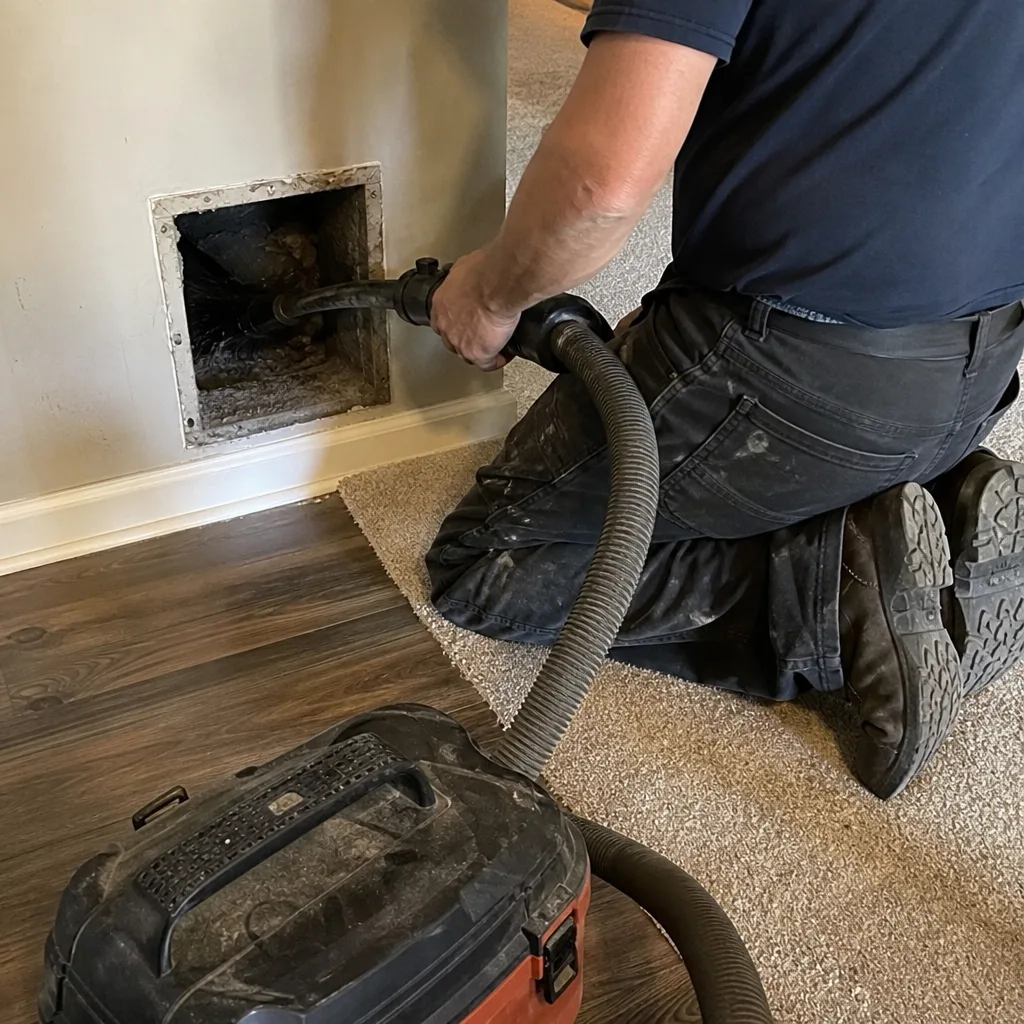 Before
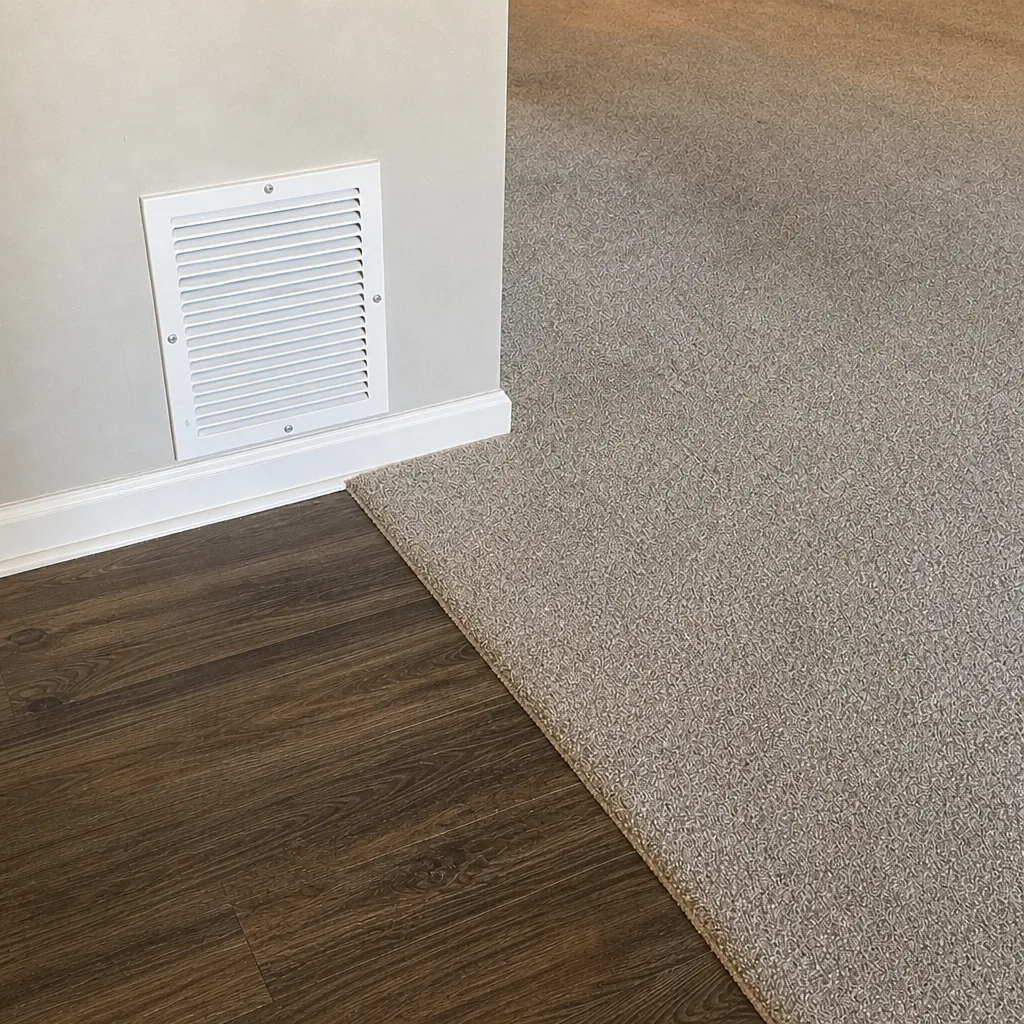 After
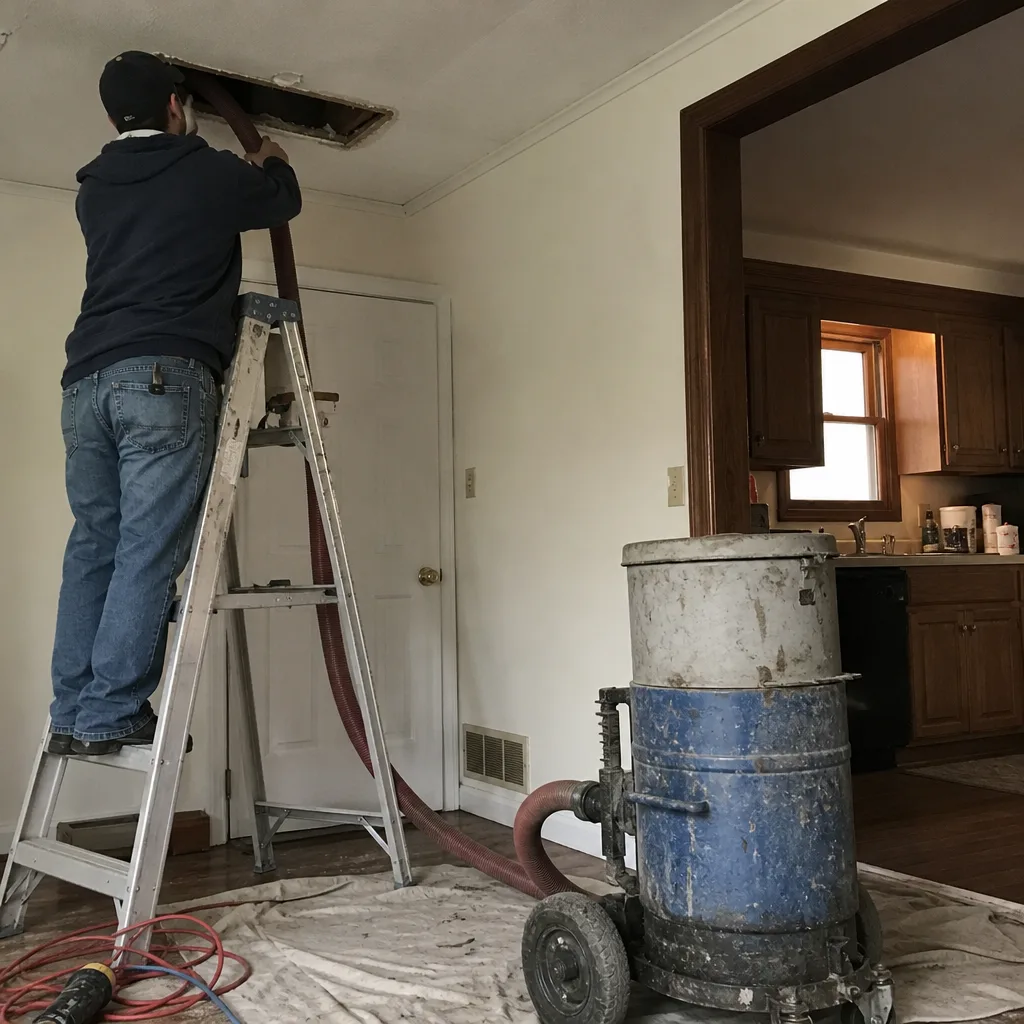 Before
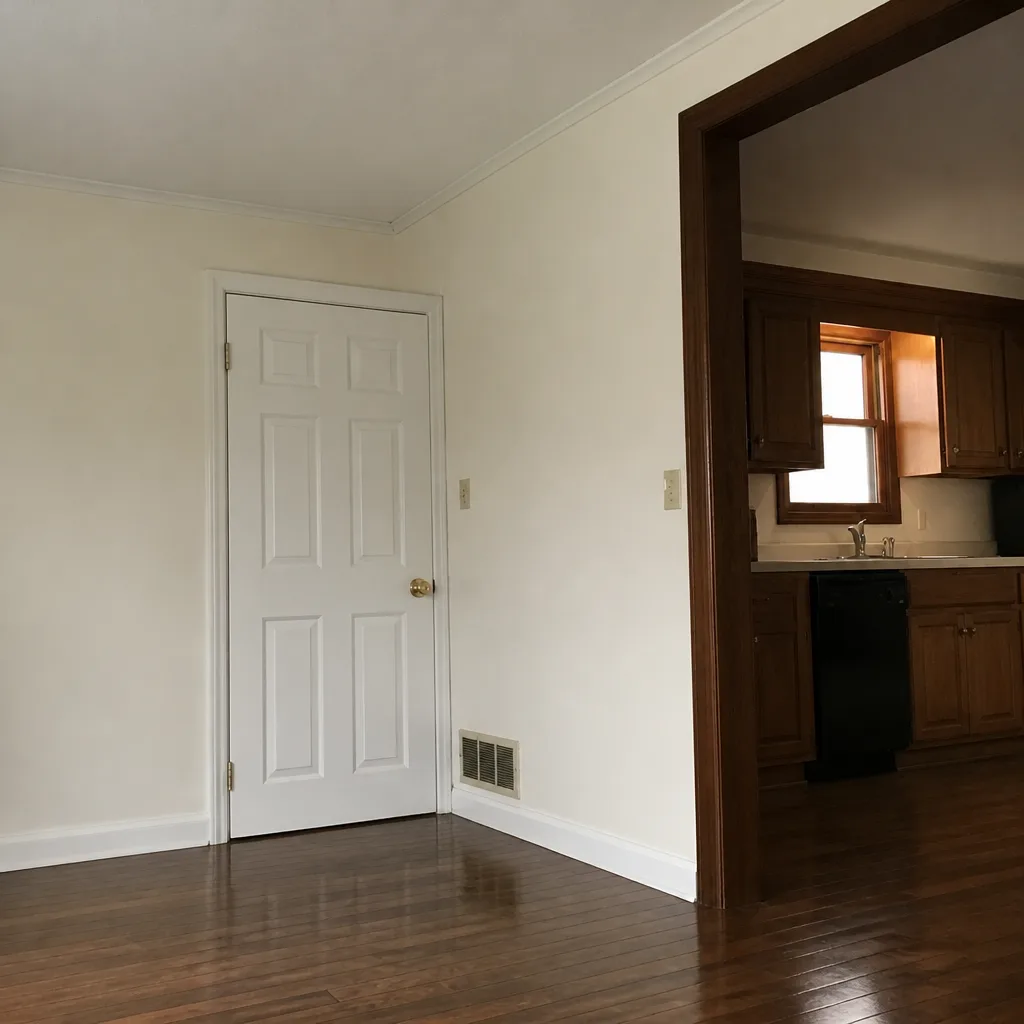 After
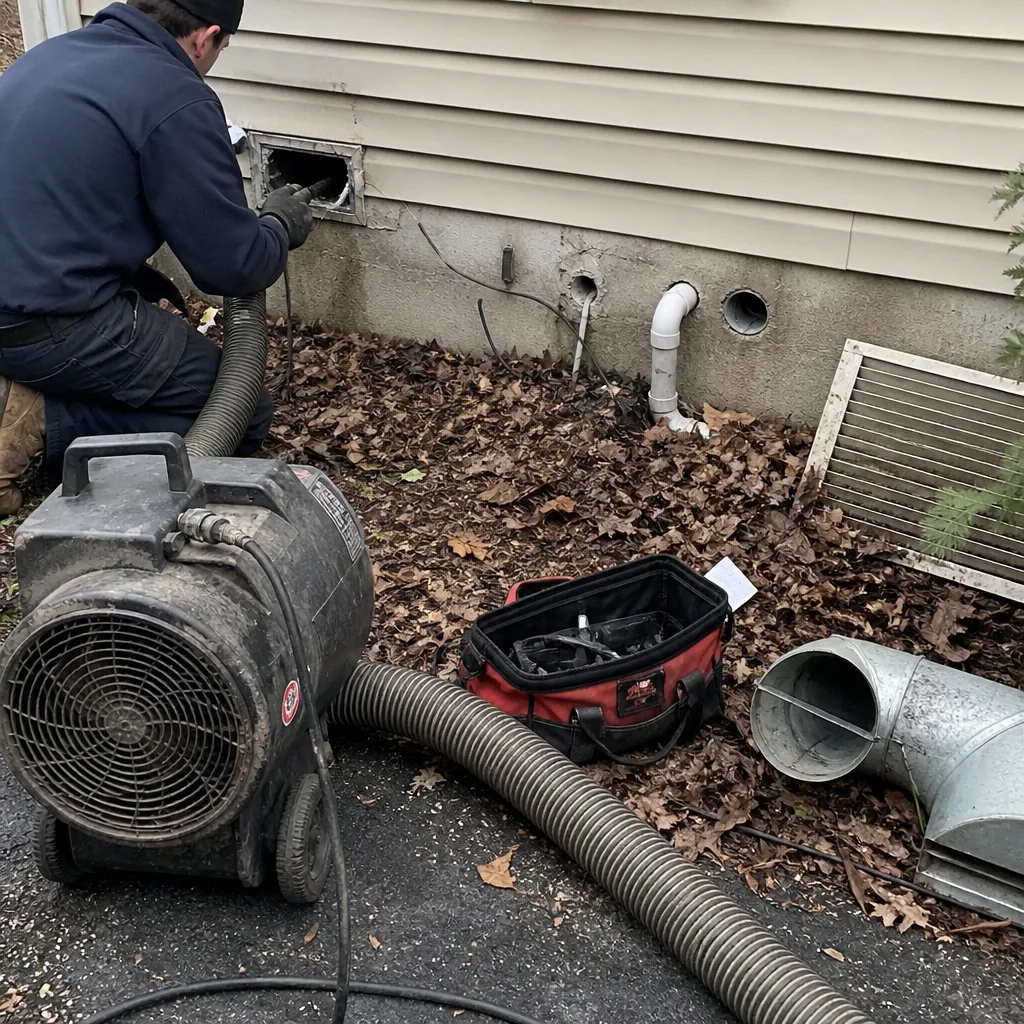 Before
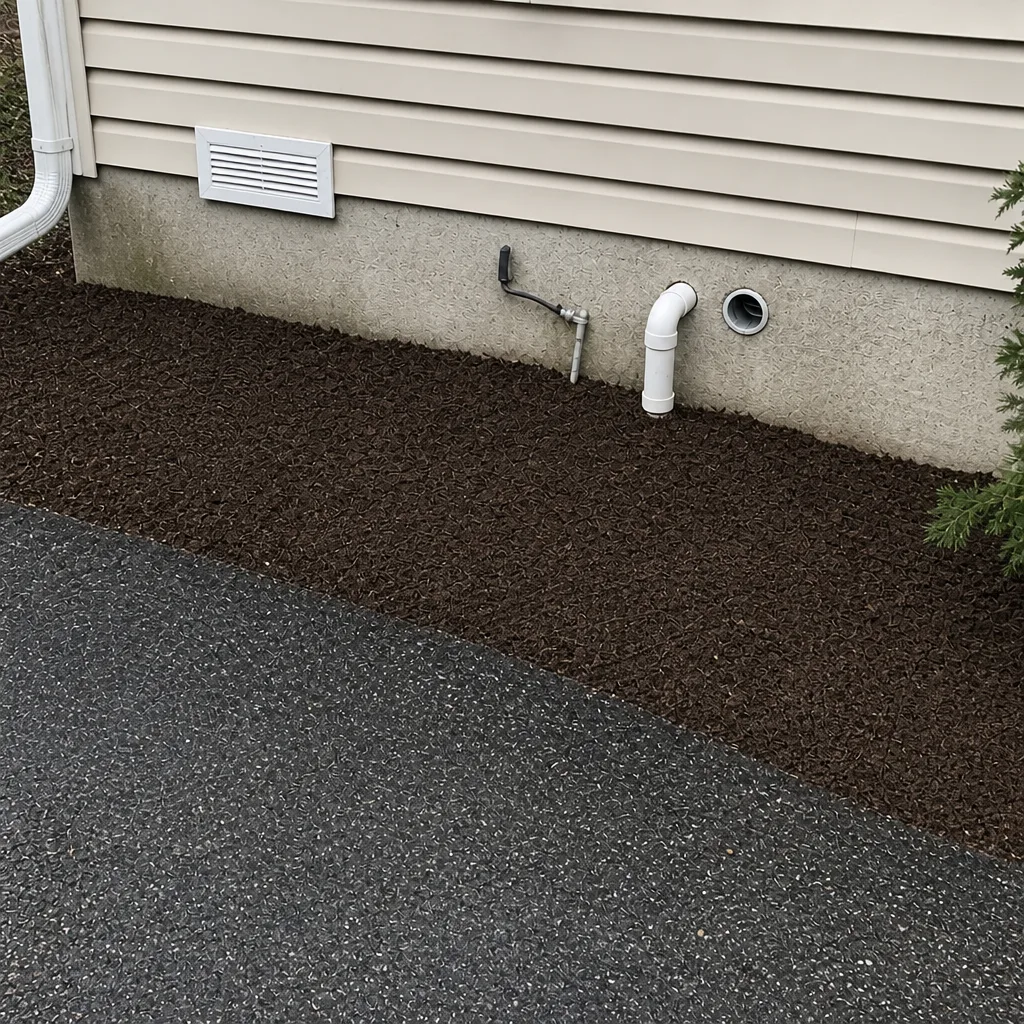 After
When to Call a Professional
Call when you see dust streaking from registers, smell something musty when the system starts, or move into a home whose duct maintenance history is unknown. Call when a renovation has just finished, when an HVAC tech has flagged contamination at the coil, or when the dryer is taking longer than it used to and the lint trap is clear – that last one is a fire-safety signal, not a small annoyance. Also call if your ductwork looks damaged: crushed flex runs, disconnected boots, or unsealed joints waste energy every month they’re left alone. Duct Cleaning Carmel offers free estimates in Carmel – call (844) 834-5334. We answer 24/7. Fast dispatch from 7am to 7pm, Sunday through Friday.
Frequently Asked Questions
Typical estimates run $350 – $700 for a standard single-family home, with larger or multi-system homes reaching $900 – $1,500 and small condos starting around $350. The written estimate sets the final price, and it should be agreed before work starts. Call (844) 834-5334 for an exact quote – estimates are free.
Cheaper quotes usually exclude containment, skip the blower compartment and returns, use consumer-grade vacuums, or price per vent so the number grows once a technician is on site. The headline figure describes a smaller scope than the one you think you’re buying. Ask for a written line-item scope and compare that instead. Call (844) 834-5334 for a quote you can compare line by line.
Before-and-after photos of your own ducts are the simplest proof, and you should expect them as part of any professional job. A thorough cleaning also takes time and involves visible containment setup around the registers. If your cleaning finishes in under an hour on a whole-home system, ask questions. Call (844) 834-5334 to schedule a job with documentation.
Most homes land somewhere between every three and seven years, depending on contamination, humidity, renovation history, and whether the system is well sealed. There’s no universal schedule – if registers aren’t streaking, filters aren’t loading fast, and nothing smells musty when the system comes on, you can wait. Call (844) 834-5334 and we’ll give you a straight answer about whether it’s time.
Yes, vent count is one of the main cost drivers, along with square footage, duct material, and access. That’s why a flat price per system makes more sense than a per-vent rate – it rewards thorough work rather than counting. Call (844) 834-5334 for a free estimate based on your actual system.
Yes, if it’s been more than a couple of years or the dryer has started taking longer to dry a load. It’s a separate service with its own scope and price, but booking both in one visit covers the two systems that handle your air and your laundry safety. Call (844) 834-5334 to get both quoted.
The Bottom Line
Duct cleaning prices in Carmel look opaque because contractors scope the work differently, not because the market is unpredictable. The variables that matter are square footage, vent count, duct material, access, contamination level, and equipment grade – and legitimate quotes will walk you through all six. Repairs, dryer vent service, and add-ons should each be quoted as their own line, agreed in writing before work starts. Compare line items, not totals. Ask for before-and-after photos of your own ducts. If you’re ready for a quote built that way, call (844) 834-5334. We answer 24/7. Fast dispatch from 7am to 7pm, Sunday through Friday.
Written by the team at Duct Cleaning Carmel.