
Last updated November 14, 2026
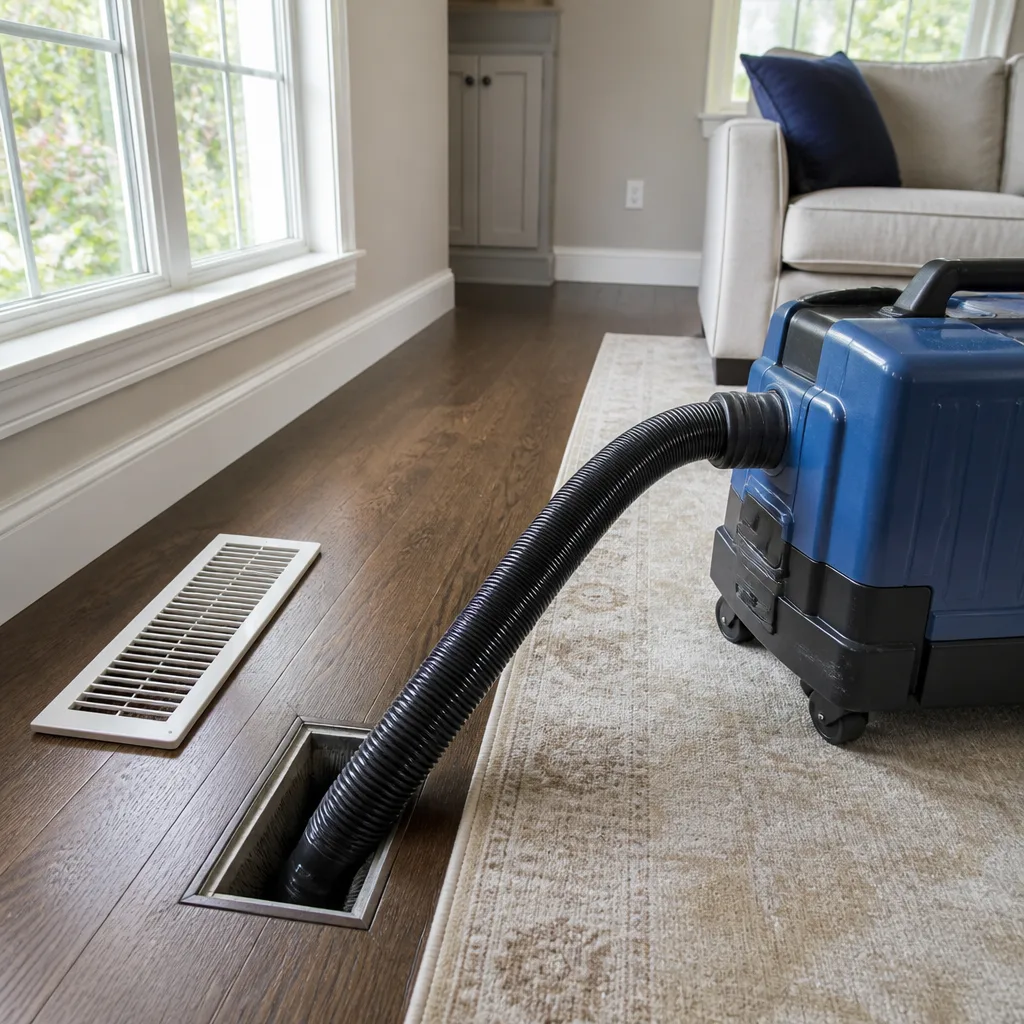 Whole-home duct cleaning
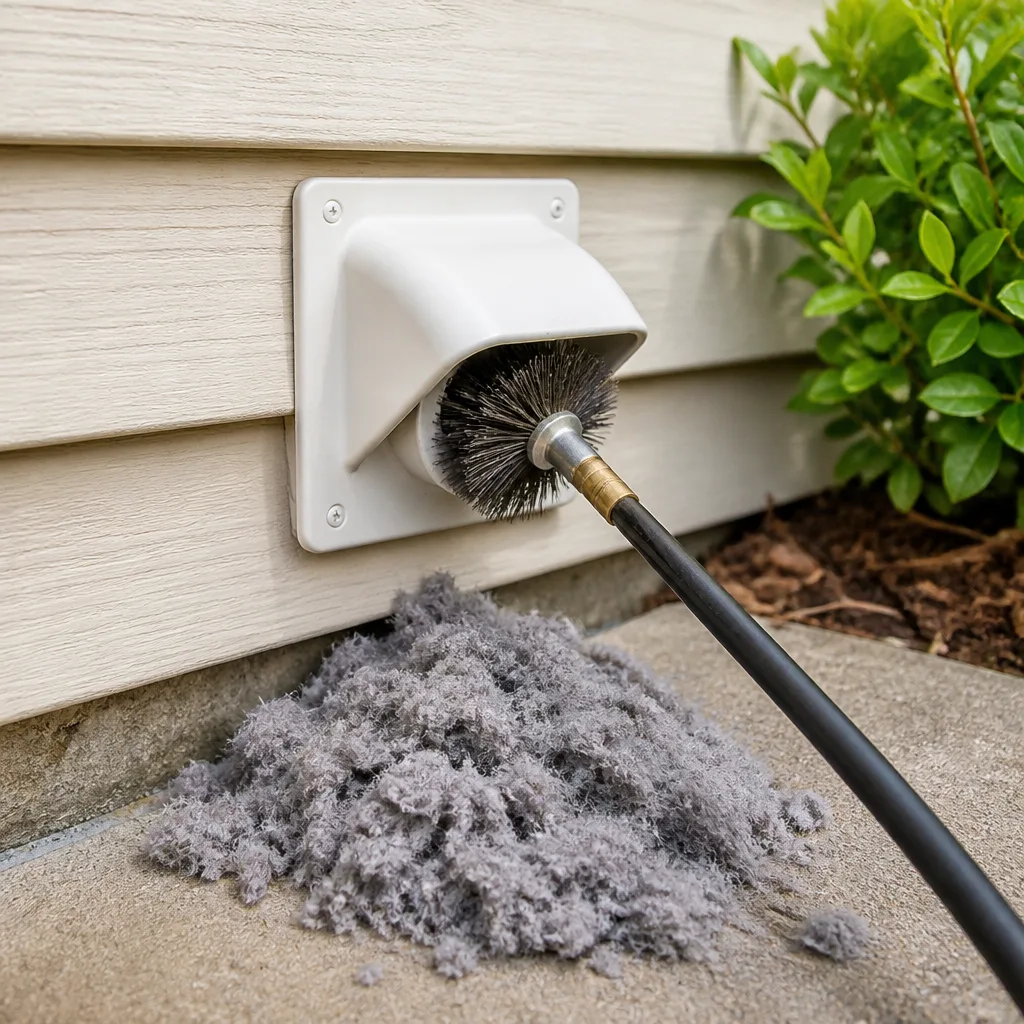 Dryer vent cleaning
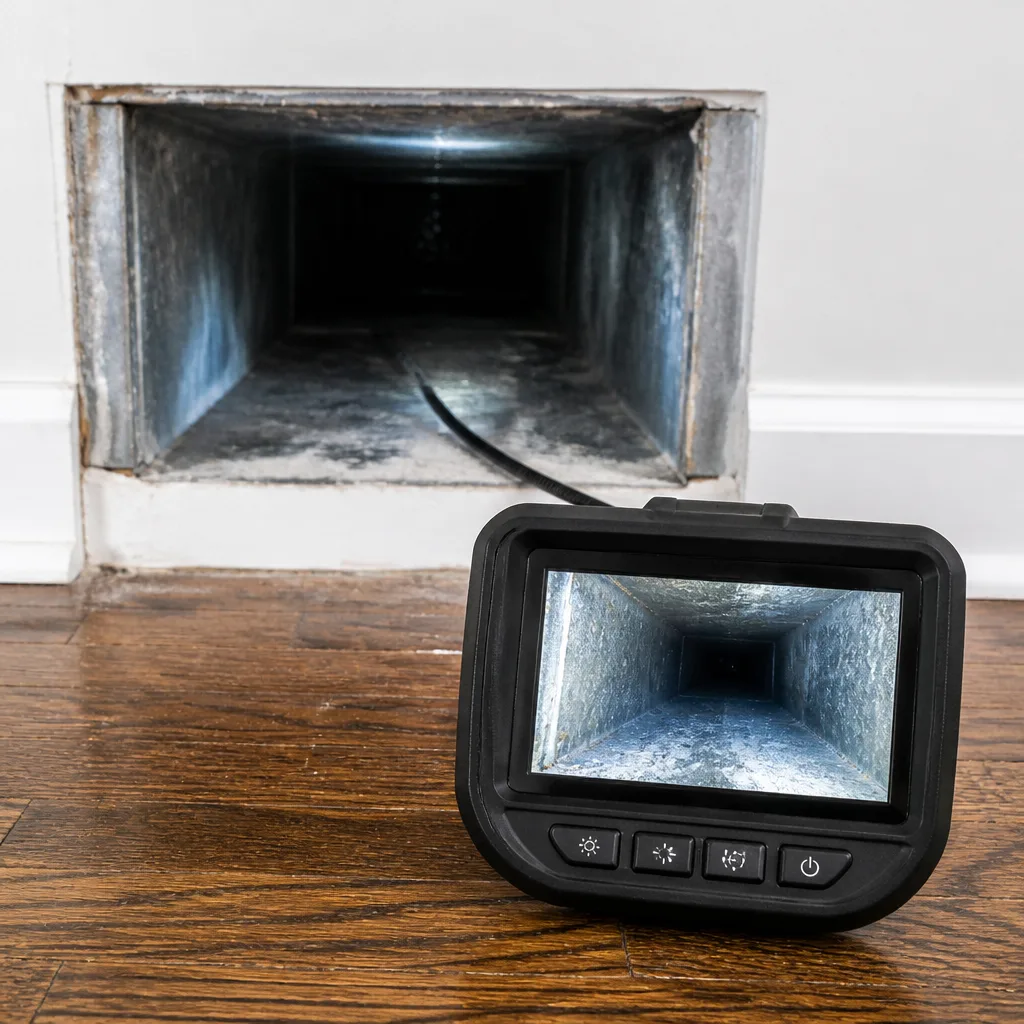 Camera inspection
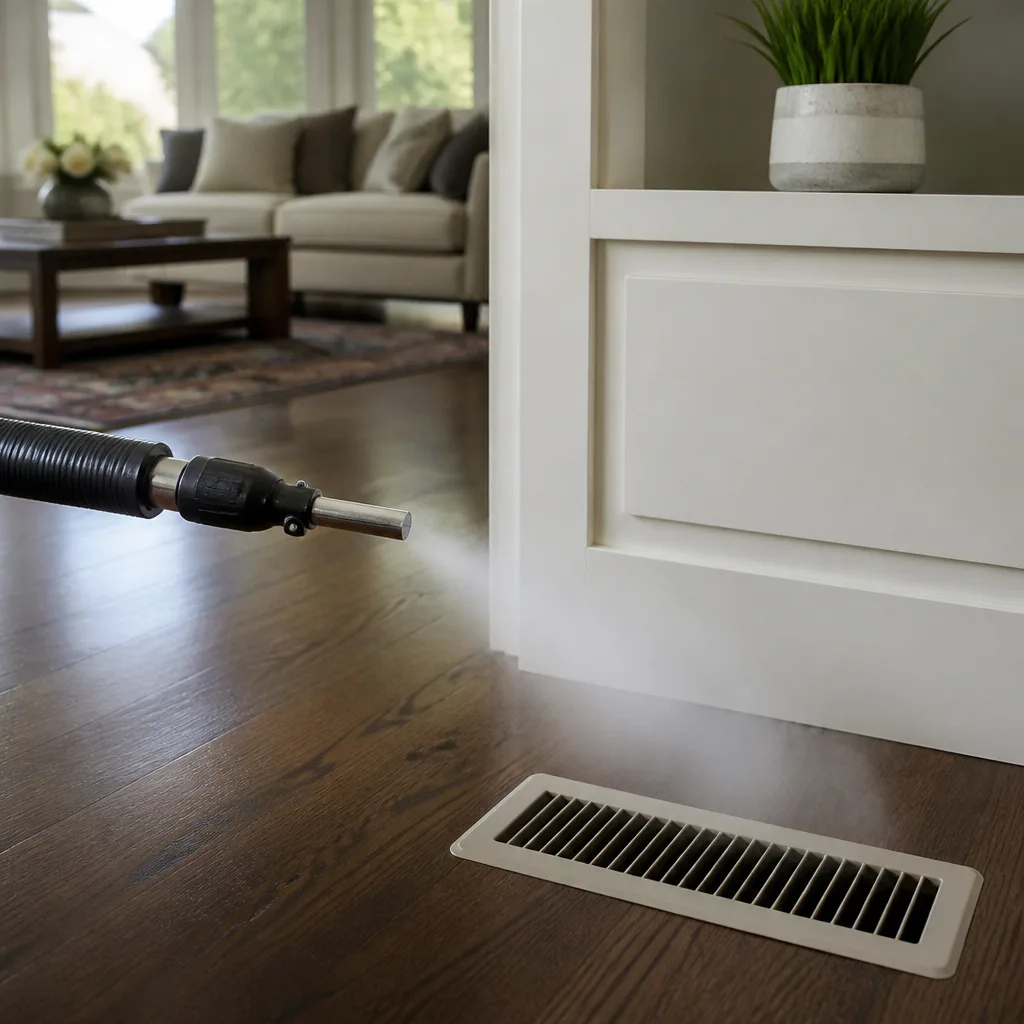 Sanitizing & deodorizing
Whole-system duct and dryer vent check with before-and-after photos - you see exactly what came out of your vents
That "$99 whole-house special" is a bait ad - the real number appears once they are in your hallway, or the "clean" is a shop-vac at the register. We photograph the inside of your ducts before and after instead.
Air Duct Cleaning Troubleshooting in Carmel: Common Problems and How to Fix Them
If a room in your Carmel home is still stuffy two weeks after a duct cleaning, the cleaning probably wasn’t the problem. A disconnected trunk line, a crushed flex run, or a return that’s choked with debris will defeat any amount of brushing and vacuuming. Cleaning clears what’s loose inside the ducts. It doesn’t reattach a joint that’s pulled apart or open a flex duct that got folded shut during a remodel. This guide is about reading your system’s symptoms before you call anyone, so you know whether you need cleaning, repair, or both.
Quick Answer
Most “bad air” complaints in Carmel homes trace back to the duct system itself, not the furnace or air conditioner. A collapsed flex run, a separated joint at a plenum, or a blocked return will cause the same symptoms as dirty ducts: uneven airflow, persistent dust, and musty smells. The fix is diagnosing which one you have first, because cleaning solves debris blockage, repair solves structural damage, and many homes need both in the same visit.
Styles & brands we work with
- Whole-home duct cleaning
- Dryer vent cleaning
- Camera inspection
- Sanitizing & deodorizing
Table of Contents
- How to Read Your Duct Symptoms
- How to Inspect Accessible Duct Sections Yourself
- Debris Blockage vs. Structural Damage: Which One Do You Have?
- Why Symptoms Return Within 60 Days
- How Professional Equipment Reveals What’s Wrong
- When a Troubleshooting Visit Turns Into a Repair
- The Dryer Vent Problem Homeowners Miss
- Common Mistakes to Avoid
How to Read Your Duct Symptoms
Duct problems don’t announce themselves. They show up as symptoms you’d normally blame on the furnace, the filter, or the thermostat. Learning to read them changes what you ask for when you call a technician, and it keeps you from paying for a cleaning that won’t fix the actual cause.
Here’s the symptom-to-cause mapping we work from when we’re troubleshooting in Carmel:
- One room weak, everywhere else fine: usually a single branch run with a crushed flex duct, a closed damper, or a boot that’s separated from the register. Air is being lost before it reaches the room.
- Whole house weak: a blocked return, a filter dropped into the airstream and sucked against the coil, or a trunk line that’s come apart at the plenum. The system is starved for air.
- Persistent dust settling on surfaces: unsealed joints pulling in attic or crawlspace air, or a return that’s drawing from a dirty space. Cleaning alone won’t fix this; the breach needs sealing.
- Musty or dirty-sock smell: moisture. Wet insulation, condensation on cold ducts, or biological growth on interior surfaces. Repair and drying come before cleaning.
- High energy bills with normal equipment: leakage. Ducts losing 20 to 30 percent of their conditioned air into unconditioned space is common in older Carmel homes, and no amount of cleaning changes that number.
Notice that only one of those five points toward cleaning as the primary fix. The rest point at the duct system’s structure. That’s the pattern we see over and over: a homeowner calls for cleaning, and the real answer is repair. If you want to understand what professional cleaning actually involves first, our guide to air duct cleaning covers the process in detail.
How to Inspect Accessible Duct Sections Yourself
You can check some of this before you call. Not all of it, but enough to know whether you’re dealing with a blockage or a breach. Look at the accessible sections only: the supply plenum above the furnace, the first few feet of trunk line, and any flex runs visible in the attic or basement. Never open a sealed section, and never get on a ladder you don’t feel steady on.
- Look at the flex runs for crushed or kinked sections. Flex duct looks like a slinky inside a silver sleeve. If it’s been folded, kinked at a sharp turn, or flattened under a piece of stored furniture, airflow is cut even though the duct is “connected.”
- Check the joints for separation. Look where flex meets the trunk, where boots meet the register, and where the plenum meets the equipment. Gaps at these points pull attic or crawlspace air directly into your supply. Even a half-inch gap matters, and a disconnected run is obvious once you’re looking for it.
- Look for moisture or staining. Rust at the base of the air handler, condensation on cold metal ducts, or dark patches inside a flexible run all point to moisture intrusion. If the interior of the duct has visible growth, that’s a repair-and-remediation problem, not a cleaning one.
- Run the system fan and feel for air at each register. Weak or no airflow at one register, with the fan running, tells you something in that branch is blocked or disconnected.
- Check the filter and its housing. A filter that’s collapsed, sucked into the blower, or installed in a housing with gaps around it lets unfiltered air past. That alone will make every room dusty.
What you can’t see is the inside of vertical runs, the main trunk lines buried in walls, and the return network. That’s where professional equipment earns its keep. Our Duct Cleaning Carmel service includes the diagnostic step before any cleaning begins, so we know what we’re dealing with before we run a single brush through the system.
Debris Blockage vs. Structural Damage: Which One Do You Have?
The single most useful question in duct troubleshooting is this: is the problem debris or structure? Debris means the duct is intact but partly filled with dust, construction dust, or pest debris. Structure means the duct is damaged, disconnected, or crushed. Cleaning fixes the first. Repair fixes the second. Confusing them is why homeowners pay twice.
Here’s the difference in practical terms:
- Debris blockage: air reaches the whole system but with reduced volume. Every register blows something, just less. Dust keeps settling because the system is recirculating it. Cleaning with proper negative-air equipment solves this.
- Structural damage: one or more rooms or zones don’t get air at all, or the system pulls from a space it shouldn’t (attic, crawlspace, garage). Energy bills climb while the system runs harder. Cleaning doesn’t fix a disconnected run; the air is going somewhere else entirely.
- Both: the more common case in Carmel homes. A crushed flex run has been feeding poor airflow to one part of the house, and debris has settled in the sections that still worked. Cleaning plus repair in the same visit is the right answer.
Our technicians have up to 12 years of experience, and the pattern holds across most systems: the visibly weak room is usually a structural problem, and the rest of the system just needs cleaning. A quick walk of the accessible runs during a diagnostic visit will confirm which is which. If you’re on the north side of Carmel or in a newer build where the ductwork is all flex in the attic, crushed runs from the original installation are the most common structural failure we find.
Why Symptoms Return Within 60 Days
If dust, stuffiness, or odor comes back within two months of a cleaning, the cleaning probably wasn’t the issue. A properly cleaned system doesn’t regrow dust in 60 days unless something’s still feeding it. That “something” is usually one of three things: an undiagnosed breach pulling unfiltered air in, active moisture feeding biological growth, or a return network the last cleaning didn’t address.
Breaches are the most common. A gap at a plenum joint or a disconnected flex run in the attic will pull outdoor or crawlspace air straight into the supply side. That air carries its own dust, and the return grille gets blamed when it’s really the supply that’s dirty. The second most common is moisture. In Carmel, humidity in the summer and condensation on cold duct surfaces in the attic can keep interior surfaces damp enough to support growth, and a clean duct that stays damp won’t stay clean.
The third is an incomplete cleaning that skipped the returns. Returns are the dirtiest side of most systems, and a cleaning that only addresses the supply runs leaves the source of the recirculating dust in place. If you’ve had a cleaning in the last two months and symptoms are already back, ask what the previous technician did about the returns and whether the system was checked for breaches. That question usually explains the whole thing.
If it’s been longer than two months and you’re not sure the system has ever been properly cleaned, a scheduled cleaning is the right starting point. You can reach our team at Carmel or book a diagnostic visit that covers both cleaning and inspection. We’d rather find the breach before we clean than after.
How Professional Equipment Reveals What’s Wrong
Consumer-grade vacuums and shop vacs pull a little air, agitate the dust, and put most of it back into the room. Professional equipment works differently: it puts the entire system under negative pressure so anything that’s disturbed is captured rather than redistributed. That’s how a technician actually sees what’s wrong inside the ductwork.
Here’s how the equipment we use changes the diagnosis:
- Rotobrush systems push a rotating brush-and-vacuum head through the runs at controlled pressure. The brush agitation loosens what’s adhered to the walls, and the vacuum that runs alongside it captures the debris at the source. When a run is crushed, you feel it immediately at the head; the adjustment tells the technician more than a camera view does.
- Nikro negative-air systems put the whole system under vacuum before any agitation starts. The negative pressure means the diagnosis happens with the ducts sealed, so a breach that would release dust during cleaning gets identified as a loss of vacuum at a specific point. That’s how we locate a disconnected joint we couldn’t see.
- Abatement Technologies equipment adds HEPA-level filtration to the capture side. Air leaving the system passes through high-efficiency filters before it goes anywhere else, which matters when the ducts contain fine particulate or biological material. On contaminant-control jobs, that’s the difference between a cleaning and a proper remediation.
- Guardsman protective treatments apply after cleaning as a last step. They don’t replace cleaning, and they don’t fix a breach, but they slow the rate at which cleaned surfaces pick up new dust. We use them when the homeowner wants the clean result to hold longer.
The point isn’t the brand names as much as the order of operations. Diagnosis with negative-air equipment first, cleaning second, repair where needed, and treatment last. That sequence is what separates a real troubleshooting visit from a “blow and go” cleaning.
When a Troubleshooting Visit Turns Into a Repair
Not every visit should escalate. Most do not. But some problems change the scope of the job once we get a real look at the system, and it’s worth knowing what those look like so you’re not caught off guard. The following are what we treat as repair signals rather than cleaning signals:
- Vacuum loss at a specific point in the duct run: the system can’t hold negative pressure at that section because there’s an opening. That opening is a breach, and it needs sealing, not another pass with the brush.
- Crushed or collapsed flex duct: the run needs replacement. No amount of cleaning reopens a flex duct that’s been folded shut.
- Visible biological growth on interior duct surfaces: cleaning alone spreads it. Growth has to be addressed at the source (moisture), the affected section often needs replacement, and the remediation is more involved than a standard cleaning.
- Pest debris in the system: the run should be checked for entry points. Cleaning without identifying and sealing the entry point just resets the clock.
- Damaged boots or registers: if the fitting at the wall is broken or disconnected from the run, it needs repair before cleaning the system is meaningful.
We do this work in the same visit when the scope allows, because deferring a repair to a second contractor means the cleaning has to happen again later. If a repair is beyond the scope of a single visit, we’ll explain what’s needed and give you a written estimate before any work starts, so you know the whole scope and the price before anyone touches the system. Our full-system approach and repair capability sit alongside the duct cleaning side of the business, and that’s deliberate: finding problems and fixing them in the same visit is the whole point.
The Dryer Vent Problem Homeowners Miss
Duct troubleshooting often stops at the HVAC system, but there’s a second duct network in your home that matters more for safety: the dryer vent. A clogged dryer vent is a fire hazard, and the symptoms aren’t always obvious. Longer dry times, a dryer that’s hot to the touch on top, and lint building up behind the unit all point at a restricted vent line.
In Carmel homes with long vent runs (up through the roofline, or across a finished basement ceiling) lint accumulates on the walls of the pipe faster than in short, straight runs. A screen on the exterior hood that’s packed with lint can restrict airflow as much as a clogged pipe. Cleaning the dryer vent is a scheduled service and shouldn’t be treated as an emergency; the right move is to have it done on its own schedule and to check the vent line at the same time as the HVAC ducts so you’re not paying for two separate visits.
Most standalone duct cleaners don’t offer dryer vent service. We do, and we treat it as a core part of the job, not an add-on. If your dryer has been taking longer than it used to, or you don’t know when the vent line was last cleaned, that’s worth addressing. Our dryer vent cleaning service covers the full vent run, not just the section behind the dryer.
Common Mistakes to Avoid
- Booking a cleaning before diagnosing. If the actual problem is a disconnected run or a crushed flex duct, the cleaning won’t fix it and you’ll have paid for work that changed nothing. Always ask what the technician does to diagnose before the cleaning starts.
- Assuming the return side doesn’t need cleaning. Returns carry the dirtiest air in the system because they pull from living space before filtration. A cleaning that skips the returns leaves the source of recirculating dust in place.
- Ignoring a musty smell after cleaning. Odor after cleaning almost always means moisture, not incomplete cleaning. Running the system harder won’t dry out a duct with wet insulation in the attic.
- Skipping the dryer vent because “we don’t notice a problem.” Dryer vent restriction builds quietly. If you can’t remember when the vent was last cleaned, it’s overdue, especially in Carmel homes with long vent runs.
- Trusting a quote with no inspection and no written scope. A price given over the phone without seeing the system can’t account for the repair work a breached duct needs, and that’s how a low quote turns into a much larger invoice on the day of the visit.
- Running the system with a collapsed filter in place. A filter that’s been sucked into the blower restricts airflow across the whole system and produces the same symptoms as a duct blockage. Check the filter housing, not just the filter itself.
- Re-cleaning when the right answer is repair. A second cleaning within 60 days of the first is a sign the first visit missed the underlying cause, not a sign the cleaning was done badly.
See the difference
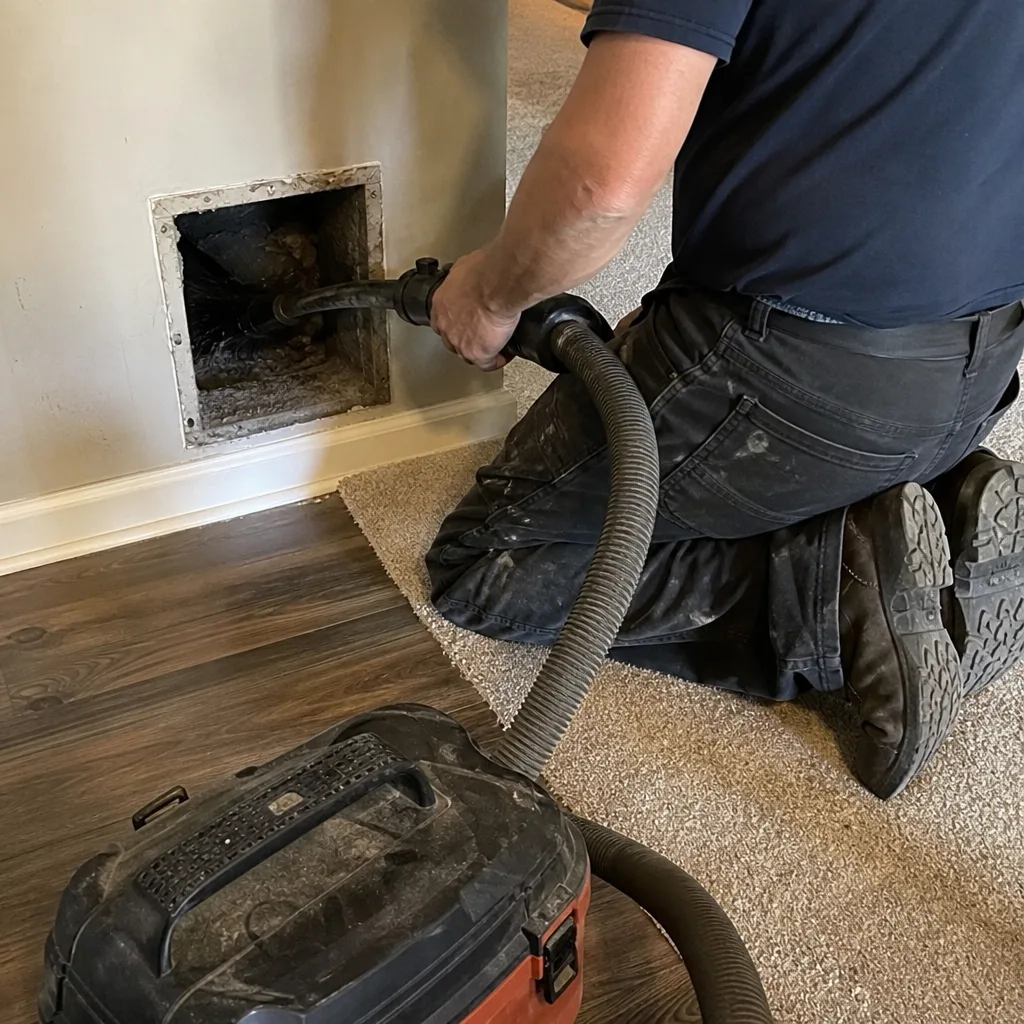 Before
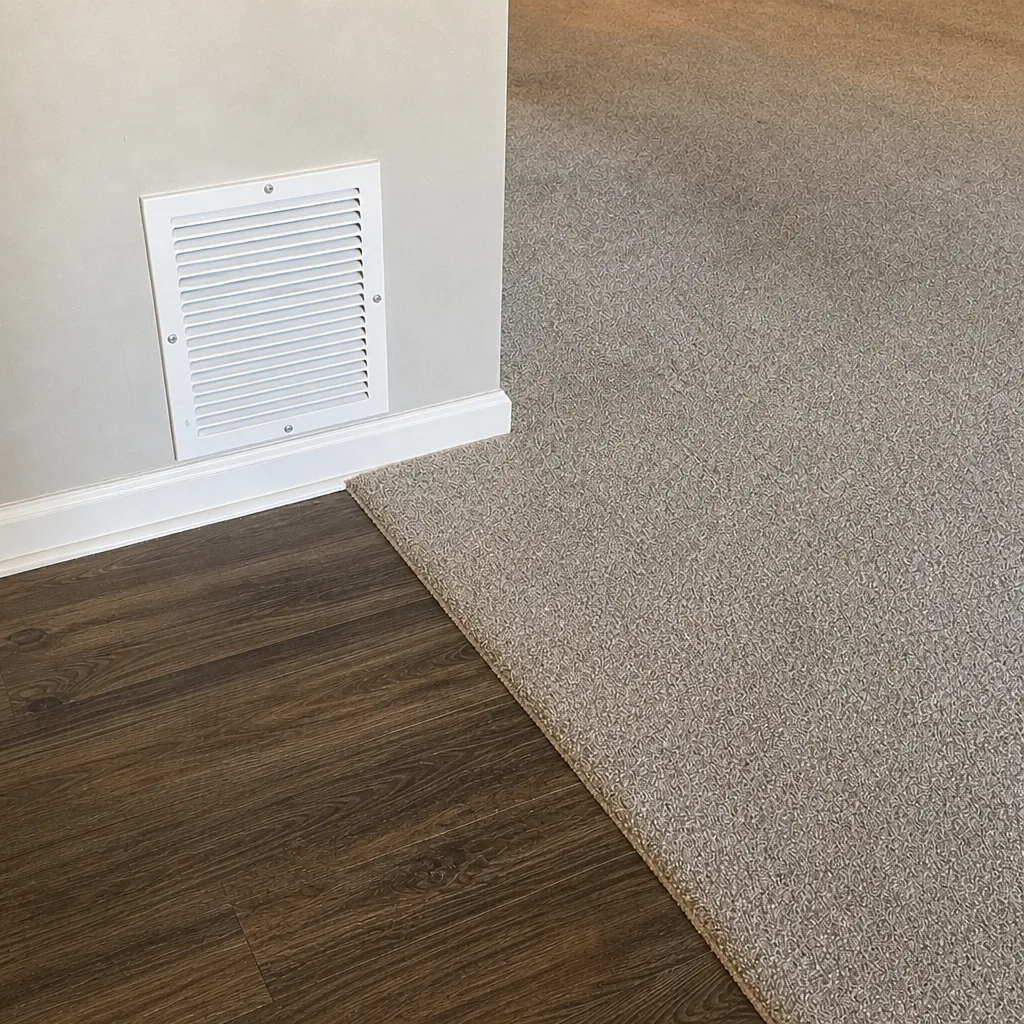 After
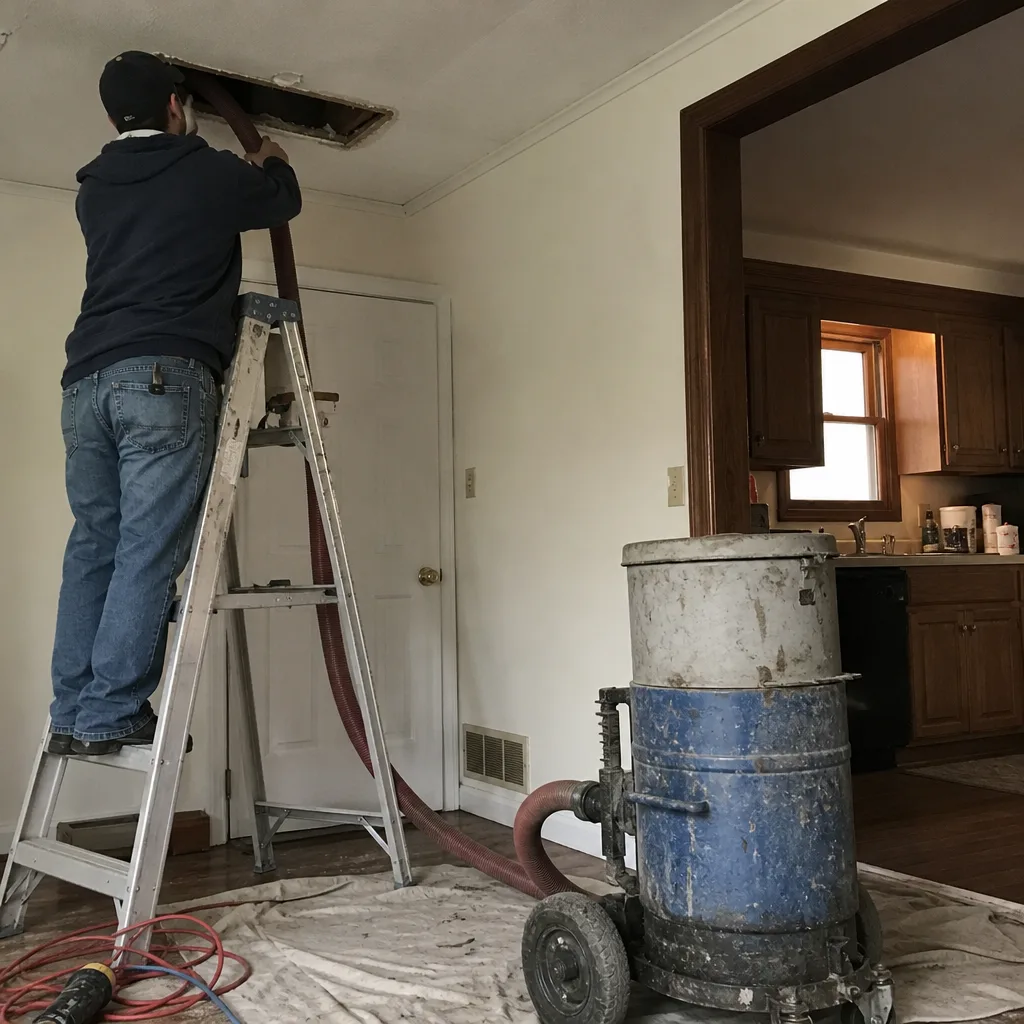 Before
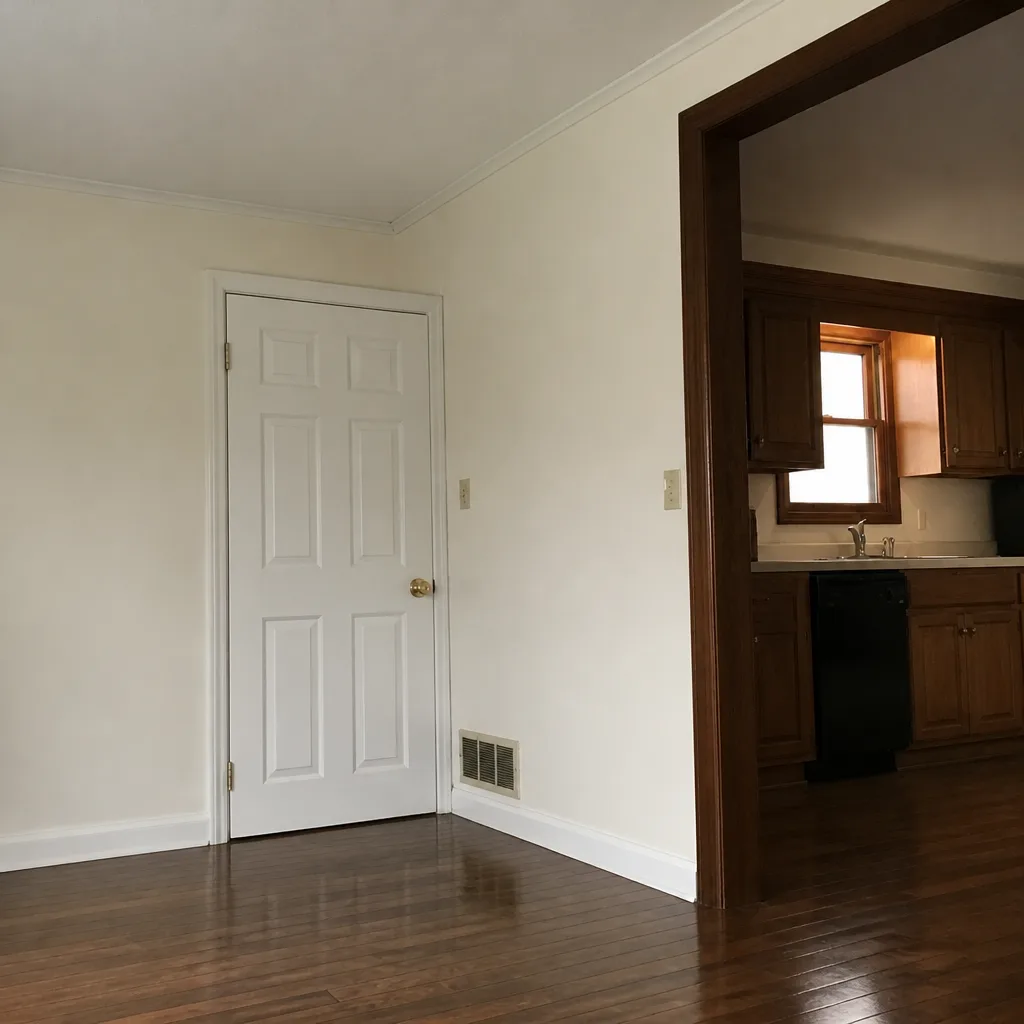 After
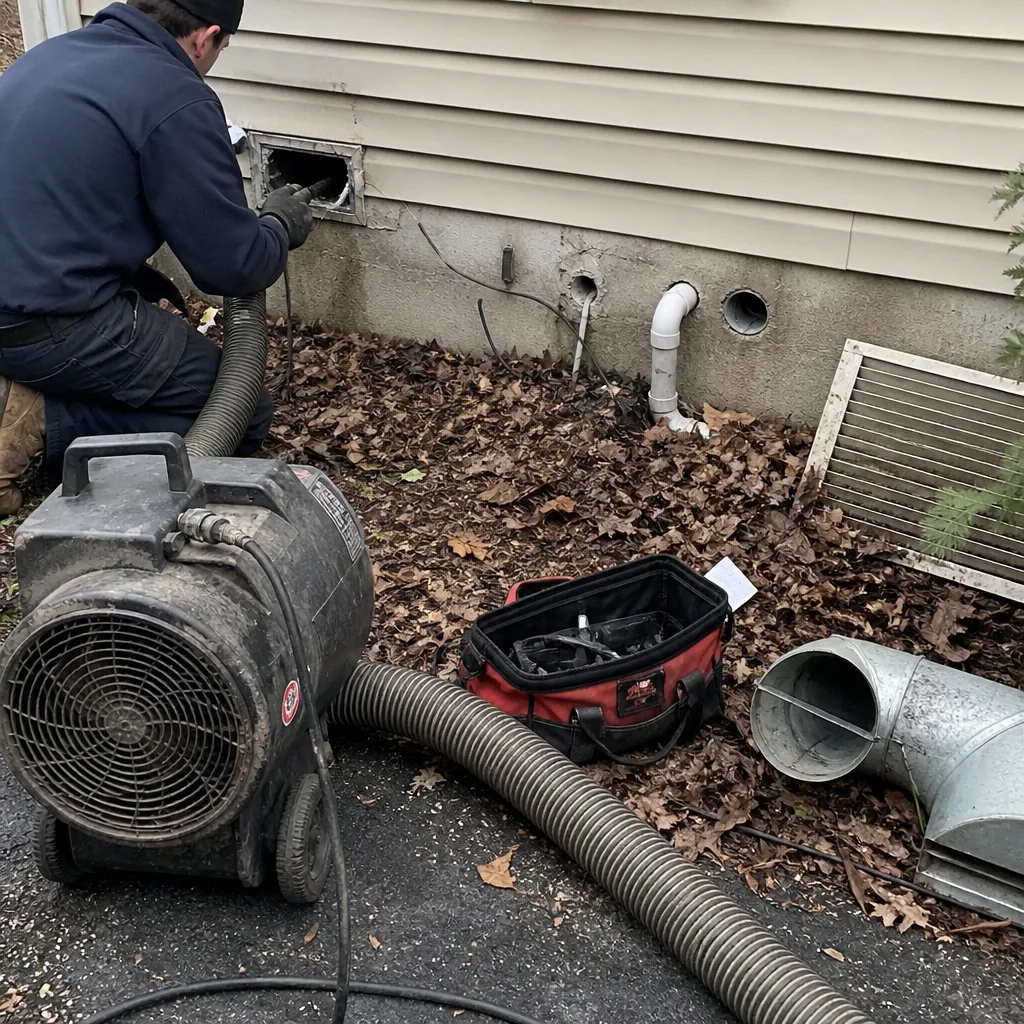 Before
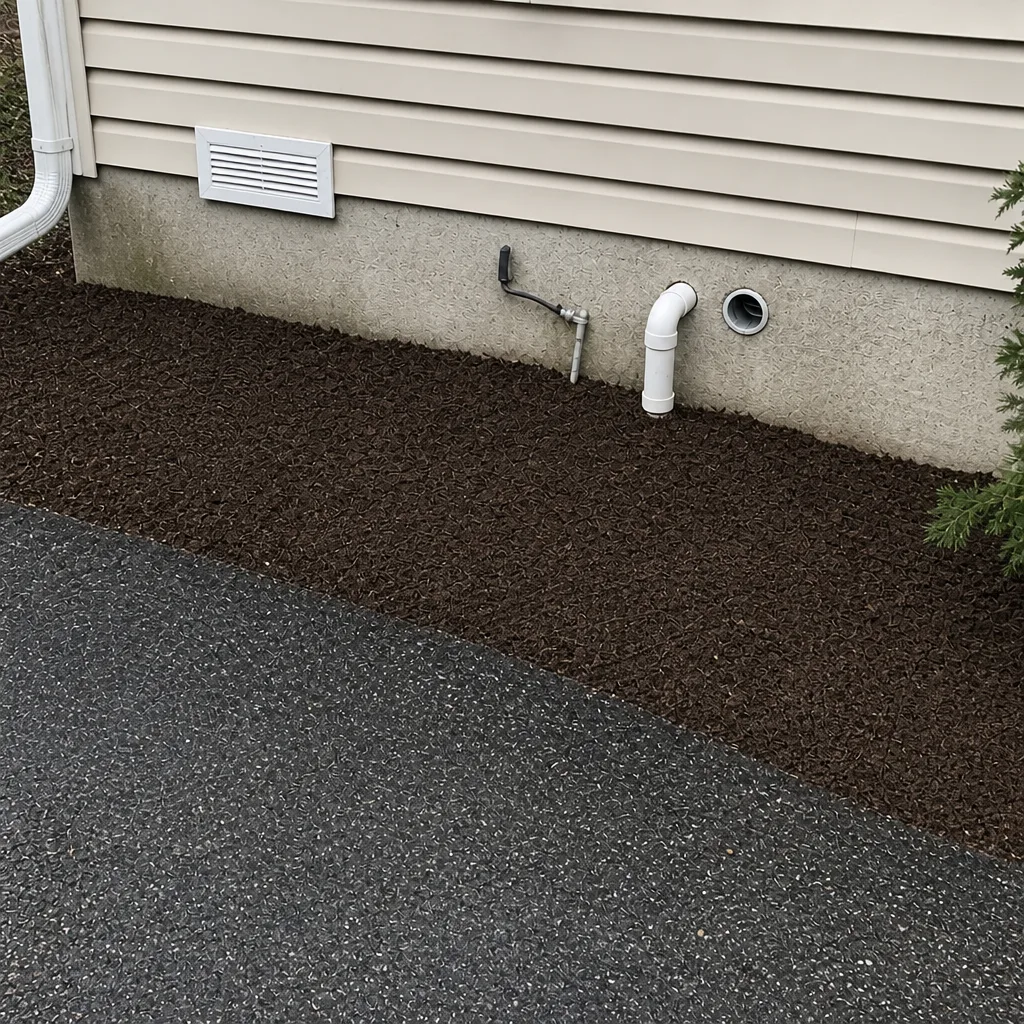 After
When to Call a Professional
Call a professional when you can’t determine which of the symptoms above you have, when a room has no airflow at all with the fan running, when you see visible moisture or growth inside an accessible duct section, or when a cleaning already happened in the last two months and symptoms are back. Call sooner if the dryer vent restriction is causing the dryer to overheat, or if you smell gas or burning (that’s a utility call, not a duct call). Duct Cleaning Carmel offers free estimates in Carmel. Call (844) 834-5334, and we’ll schedule a diagnostic visit that covers cleaning and inspection together. We answer 24/7, and dispatch runs from 7am to 7pm, Sunday through Friday.
Frequently Asked Questions
A crushed flex run, a disconnected branch, or a closed damper is the most likely cause. Cleaning clears debris from ducts that are intact; it doesn’t reopen a flex run that’s been folded shut or reconnect a joint that’s separated. If one room is weak while the rest of the house is fine, that single branch is where the diagnosis should start. Call (844) 834-5334 for an estimate that includes checking for structural damage alongside cleaning.
The price is set per system by a written estimate, not by the vent or by a teaser figure. We give one flat price for the whole system once we’ve seen it, and that price accounts for the cleaning, the return side, and any repair work identified during the diagnostic step. A lowquote that jumps once the technician is on site usually means the scope wasn’t inspected before it was priced. Call (844) 834-5334 for a free estimate.
Usually because they exclude the return network, skip material capture, or quote without inspecting the system. A price given over the phone can’t account for a disconnected run or a crushed branch, so the technician either doesn’t address it or adds it to the invoice on the day. Professional equipment (Rotobrush and Nikro systems under negative pressure, with HEPA-level capture from Abatement Technologies) costs more to run than a shop vac, and it captures the debris instead of redistributing it. Call (844) 834-5334 for an exact quote; estimates are free.
Ask for before-and-after photos of your own system, and ask what the technician did about the return side and any breaches found. A cleaning that only addresses supply runs is easier to complete quickly and easier to leave incomplete. Our process documents what was found and what was cleaned. Call (844) 834-5334 for a free estimate.
Most homes don’t need cleaning on a fixed schedule. Cleaning is due after a renovation, after a move-in where the previous owner’s system history is unknown, when there’s visible debris or persistent odor, or when symptoms point to blockage in an otherwise intact system. Homes with pets, heavy allergy sensitivity, or recent construction tend to need it more often than homes that don’t. Moisture and structural damage change the schedule entirely and should be addressed before cleaning. Call (844) 834-5334 for a free estimate.
Negative pressure across the whole system, agitation that reaches the duct walls, and HEPA-level filtration on the capture side. Rotobrush, Nikro, and Abatement Technologies equipment does what a shop vac can’t: capture debris at the source instead of moving it into the air in your home. That’s the difference between a cleaning and a redistribution. Call (844) 834-5334 for a free estimate.
The Bottom Line
Duct problems are usually structural before they’re cleanliness problems. Read your symptoms first: one weak room points at a branch, whole-house weakness points at a return or plenum, dust and odor point at breaches and moisture. Inspect the accessible sections yourself if you can, but treat what you can’t see as a diagnostic job for professional equipment under negative pressure. Cleaning solves debris. Repair solves damage. Many Carmel systems need both, and finding problems and fixing them in the same visit is what keeps you from paying twice. Take the estimates, read the written scope, and ask what was done about the returns.
If you’d rather have someone look at the system before you decide, we offer free estimates. Call (844) 834-5334. We answer 24/7, with fast dispatch from 7am to 7pm, Sunday through Friday.
Written by the team at Duct Cleaning Carmel.